THE STORY & ITS AFTERLIVES
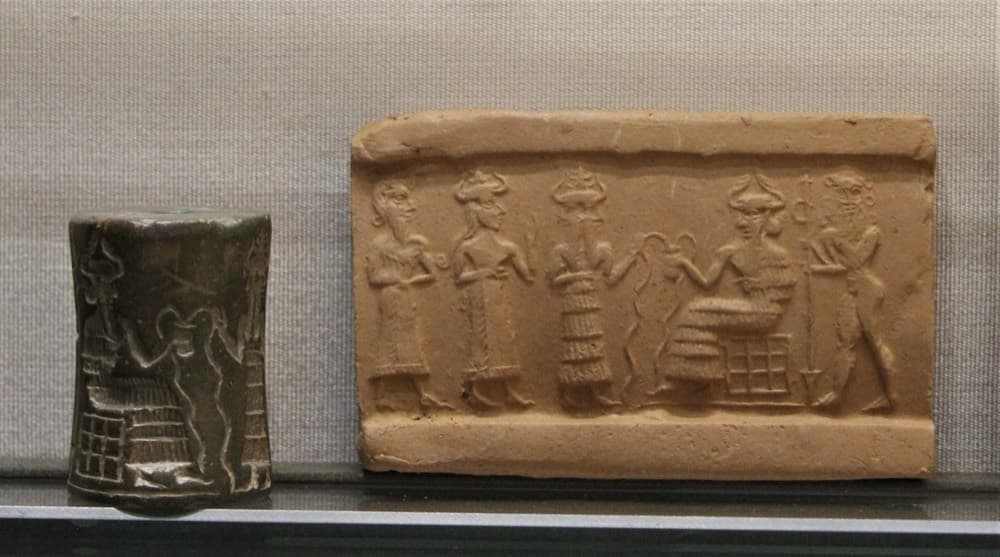
Marduk is the patron god of Babylon, son of Ea; his name was written with signs meaning 'bull calf of the sun.' His temple Esagila and the seven-staged ziggurat Etemenanki — some ninety meters tall, generally taken as the seed of the Tower of Babel story — dominated the city's heart. His beast is the mušḫuššu, a snake-dragon with horned serpent's head, lion's forelegs, eagle's hind talons, and a scorpion's sting, which parades in glazed brick across the Ishtar Gate; his emblem is the triangular spade called marru.
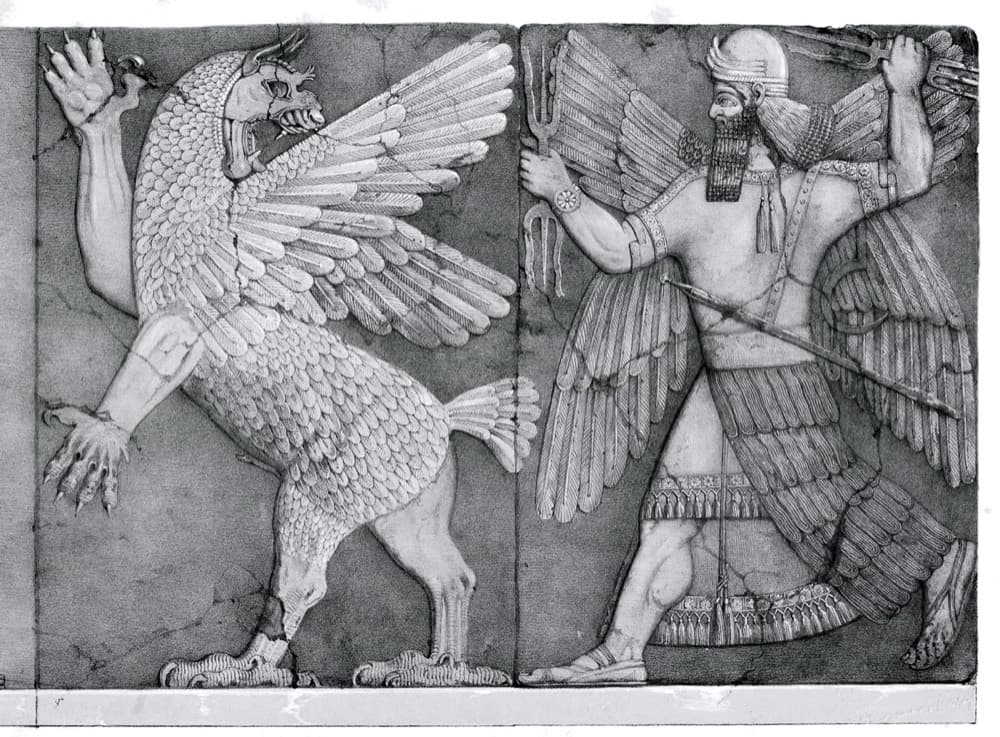
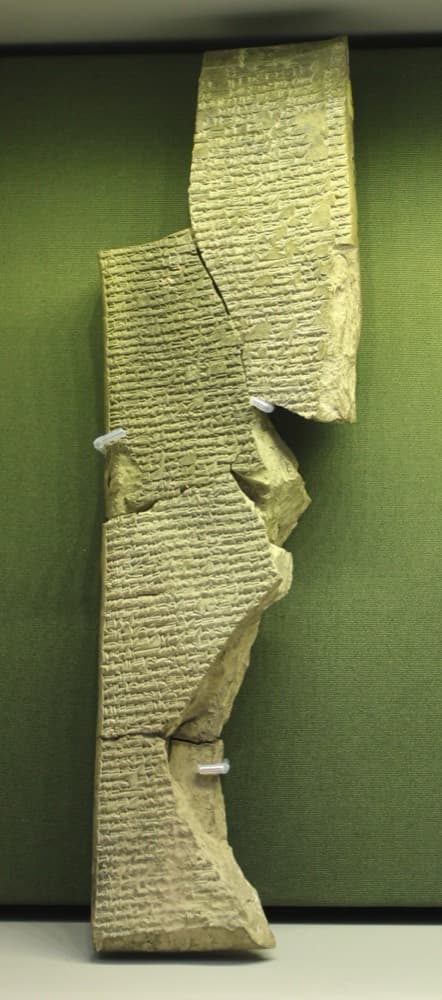
Enuma Elish tells of his enthronement. When the primeval sea Tiamat rises in vengeance and the elder gods quail, young Marduk names his price: victory in exchange for permanent supremacy. Armed with bow, net, and the four winds, he drives the gales into Tiamat's open gullet until her belly distends, bursts her heart with an arrow, and splits the corpse 'like a fish for drying' into sky above and earth below; he then fixes the stations of the stars and the gods, and has mankind made from the blood of the rebel commander Qingu to bear the gods' labor. The gods build Babylon for him in thanks, and the poem closes by reciting his fifty names. Each spring, on the fourth day of the Akitu new year festival, priests recited the whole epic before his statue.
He rose with Hammurabi's dynasty and reigned supreme in the first millennium BCE, often simply as Bel, 'the Lord' — the Bel of the Hebrew prophets. The Cyrus Cylinder credits Marduk himself with choosing the Persian king and leading him into Babylon without battle in 539 BCE. Temple and tower later crumbled, though the ziggurat's footprint remains visible at Babylon.