THE STORY & ITS AFTERLIVES
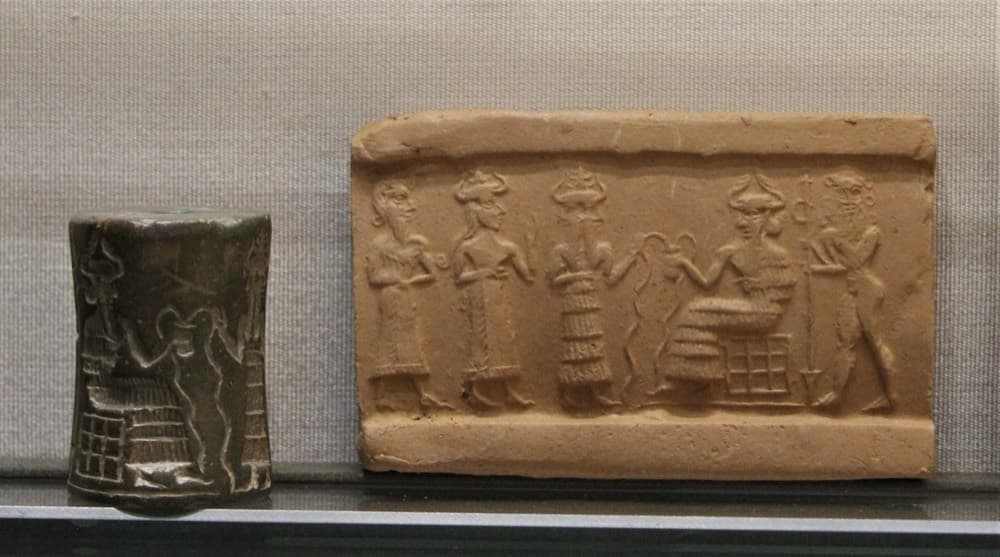
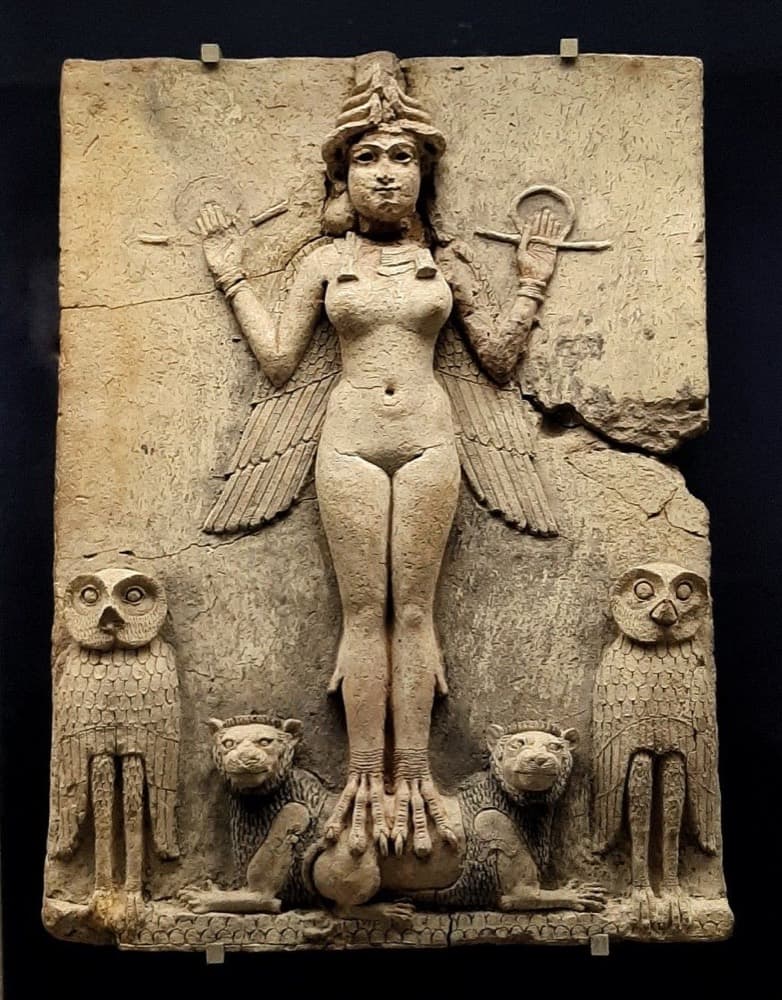
Ishtar, Sumerian Inanna, is the goddess of sexual love and of war, embodied in the planet Venus as both morning and evening star. Her emblem is the eight-pointed star, her beast the lion, and her holy city Uruk, where the Eanna, 'House of Heaven,' ranks among Mesopotamia's oldest sanctuaries. Bed and battlefield counted as a single domain: cuneiform texts call combat 'the dance of Ishtar.'
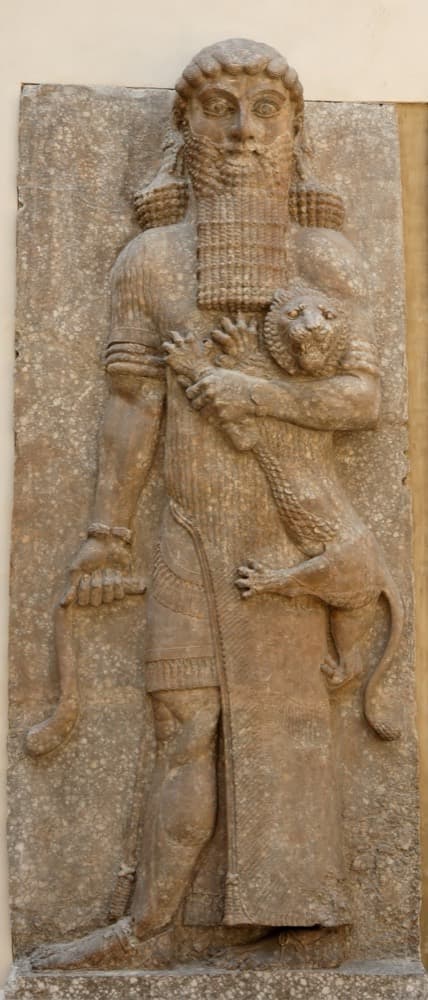
Her most famous myth is the Descent. In the Sumerian poem she knocks at the seven gates of the netherworld in full regalia, and at each gate the doorkeeper strips away one crown, jewel, or garment by the ancient rule of the land below, until she stands naked before her sister Ereshkigal, is sentenced, killed, and hung on a hook. After three days Enki fashions two sexless creatures from the dirt under his fingernails; they slip below, win Ereshkigal's favor by echoing her groans, claim the corpse, and revive it with the water and plant of life. The netherworld demands a substitute, and finding her husband Dumuzi enthroned and unmourning, Ishtar hands him over — a sentence later commuted to half of each year. In Tablet VI of Gilgamesh she proposes to the hero, hears the fates of her former lovers recited back at her, and in fury borrows the Bull of Heaven from Anu to ravage Uruk.
Her cult spread with Babylon and Assyria and merged westward with Astarte. The Ishtar Gate of Babylon, finished under Nebuchadnezzar II around 575 BCE in blue glazed brick, was reassembled in Berlin's Pergamon Museum in 1930.