THE STORY & ITS AFTERLIVES
Ereshkigal's name means “Lady of the Great Earth,” the earth here being the dark country into which the dead descend. She sits within the palace of the netherworld and commands its seven gates, judges, and demons. A scribe records the dead on tablets; her minister Namtar carries her orders. Unlike gods who travel between cities and assemblies, Ereshkigal is bound by the very sovereignty she holds. When the heavenly gods give a banquet, she cannot leave the realm below and must send Namtar upward to receive her share.
In Inanna's Descent, her sister arrives at the gates in full regalia. At every door the keeper removes a crown, jewel, or garment according to the law of the underworld, until Inanna passes the seventh gate with nothing. She reaches for Ereshkigal's throne, is judged by the seven judges, killed, and hung on a hook. After three days, two beings fashioned by Enki slip below and hear Ereshkigal groaning as though in labour. They echo her pain and win the corpse and the water of life. Inanna rises, but she must provide a substitute. The law of the netherworld has bent without being abolished.
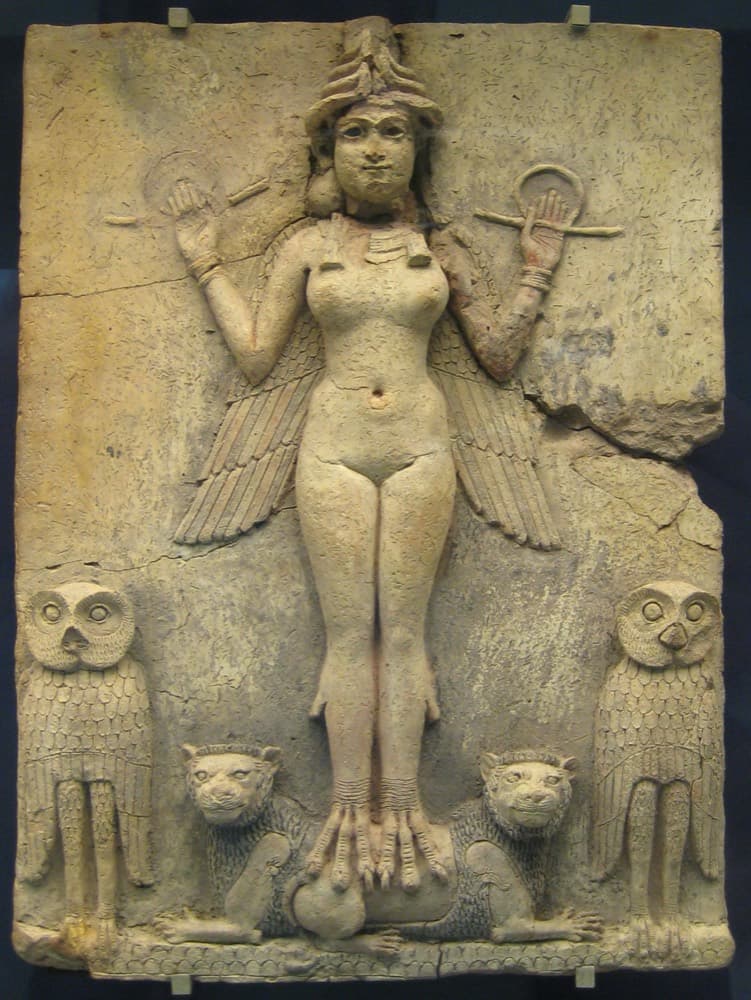
The Akkadian Nergal and Ereshkigal approaches her through another gate. Nergal insults her messenger at a divine banquet and is made to descend. Different recensions narrate the confrontation and union with sharply different degrees of violence, but Nergal becomes her later consort; earlier tradition gives her Gugalana. The ORACC Ancient Mesopotamian Gods and Goddesses project notes that she rarely had an independent cult outside literature. The famous Queen of the Night relief is often labelled Ereshkigal in popular accounts, but its identity remains disputed; her most secure portrait is still written in cuneiform rather than fixed in an uncertain image.