THE STORY & ITS AFTERLIVES
The name Lucifer comes from a taunt-song against the king of Babylon. Isaiah 14 has Israel sing: 'How you have fallen from heaven, morning star, son of the dawn!' The Hebrew phrase, helel ben shahar, names Venus as it rises before sunrise. The king of the poem had said in his heart, 'I will ascend to heaven; I will raise my throne above the stars of God; I will make myself like the Most High' — and is brought down instead to the depths of the pit. The Latin Vulgate of the late fourth century rendered 'morning star' as lucifer, 'light-bearer,' an ordinary Latin name for Venus.
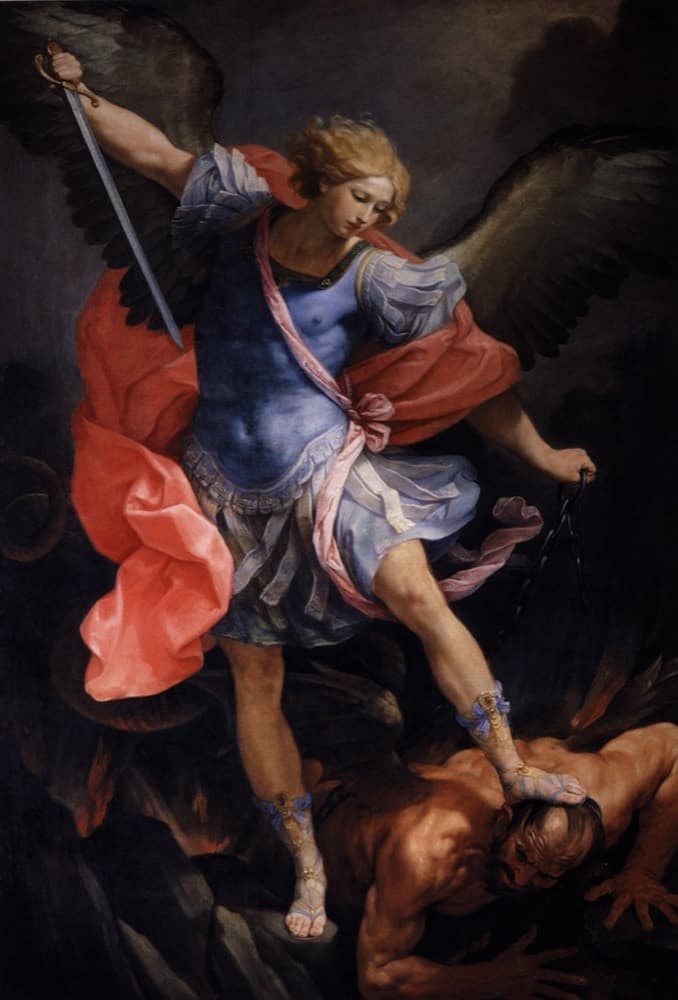
Early Christian writers read the passage alongside two others: Jesus's words in Luke 10:18, 'I saw Satan fall like lightning from heaven,' and the dragon cast down with his angels in Revelation 12. Church fathers such as Origen concluded that the fallen figure of Isaiah's poem was the devil before his fall — a radiant angel ruined by pride at the beginning of creation — and Lucifer passed from a name of Venus to the proper name of the fallen angel. This reading is a Christian interpretive tradition; Jewish tradition does not take the verse as a reference to Satan.
Literature then forged the most famous rebel in the Western imagination. Dante's Inferno fixes Lucifer waist-deep in the ice of hell's lowest circle, each of his three mouths chewing a traitor; Milton's Paradise Lost (1667) gives him an army of a third of heaven's angels, a defeat, a lake of fire, and the declaration that it is 'better to reign in Hell than serve in Heaven.' The modern figure — proud, eloquent, his brightness not yet wholly quenched — is largely Milton's.