THE STORY & ITS AFTERLIVES
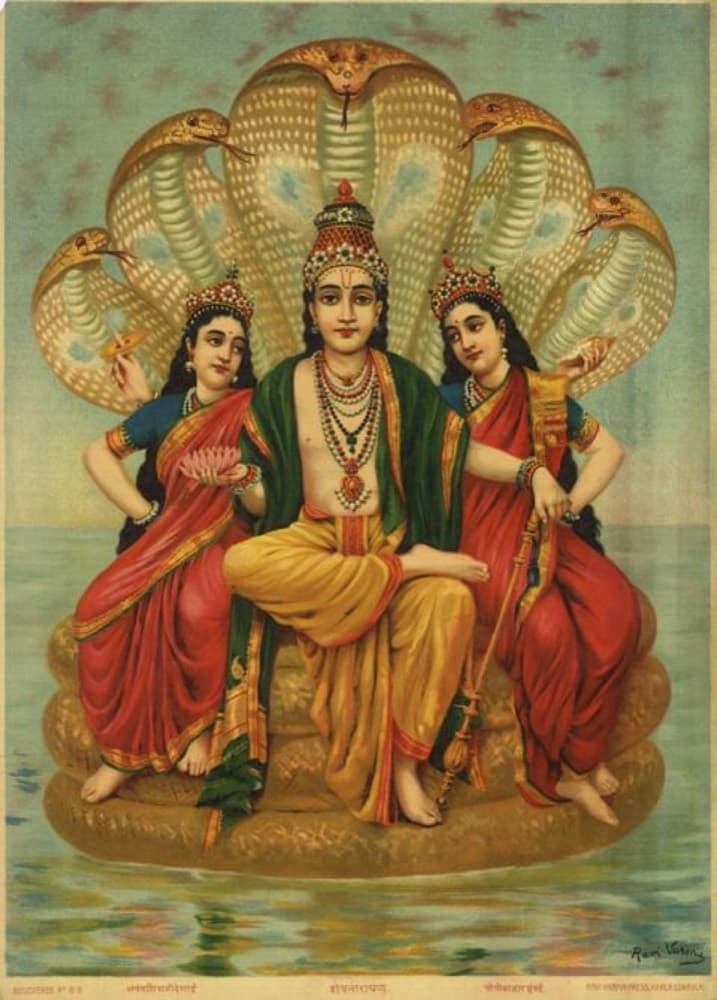
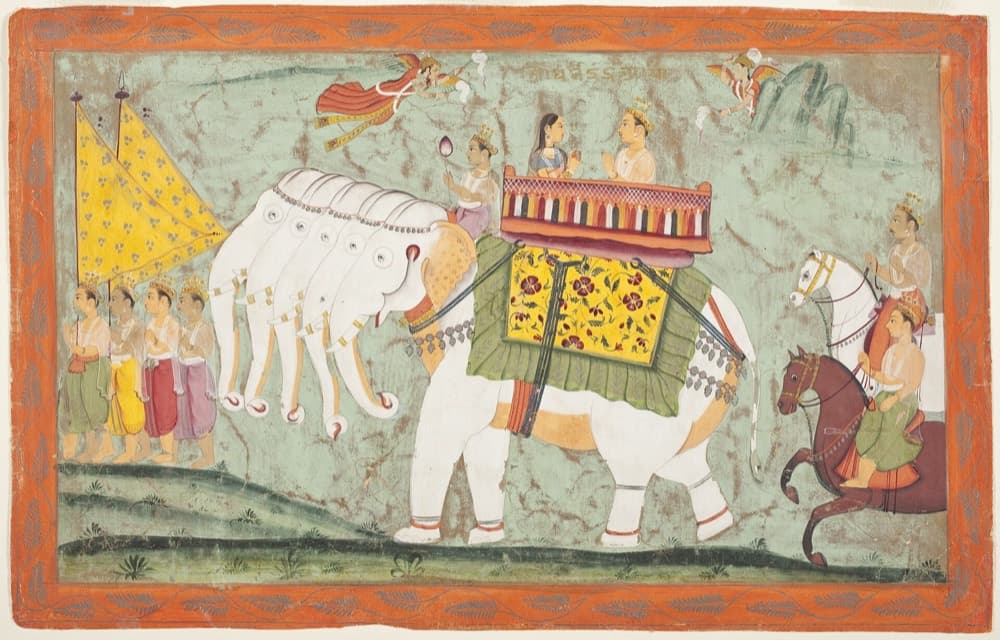
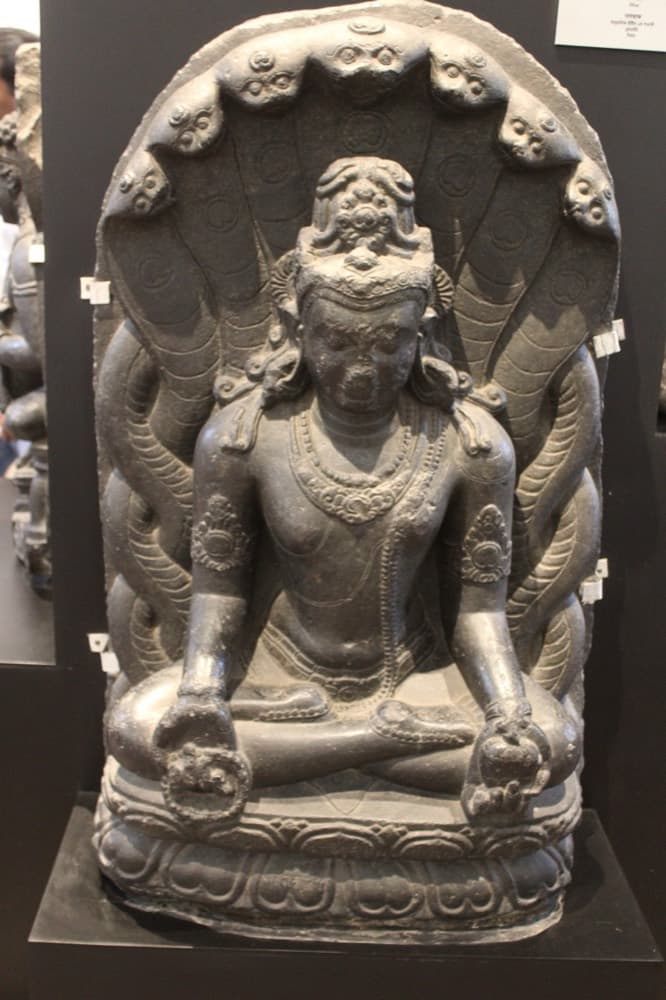
Krishna's skin is the blue-black of a storm cloud; a peacock feather tilts in his hair and a bamboo flute rests at his lips. The tyrant Kamsa, warned that his sister Devaki's eighth son would kill him, imprisoned her and slaughtered her newborns one by one; on the night the eighth child was born, his father Vasudeva carried him through the flooding Yamuna—the serpent Shesha spreading his hoods as an umbrella—to be fostered among the cowherds of Vrindavan. Those pastoral years are the best-loved part of his myth: the butter thief, the boy who subdued the venomous serpent Kaliya, the youth whose flute drew the gopis to dance in a circle under the moon, his love for the cowherd girl Radha the theme of a thousand years of devotional poetry. When Indra loosed seven days of storm, Krishna held Mount Govardhana over the village on one finger.
Grown, he returned to Mathura and killed Kamsa with his bare hands, later leading his clan west to found the seaside city of Dwarka. In the Mahabharata he is ally and counsellor to the five Pandavas, and on the eve of the great war at Kurukshetra he serves as Arjuna's charioteer. When Arjuna drops his bow rather than kill his own kin, Krishna, between the two armies, speaks the seven hundred verses of the Bhagavad Gita—act without attachment to the fruits of action—and reveals his universal form, which swallows all worlds. Thirty-six years after the war, a hunter mistakes his foot for a deer and the arrow finds his heel; he departs, and Dwarka sinks beneath the sea.
Devotion to Krishna has shaped Indian art for a millennium: Jayadeva's 12th-century Sanskrit poem Gita Govinda sings of Radha and Krishna, miniature painting returns endlessly to the circle dance, his birthday festival Janmashtami is kept across India, and the Hare Krishna movement founded in 1966 carried his name to streets in the West.