THE STORY & ITS AFTERLIVES
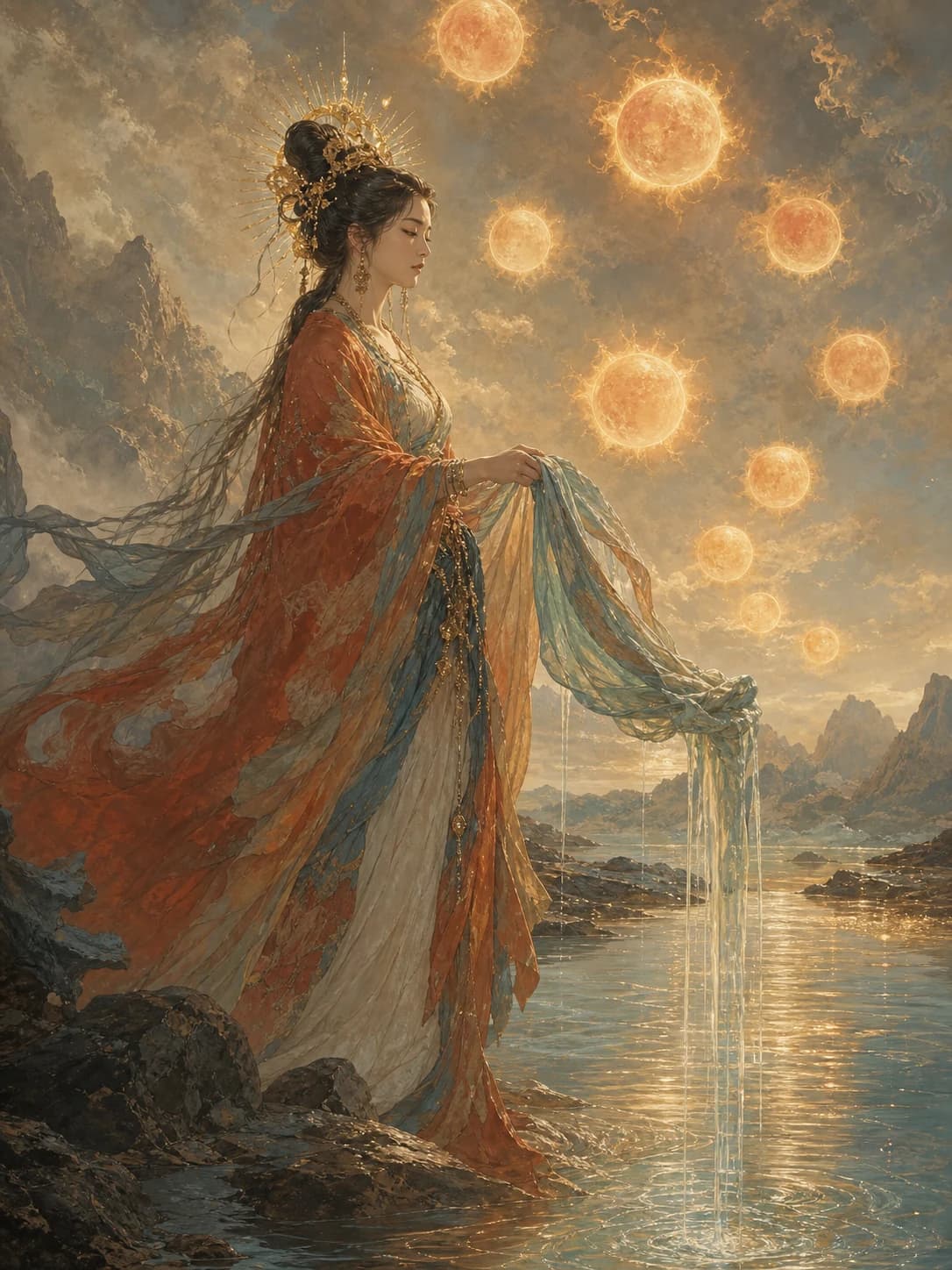
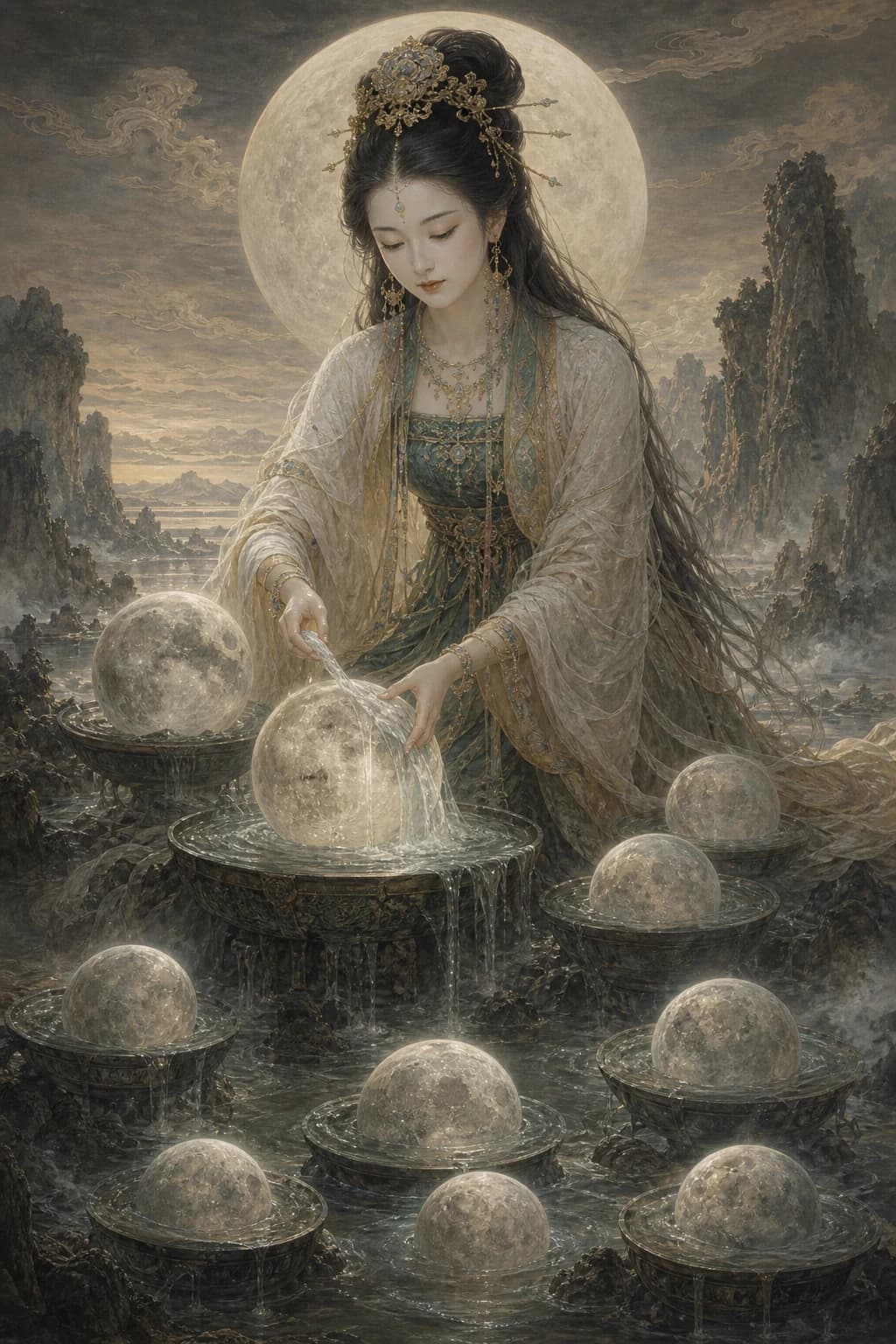
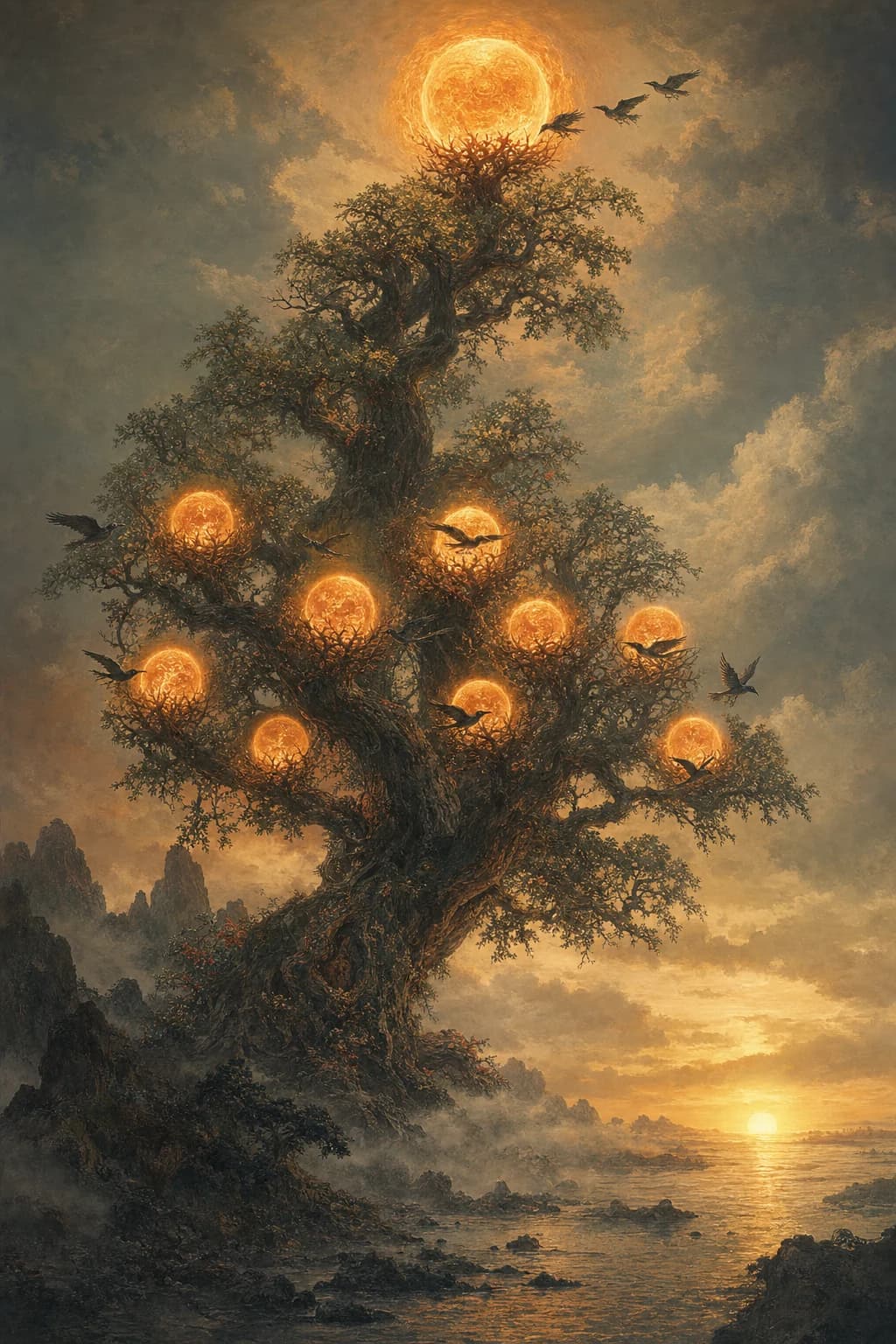
The name Di Jun appears nowhere in the five books of mountain itineraries and in no other transmitted pre-Qin text, yet he surfaces more than a dozen times across the four Great Wilderness classics and the final chapter, where he outranks every other god. His three wives are each remarkable: Xihe bore the ten suns and bathed them in the Sweet Gulf beyond the southeastern sea; Changxi bore the twelve moons in the western wilderness; Ehuang bore the one-headed, three-bodied people of the Sanshen country. Five-colored birds that sing and dance for themselves are called 'the friends of Di Jun below', keeping his two altars on earth.
The final chapter hangs the genealogy of invention on him: his descendant Fanyu first built boats and Jiguang first built wooden carts; Yanlong first made the qin and se zithers; his eight sons began song and dance; and Yijun, of the three-bodied line, invented the hundred crafts for the people below. When the ten suns brought calamity, it was Di Jun who gave the archer Yi a vermilion bow and plain arrows and sent him down to relieve the lands beneath.
Why so great a god vanished from all other early literature became a classic puzzle. The commentator Guo Pu read 'Jun' as a loan for 'Shun'; in 1917 Wang Guowei identified the 'High Ancestor Nao' worshipped in Shang oracle-bone inscriptions, and Guo Moruo argued this figure was Di Jun himself, identical with Di Ku of the transmitted histories. The three-way identification remains the standard hypothesis: Di Jun as the supreme god of the Shang, surviving only in this book.