THE STORY & ITS AFTERLIVES
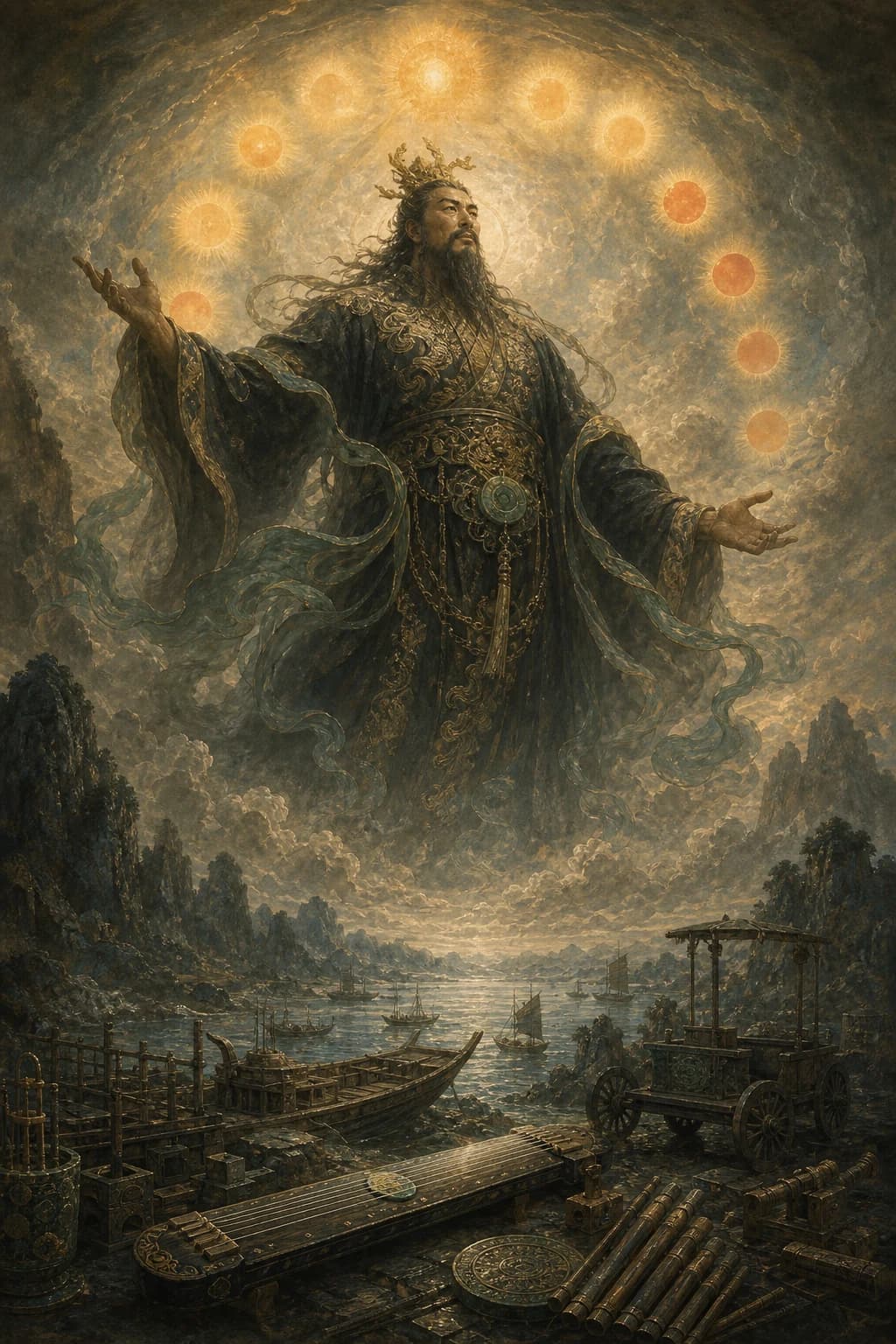
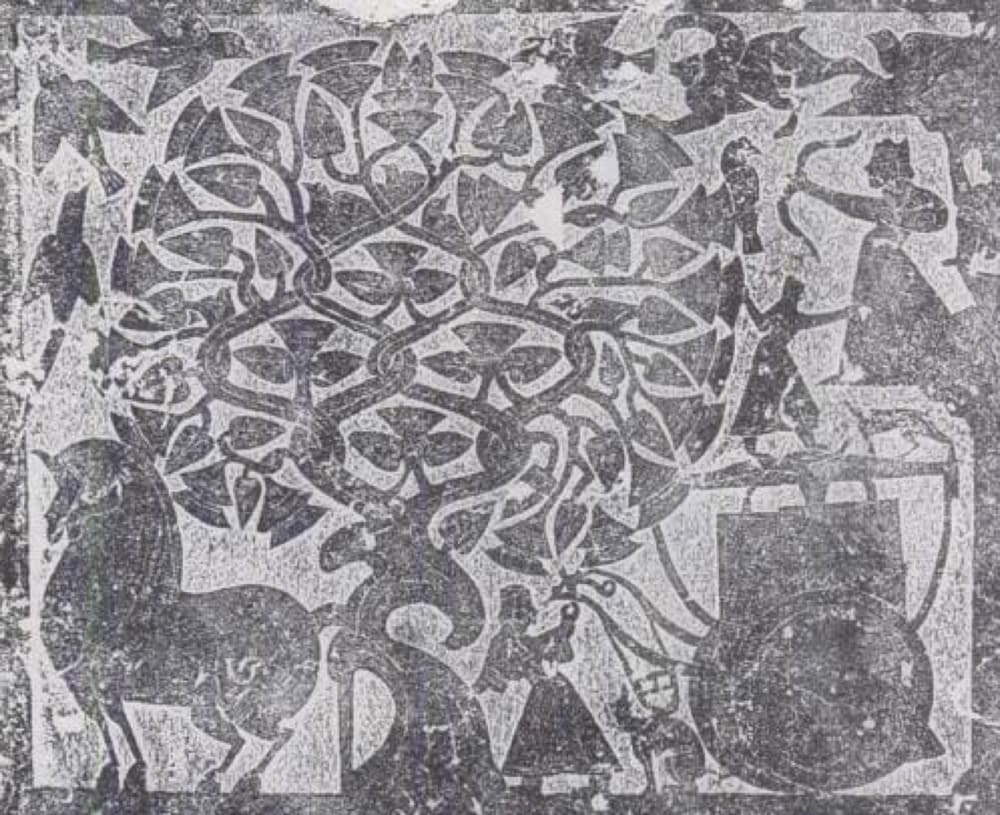
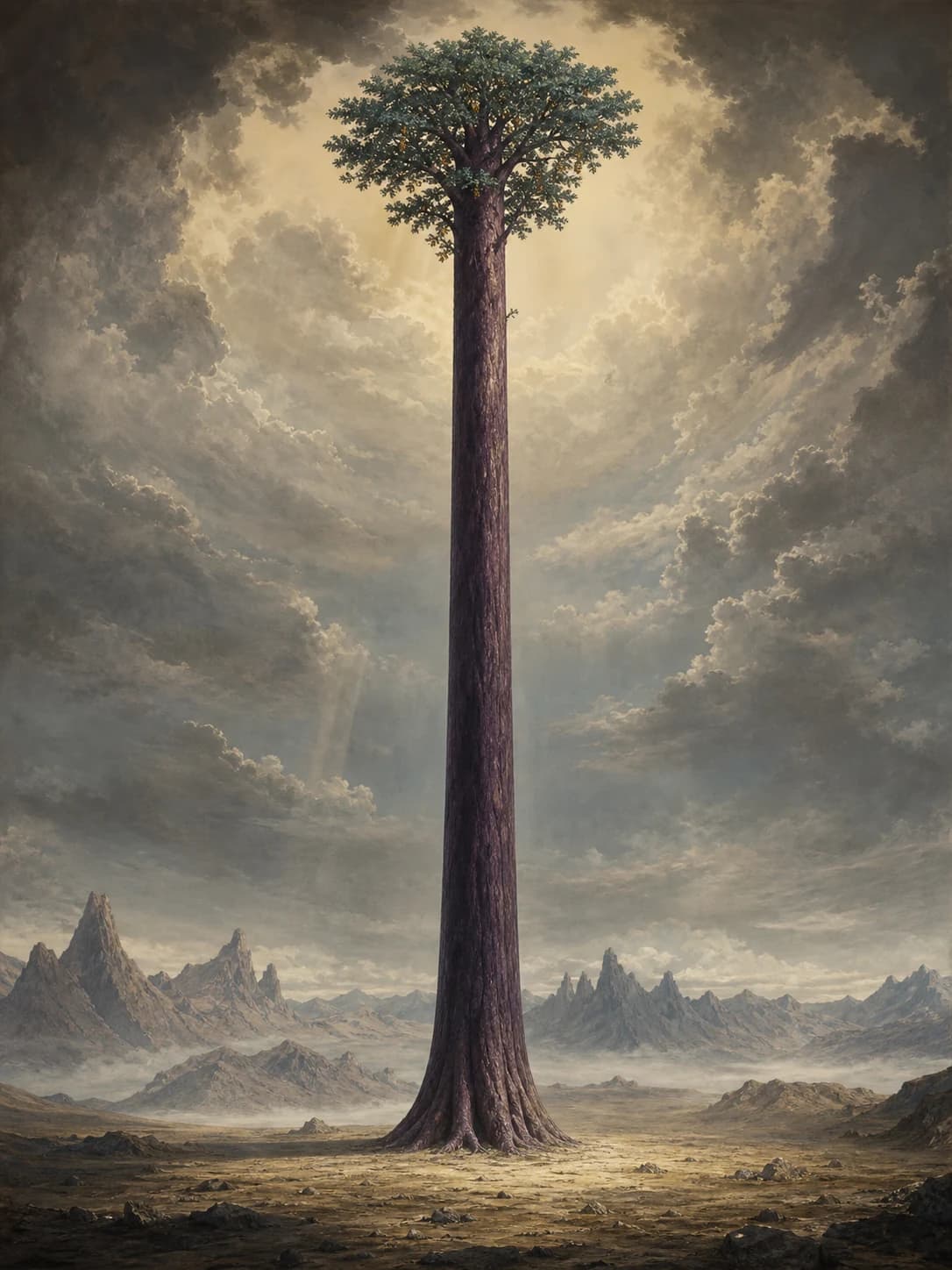
Above the valley of Tanggu, says the Great Wilderness: East, grows the Fu tree: one sun has just arrived home, another is just setting out, each carried by a crow. Elsewhere in the wilderness the tree towers three hundred li with leaves like mustard greens. The Beyond the Seas: East chapter is more precise: the Fusang stands in the water where the ten suns bathe, nine roosting on the lower branches and one on the upper. The ten are children of Xihe, wife of Di Jun; each day one takes its shift across the sky by crow while nine wait on the branches — a precisely rotating timetable of sunrise.
What happened when the timetable broke is told in the Huainanzi: in the age of Yao all ten suns rose at once, scorching crops and grasses until the people had nothing to eat, and Yao ordered the archer Yi to shoot them down. The final chapter of the Classic itself preserves the commission: Di Jun gave Yi a vermilion bow and plain-corded arrows and sent him to relieve the hardships of the lands below. Nine suns fell; one remains. The crow moved inside the sun itself — the Huainanzi's 'three-legged crow in the sun' made 'golden crow' a lasting name for the sun.
The scene keeps surfacing from the ground: the T-shaped silk banner from Mawangdui tomb 1 paints a red sun with a crow in it and small suns hanging in the Fusang's branches, and the bronze trees of Sanxingdui, with birds perched tier on tier, are routinely compared to the Fusang of this myth.