THE STORY & ITS AFTERLIVES
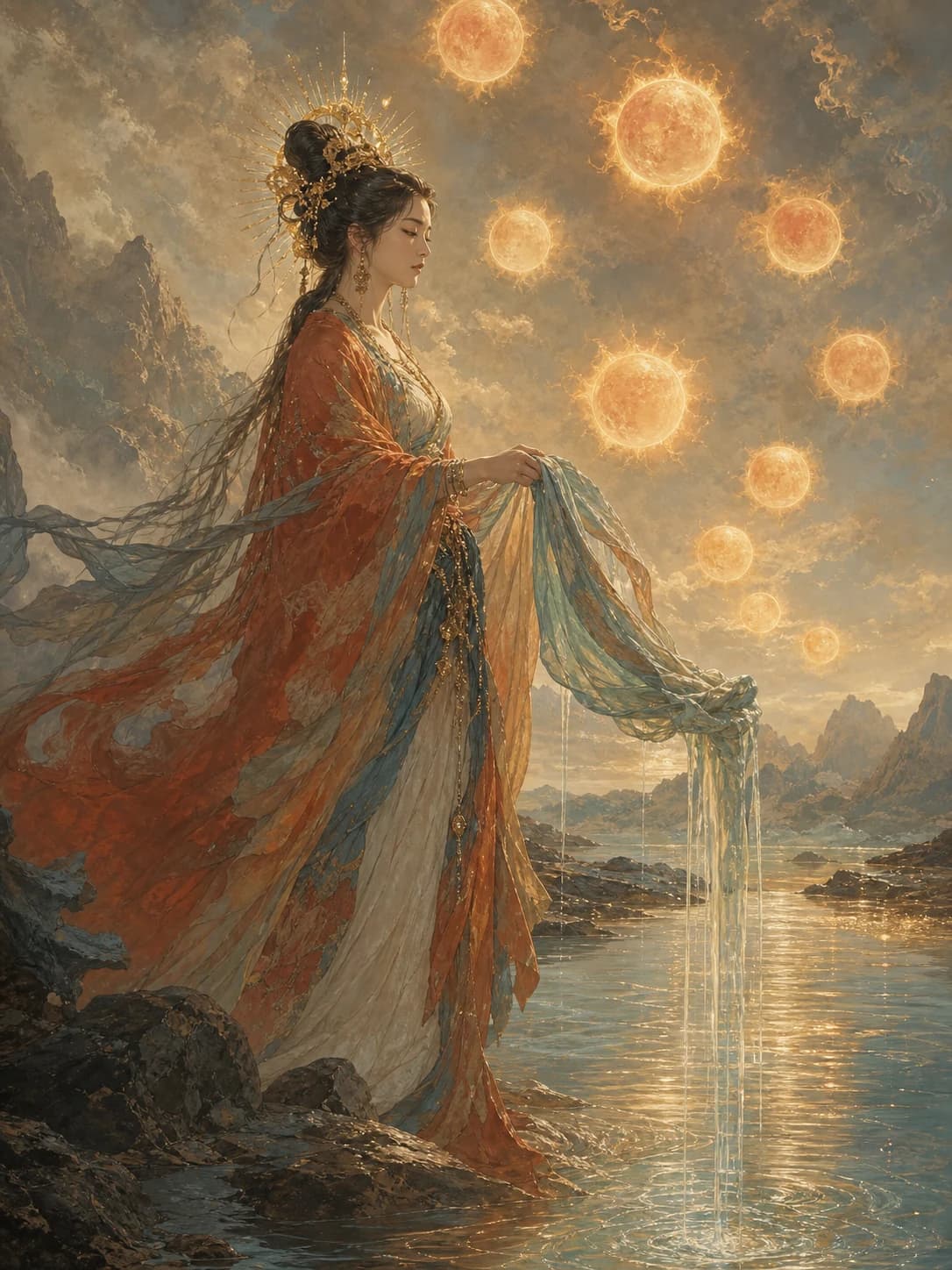
The Classic of the Great Wilderness: West gives her a single line: a woman is bathing a moon; she is Changxi, wife of Di Jun, who bore twelve moons and is bathing them for the first time. The scene mirrors Xihe bathing the suns in the southern wilderness — one wife in the southeast bore ten suns, one in the west bore twelve moons, each luminary with its own mother washing it clean before it climbs the sky.
Twelve moons answer to the twelve months of the year: Changxi is the calendar's 'month' personified. In transmitted texts she appears under the spellings Changyi or Shangyi. The Lüshi Chunqiu's catalogue of primordial inventors credits 'Shangyi' with devising lunar observation, the same historicizing move that turned Xihe into a college of calendar officials.
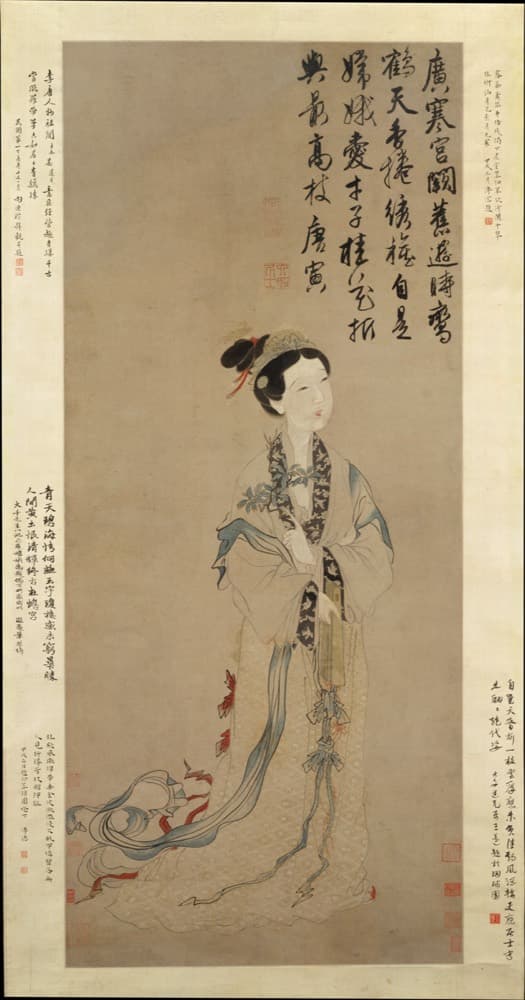
The Qing scholar Bi Yuan, annotating the Lüshi Chunqiu, noted that Shangyi is Changyi and that the graphs 'yi' and 'e' were interchangeable in ancient pronunciation — from which the later name Chang'e derives. On this widely accepted reading, the goddess who steals the elixir of immortality and flees to the moon in the Huainanzi began here: the mother of the moons became, over centuries of retelling, the woman in the moon.