THE STORY & ITS AFTERLIVES
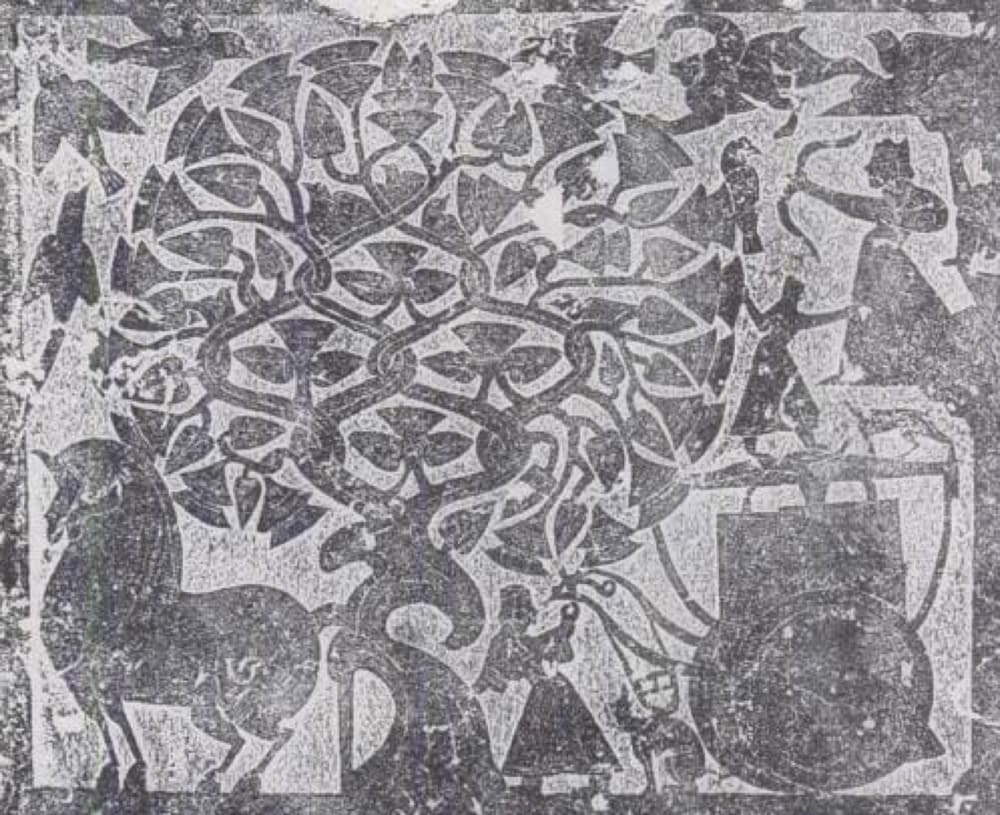
Chang'e was originally called Heng'e; the name changed in the Han dynasty to avoid the taboo on Emperor Wen's personal name Heng. The Huainanzi states the core of the myth in one line: Yi obtained the elixir of immortality from the Queen Mother of the West, and Heng'e stole it and fled to the moon. Zhang Heng's astronomical treatise Lingxian, of the second century CE, adds that before her flight she had the diviner You Huang cast the stalks and received a favorable omen — and that on arriving in the moon she became the lunar toad.
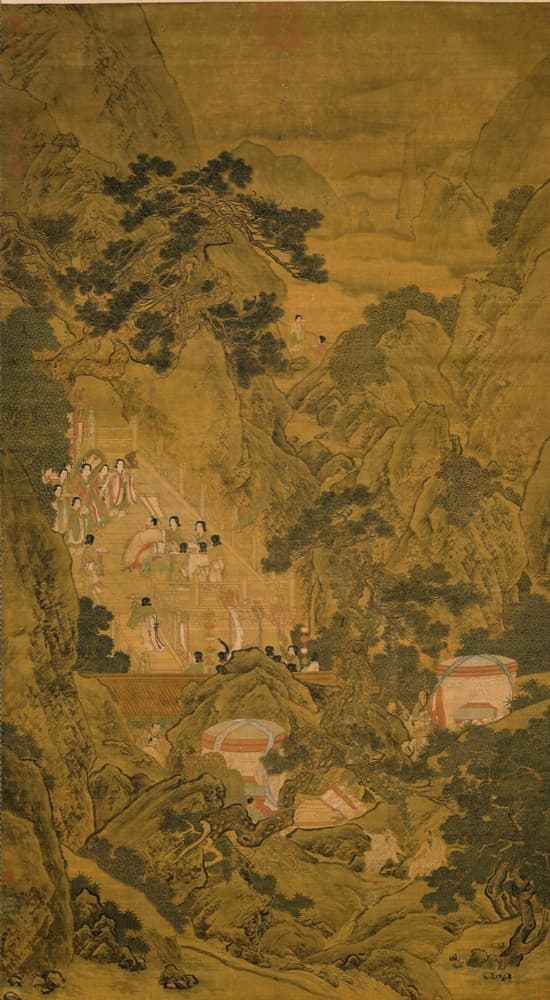
From the Tang dynasty onward the toad was quietly forgotten, and Chang'e settled into her enduring image: a solitary beauty in the Palace of Far-Reaching Cold, attended by the jade rabbit that pounds the elixir with mortar and pestle. The moon palace also houses Wu Gang, condemned to fell a self-healing cassia tree five hundred zhang tall, a tale recorded in Duan Chengshi's Youyang Zazu. Li Shangyin's famous couplet imagines her regretting the stolen elixir, alone night after night between jade sea and blue sky.
Mid-Autumn offerings to the moon, mooncakes, and the rabbit figurines of old Beijing all point back to her palace, and since 2007 China's lunar probes have flown under the name Chang'e, with rovers named Yutu, the jade rabbit.