THE STORY & ITS AFTERLIVES
No Chinese deity changed shape more dramatically than the Queen Mother of the West. In the Shanhaijing she dwells on Jade Mountain 'like a human, with a leopard's tail and tiger's teeth, skilled at whistling, wild-haired and wearing the sheng headdress', presiding over plagues and the five punishments, fed by three azure birds — a fearsome, half-bestial power of the far west.
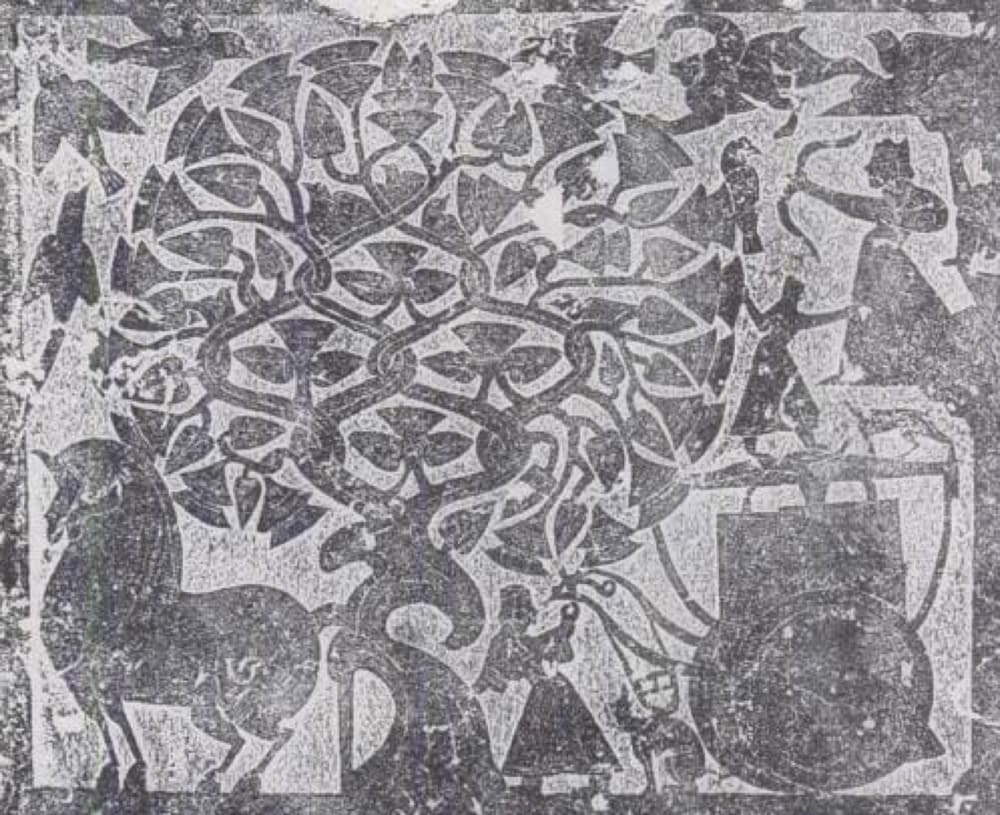
In the Mu Tianzi Zhuan she has become a gracious sovereign, exchanging verses with King Mu of Zhou over wine on the banks of the Turquoise Pond and inviting him to return. By Han times she held the elixir of immortality — it was from her that the archer Yi obtained the drug his wife Chang'e stole. In 3 BCE a millenarian frenzy swept the eastern commanderies as thousands passed tokens 'of the Queen Mother' from village to village, gathering to sing and sacrifice; the Book of Han recorded it among the portents. Han tomb reliefs seat her atop a pillar-like Mount Kunlun, flanked by the jade rabbit, the toad, and her azure birds.
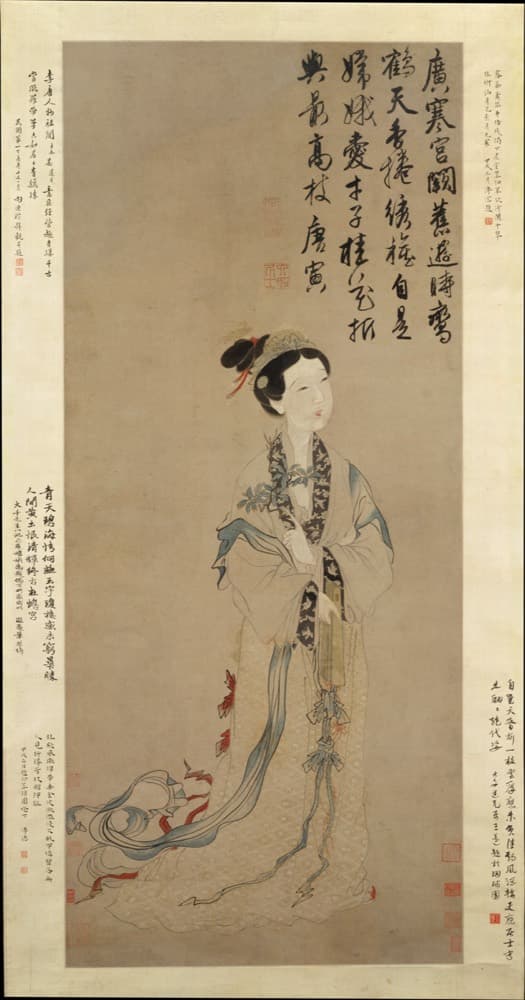
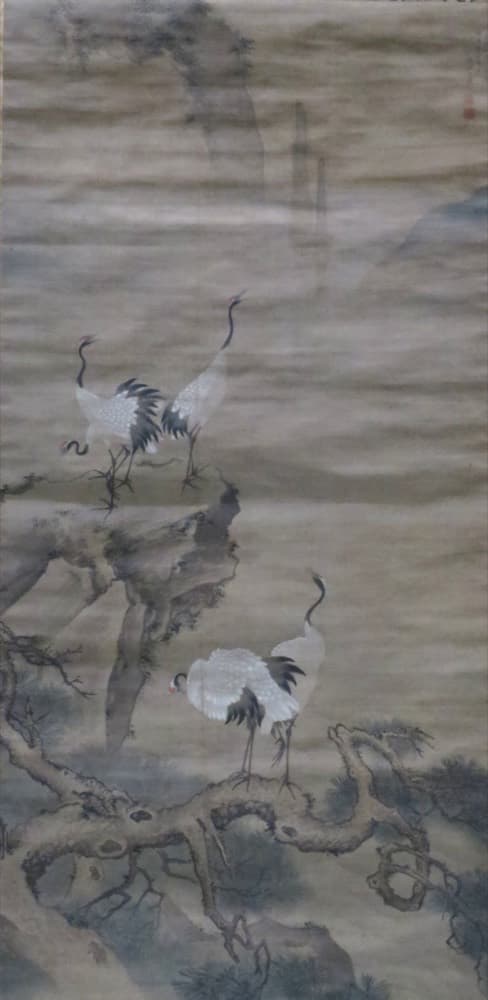
The Han Wudi Neizhuan has her descend into the palace of Emperor Wu on the seventh night of the seventh month, sharing seven peaches that fruit once in three thousand years. Daoism enthroned her as Golden Mother, head of all female immortals and counterpart of the King Father of the East; late imperial religion made her the Jade Emperor's consort, hostess of the Peach Banquet immortalized in Journey to the West. Her ancestral shrine at Huishan in Jingchuan, Gansu, claims Han-dynasty origins and remains active.