THE STORY & ITS AFTERLIVES
Avalon first appears in Geoffrey of Monmouth's Historia Regum Britanniae (c. 1136): the sword Caliburn was forged on the Insula Avallonis, and after the battle of Camlann the mortally wounded Arthur was carried there to be healed, resigning his crown. Geoffrey's Vita Merlini (c. 1150) fills in the picture: also called the Isle of Apples or the Fortunate Isle, it bears crops without ploughing, its people live past a hundred, and it is ruled by nine sisters led by Morgen, mistress of healing and shape-shifting, who took charge of Arthur's wound. From this grew the most durable hope in British legend, that Arthur, the once and future king, will return from Avalon.
In 1191 the monks of Glastonbury Abbey in Somerset announced they had unearthed a giant's bones and a lead cross inscribed to the effect that the renowned King Arthur lay buried in the isle of Avalon; Gerald of Wales recorded the exhumation. Glastonbury, its Tor rising over then-marshy levels, does read as an island from afar, but scholars generally take the discovery as publicity to fund rebuilding after the abbey's fire of 1184. Edward I and Queen Eleanor presided over a reburial in 1278; the tomb vanished with the abbey's dissolution in 1539.
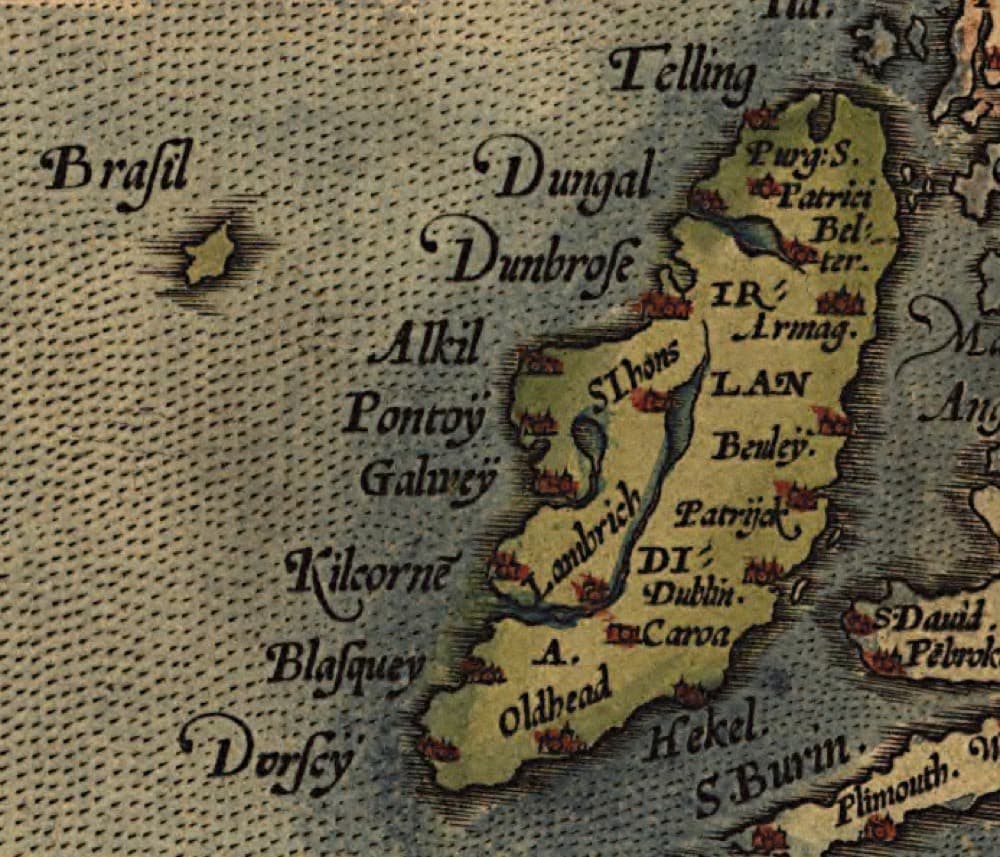
Avalon absorbed the Celtic tradition of blessed western isles such as the Irish Tír na nÓg. Malory's Le Morte d'Arthur (1485) fixed the scene of the queens bearing Arthur away by barge, and modern retellings from Marion Zimmer Bradley's The Mists of Avalon (1983) onward keep the name central to fantasy.