THE STORY & ITS AFTERLIVES
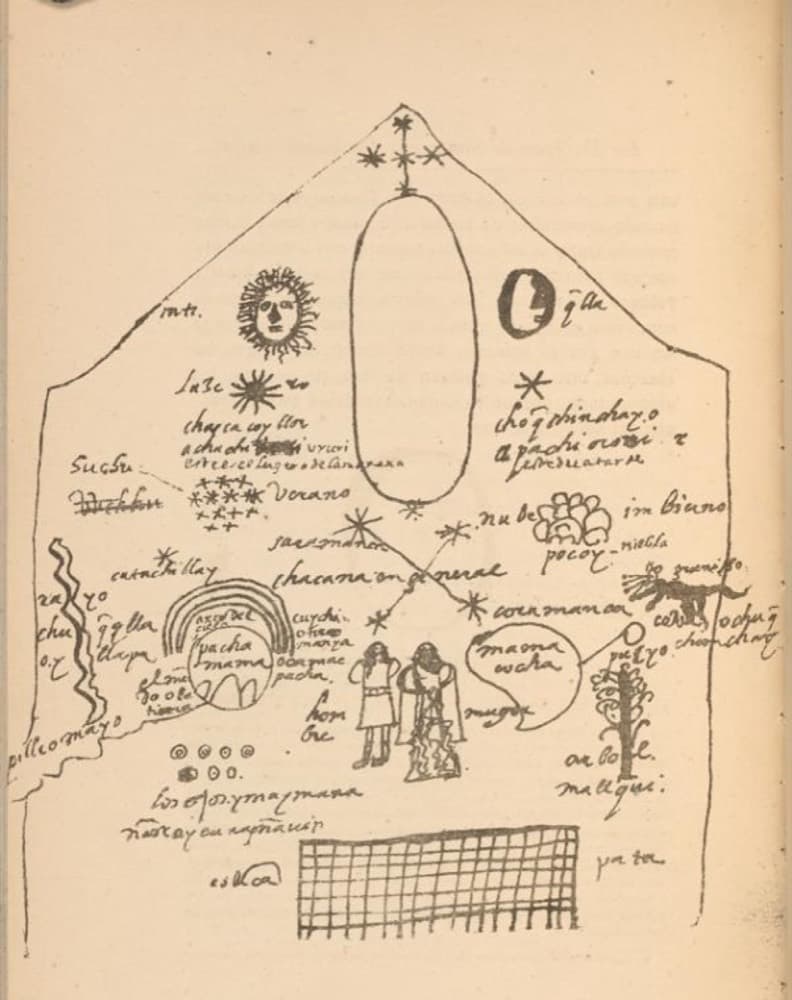
The creation stories set down by Betanzos and Molina begin in darkness: a world already made, but without light, and a first race of people who angered their maker in the gloom and were ended by flood or turned to stone. Then Viracocha set the world in order at Lake Titicaca. Standing at Tiahuanaco he called the sun up from the Titikala, the sacred rock on the Island of the Sun, and the moon and stars rose after it. Cobo adds a sequel: the moon at first shone brighter than the sun, and the sun in jealousy flung a handful of ashes in her face, dimming her light forever. With the lights in place, Viracocha carved the prototypes of the nations in stone and sent messengers across the land to call them out of caves, springs and rock.
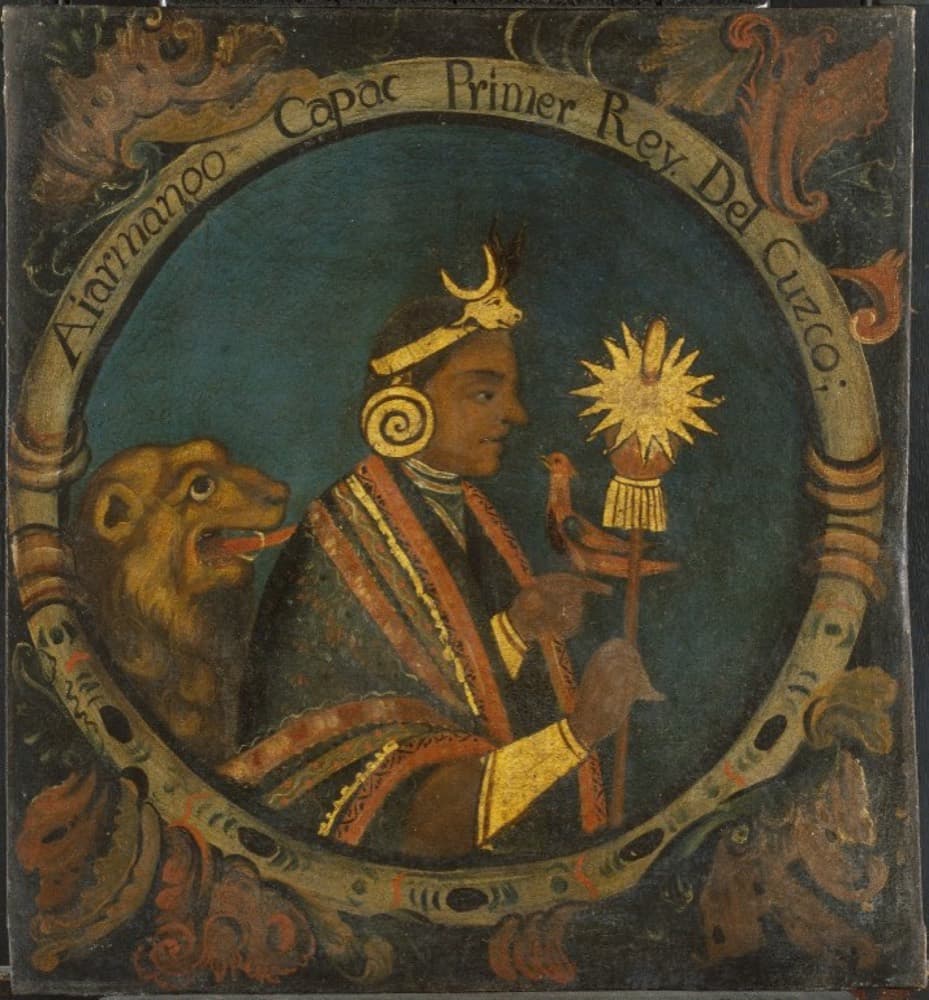
When the Incas conquered the Collao they folded this ground of creation into the imperial cult, and Tupac Inca Yupanqui built out great sanctuaries on the Islands of the Sun and the Moon. The Augustinian Ramos Gavilán records that pilgrims had to pass three gates on the island, confessing at each, before they might view the sacred rock from afar; barefoot processions came and went, with offerings flowing in from the four quarters of the empire. The dynastic legend was grafted here as well: it was from these waters that Manco Cápac set out at the Sun's command to found Cusco.
Lake Titicaca lies above 3,800 meters, the highest large navigable lake in the world. In colonial times the basilica of Copacabana rose on its shore, where the image of the Virgin carved by the indigenous sculptor Tito Yupanqui in 1583 is venerated still, and the Aymara and Quechua communities of the lake continue to make the old offerings to its waters and islands.