THE STORY & ITS AFTERLIVES
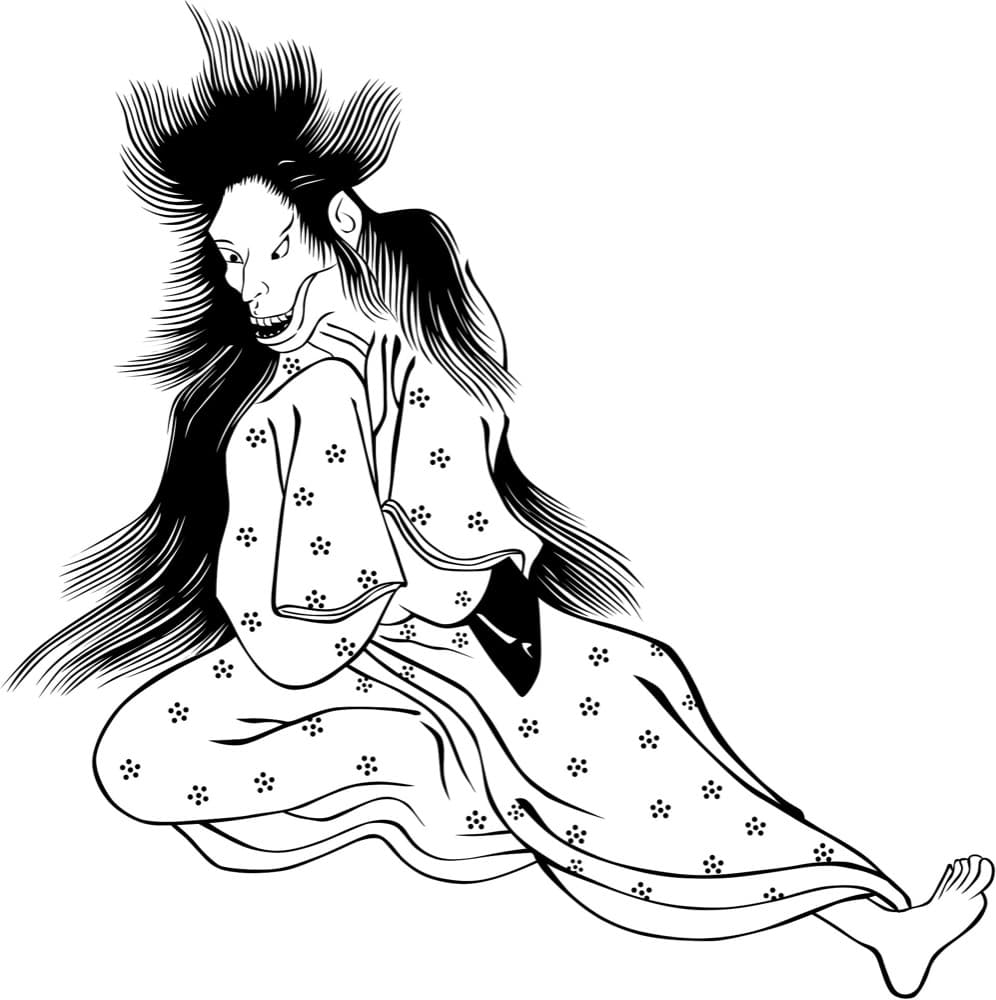
The name is the sound it makes. A woman severed at the waist propels her torso on elbows and palms, teke, teke, teke, fast enough to run down a car. In life, the story goes, she was cut in half by a train; the winter cold froze the wound and she did not die at once, dragging herself along the ballast. Now she haunts stations, footbridges, and schoolyards at dusk, and whoever meets her is scythed or sawed in two at the waist and joins her kind. Many versions close with a chain-letter clause: now that you have heard this, she will come within three days.
The figure passed by word of mouth among elementary schoolers in the 1980s and hardened into canon during the 1990s school-kaidan publishing boom. Hokkaido is often named as the legend's home ground, as it is for the closely related Kashima-san, sometimes given the full name Kashima Reiko: she telephones at night or appears at the bedside to ask, 'Where are my legs?' The wrong answer kills; the right one is 'On the Meishin Expressway,' and to the follow-up 'How do you know?' one must answer, 'Kashima-san told me.' This call-and-response grammar runs through the kuchisake-onna's questions and the summoning rituals of school lore alike.
Shiraishi Koji's two Teketeke films appeared in 2009. No documented lineage connects her to older half-bodied ghosts of the snow country or the vengeful women of the noh stage; she is a new creature, grown in the postwar landscape of railways and station platforms.