THE STORY & ITS AFTERLIVES
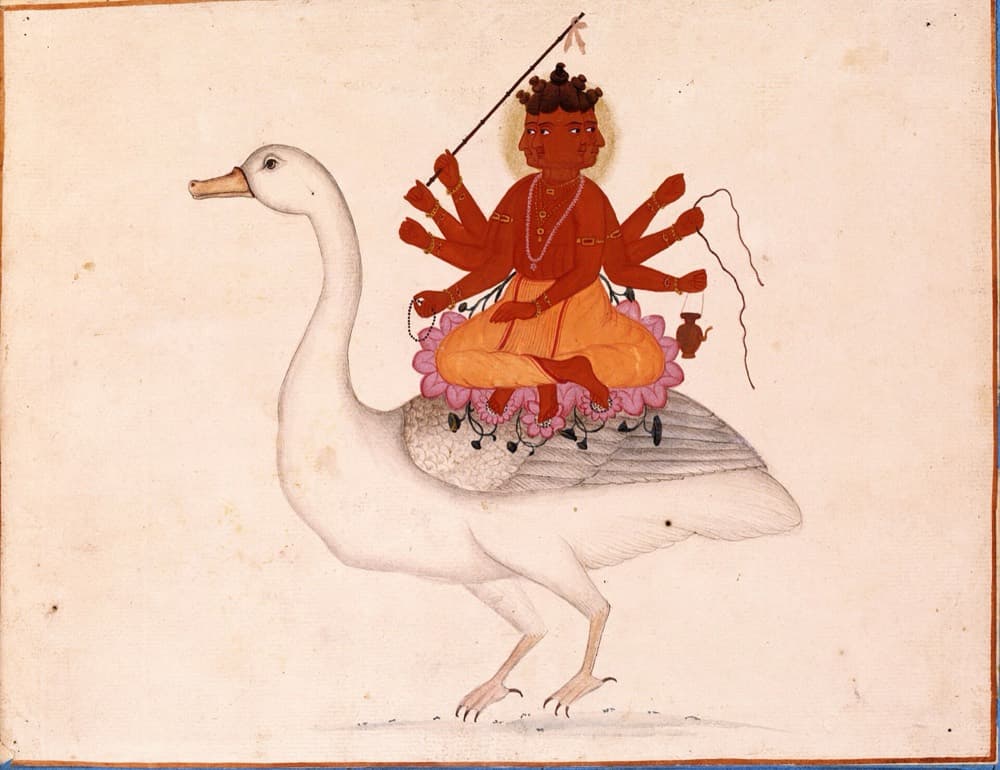
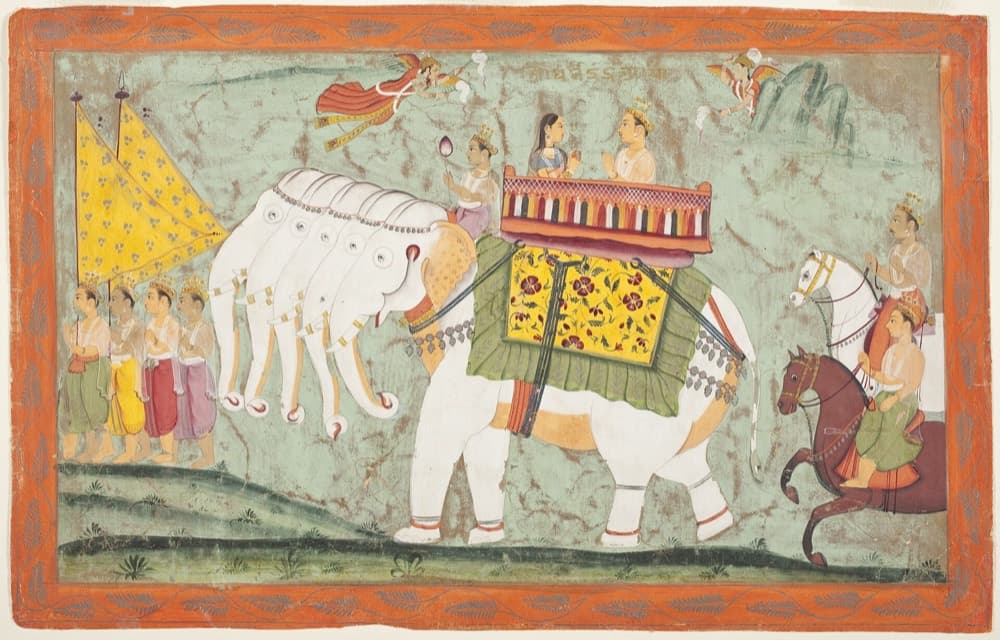
In the cosmology of the Puranas, Mount Meru stands at the exact centre of the world: a mountain of solid gold, 84,000 yojanas high with 16,000 more sunk beneath the earth, wider at the summit than at the base, like a mountain set upside down. It is the axis of the universe—sun, moon and stars wheel around it, Brahma's golden city crowns its peak, and the cities of Indra and the other guardians of the directions ring it on eight sides. The continents spread around it like petals, with Jambudvipa, the land of men, to the south; the celestial Ganges falls first upon its summit before dividing to water the world.
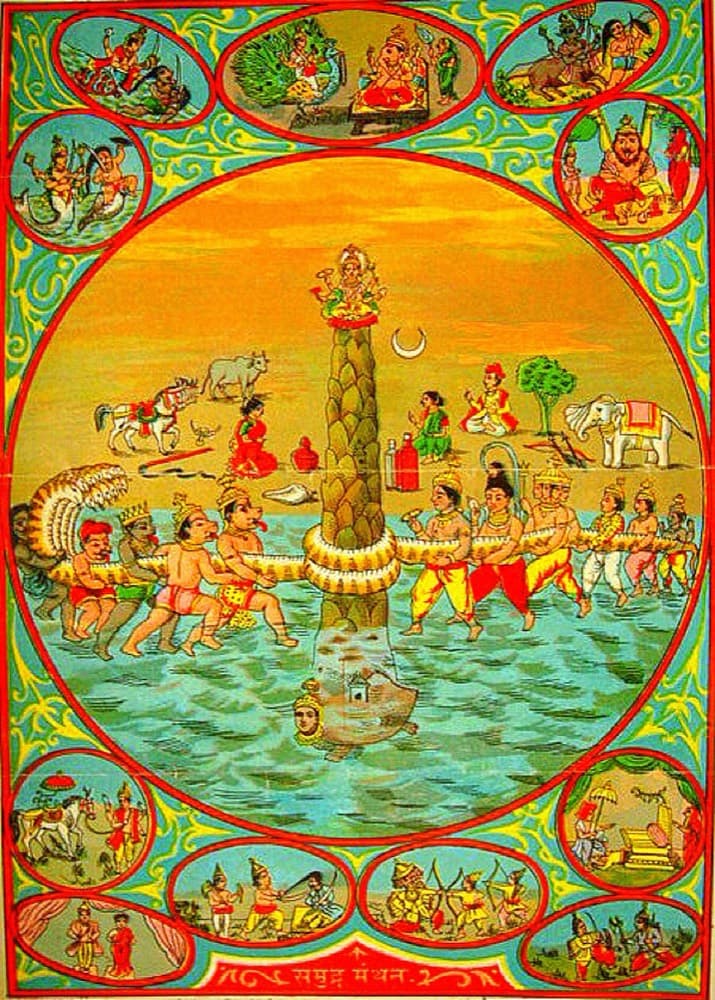
Meru recurs throughout the myths: it is the assembly ground of the gods—at the opening of the Mahabharata they gather on its summit to plan the churning of the ocean—and in the epic's final book the Pandavas walk toward Meru on their last journey to heaven. One distinction matters: the churning rod of the ocean of milk was Mount Mandara, not Meru itself. Later tradition often points to Mount Kailash as Meru's earthly counterpart.
Buddhism and Jainism inherited this central-mountain cosmology whole: in Chinese Buddhist texts it is Xumi Shan, Sumeru, with the Four Heavenly Kings dwelling on its slopes and Indra's heaven of the Thirty-three at its peak. It also froze into architecture—Borobudur in Java, the five towers of Angkor Wat, the shikhara spire above every Hindu sanctum are all miniatures of Meru, as are the tiered roofs of Burmese and Thai royal halls.