THE STORY & ITS AFTERLIVES
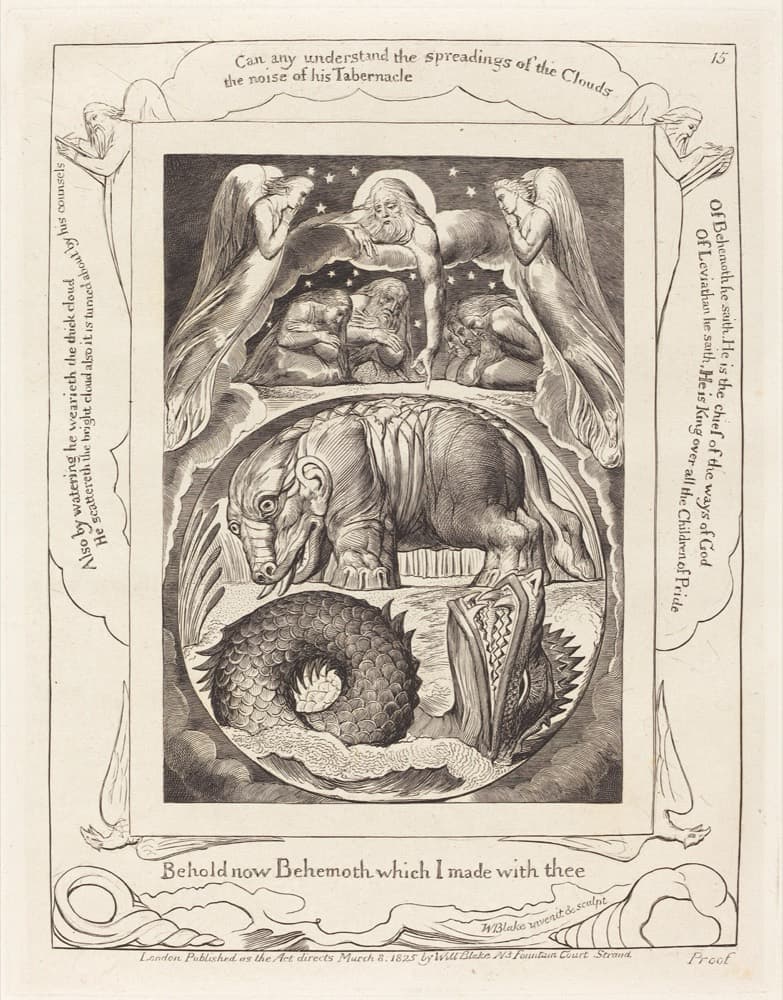
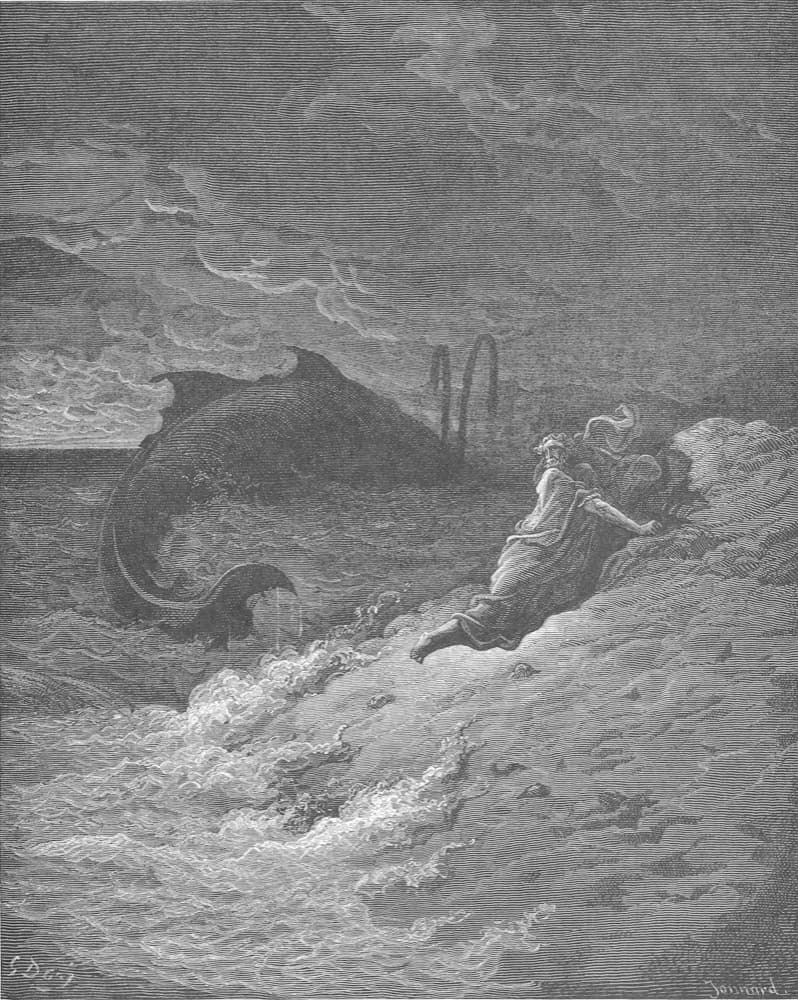
Leviathan is the great sea monster of the Hebrew Bible. Job 41 devotes an entire chapter to it: rows of scales locked so tightly that no air passes between them, firebrands streaming from its mouth, smoke pouring from its nostrils as from a boiling pot. Sword, spear, and javelin cannot touch it; it treats iron as straw and bronze as rotten wood, and leaves a wake of churning white water behind it. The chapter is framed as God's question to Job — can you draw out Leviathan with a fishhook? — a statement of the limits of human power before creation.
The figure descends from older Canaanite myth. Ugaritic tablets of the fourteenth to thirteenth century BCE describe Baal's defeat of Lotan, a seven-headed sea serpent whose name is cognate with Leviathan. Psalm 74 recalls God crushing the heads of Leviathan at the beginning of time, while Isaiah 27:1 defers the final battle to the last day, when the Lord with his hard, great sword will punish 'Leviathan the fleeing serpent, Leviathan the twisting serpent.' Rabbinic tradition adds that God made a male and a female; the female was slain and salted away, to be served to the righteous at the banquet of the world to come (Babylonian Talmud, Bava Batra 74b-75a).
In 1651 Thomas Hobbes borrowed the name for his treatise on the state, and Leviathan has since served Western languages as the standing image of any overwhelming vastness.