THE STORY & ITS AFTERLIVES
The kachinas (Hopi katsina, plural katsinim) stand at the heart of Pueblo agricultural religion: a vast company of named spirits, each with its own face and office, embodying clouds, rain, crops, and the ancestors. Hopi tradition counts more than three hundred, from the long-haired rain spirit Angak'china, to the beaked guardian figures who enforce ceremonial order and frighten misbehaving children, to the comic mudhead clowns, the Koyemsi. For half the year they are said to dwell on the San Francisco Peaks near Flagstaff, Arizona, which the Hopi call Nuvatukya'ovi, "the place of snow on the very top," and for half the year they come down to the villages.
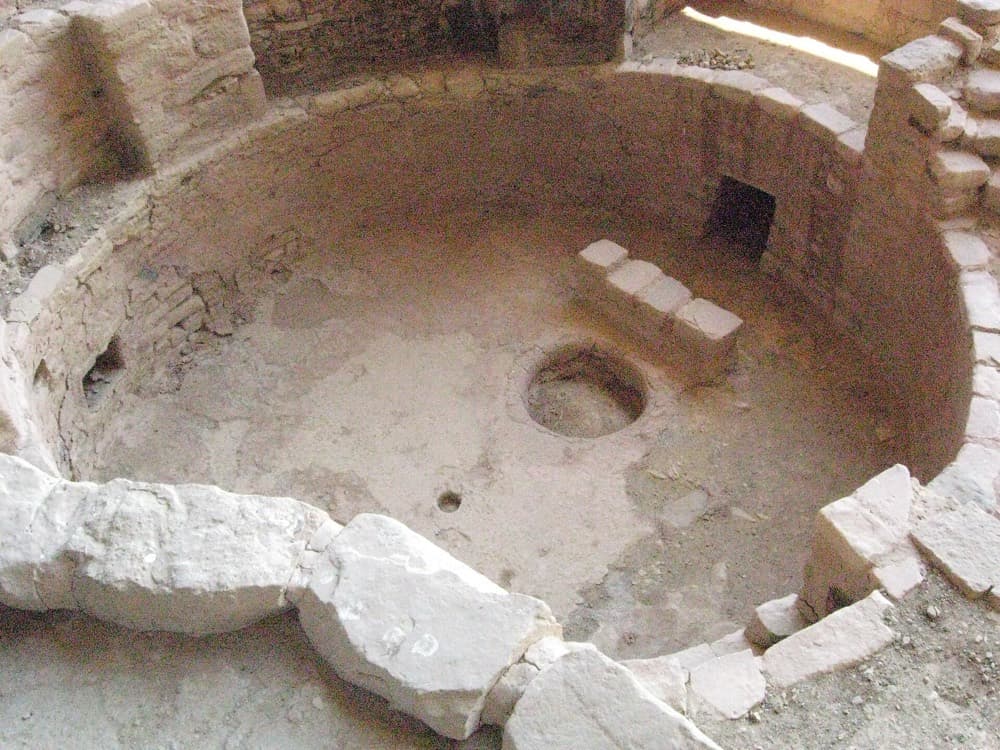
The Soyal ceremony at winter solstice opens the kachina season. For the following months, initiated men dance in the kivas and plazas wearing the masks; in Hopi understanding, in the moment the mask is donned the kachina itself is present in the dancer. At the Niman or Home Dance in July, the kachinas are thanked and sent back to the peaks. The constant petition of the ceremonies is rain, for on mesas receiving less than twelve inches a year, corn grows by the favor of these cloud relatives.
Between dances the kachinas give girls carved cottonwood-root figures of the spirits, the tithu or kachina dolls, as lessons in knowing them. Museums and collectors began acquiring these carvings in the late nineteenth century, and Jesse Walter Fewkes's 1903 album of paintings by Hopi artists remains a foundational document. Kachina religion is fully alive today, and Hopi and Zuni communities strictly limit what may be shown or told of masks and ceremony.