THE STORY & ITS AFTERLIVES
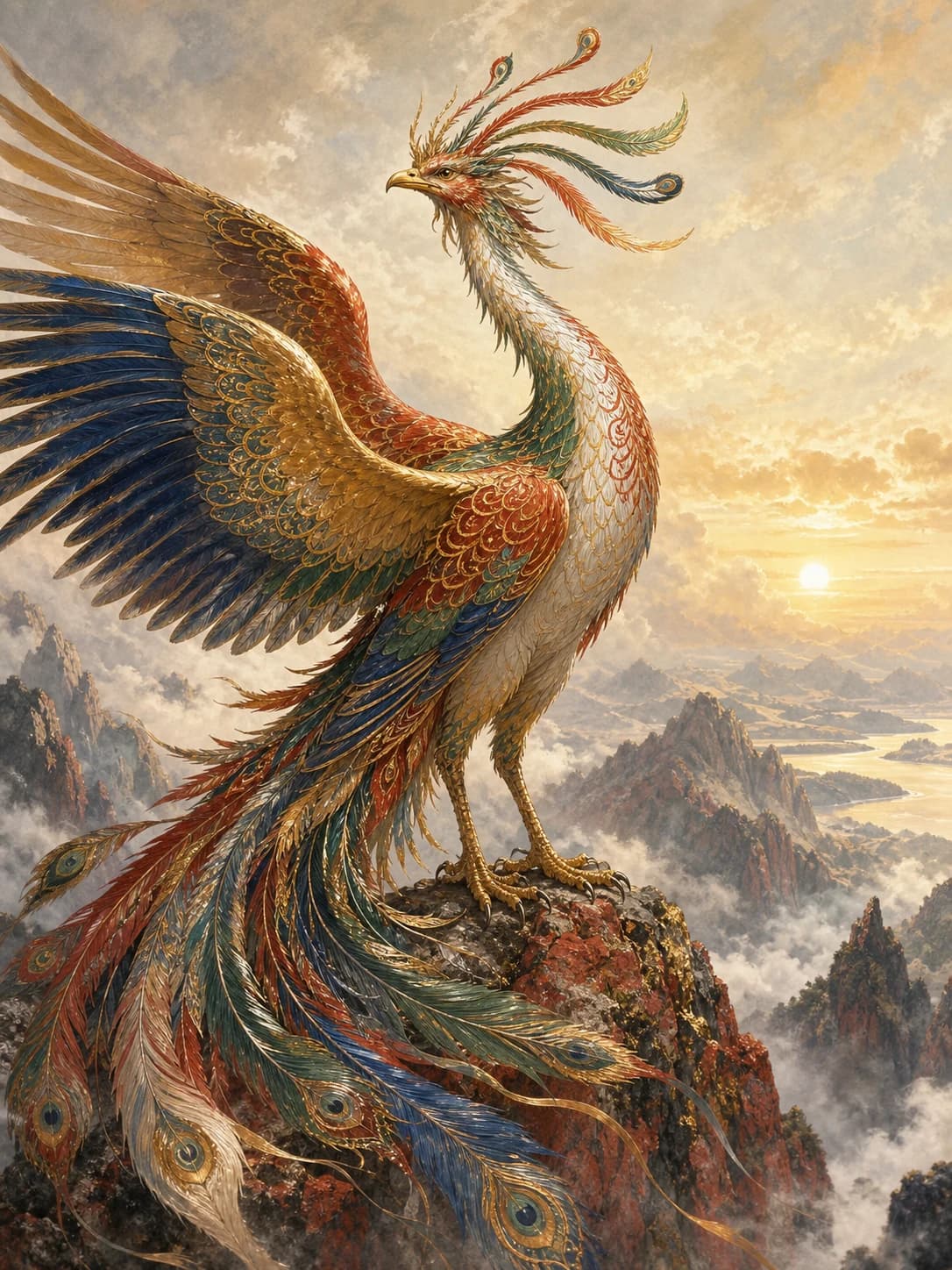
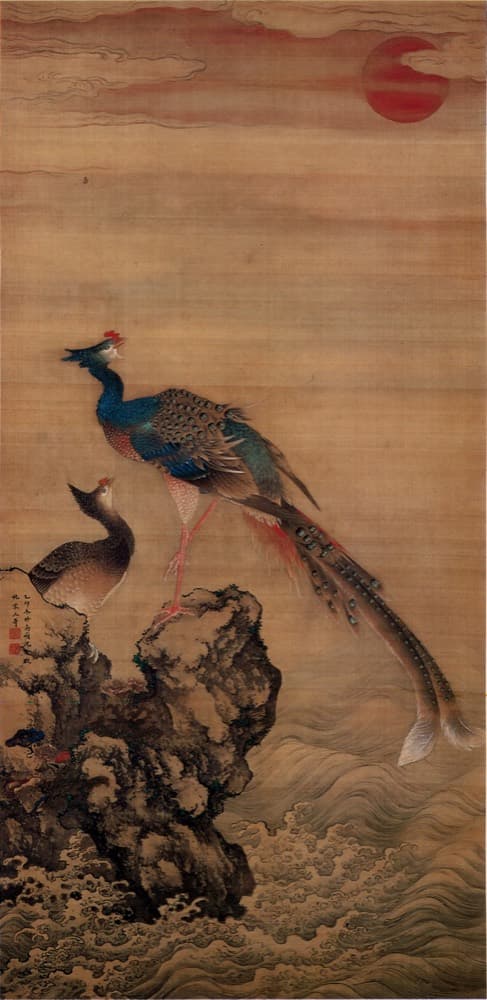
In the midst of the great wilderness stands a mountain called Heaven's Cabinet of the North Pole, into which the sea pours from the north. On it lives a god with nine heads, every face human, set on the body of a bird: Jiufeng, the Nine-Phoenix. It shares the mountain with Qiangliang, a tiger-headed serpent-handler. The classic mentions Jiufeng only here, and no other pre-Han text names it at all.
Nine is the number of fullness, and the feng the highest of divine birds. Yuan Ke's critical commentary, among others, notes the strong Chu flavor of the Great Wilderness chapters: the people of Chu revered the phoenix and favored nines — their poetry runs to Nine Songs and Nine Declarations — so Jiufeng is best read as a god born of Chu phoenix worship, its nine human faces a mark of divinity.
When the god vanished, a nine-headed bird returned as an omen of evil. The Xuanzhongji and Duan Chengshi's Youyang Zazu describe the guiche or 'demon cart' bird: nine-headed, one neck bitten off by a dog and forever dripping blood; misfortune fell on any house the drops touched, so people doused their lamps and twisted their dogs' ears until it passed. Most scholars take this ominous creature as the fallen descendant of Jiufeng. The saying 'nine-headed bird in heaven, Hubei man on earth' keeps the bird pinned to the old lands of Chu to this day.