THE STORY & ITS AFTERLIVES
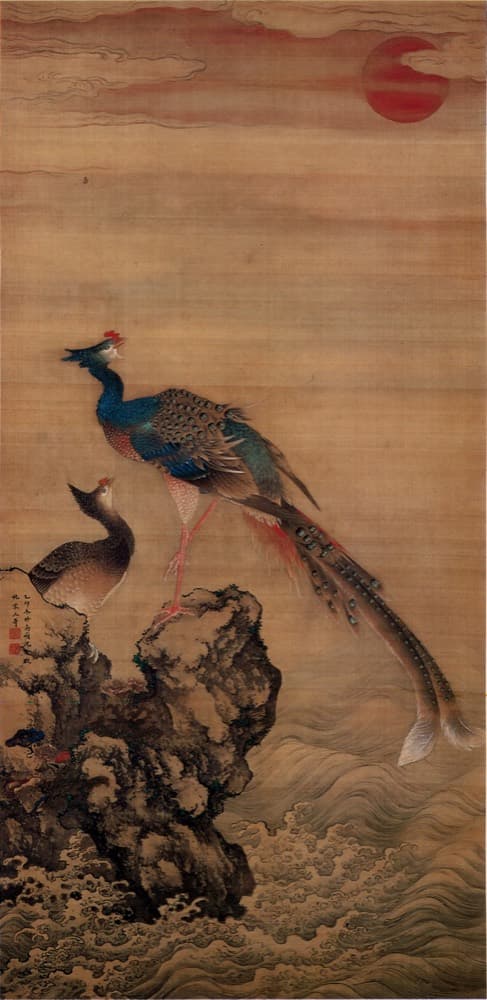
Mount Danxue is rich in gold and jade, and the Dan River flows south from it. Here the Classic of the Southern Mountains sets its most celebrated bird: shaped like a fowl, feathered in five colors, its markings forming written characters — 'virtue' on the head, 'duty' on the wings, 'ritual' on the back, 'benevolence' on the breast, 'trust' on the belly. It feeds itself without being fed, sings of itself, dances of itself, and when it is seen, all under heaven is at peace.
This is among the fullest early descriptions of the fenghuang in any transmitted text. The graph 'feng' already appears on Shang oracle bones, often borrowed to write 'wind', and the Book of Songs sings of the fenghuang crying on the high ridge while the wutong tree grows in the morning sun. What the Southern Mountains adds is a place in the book's system of portents: where most of its creatures forebode drought, flood, forced labor, or war, the fenghuang is one of the very few signs of good — the exact counterweight to the drought-bird Yong later in the same volume.
Later ages lifted the phoenix out of this naturalist's ledger and paired it with the dragon as emblem of empresses; a hundred birds pay it court in painting and embroidery. But the conceit of virtues written in plumage always leads back to this passage on Mount Danxue.