THE STORY & ITS AFTERLIVES
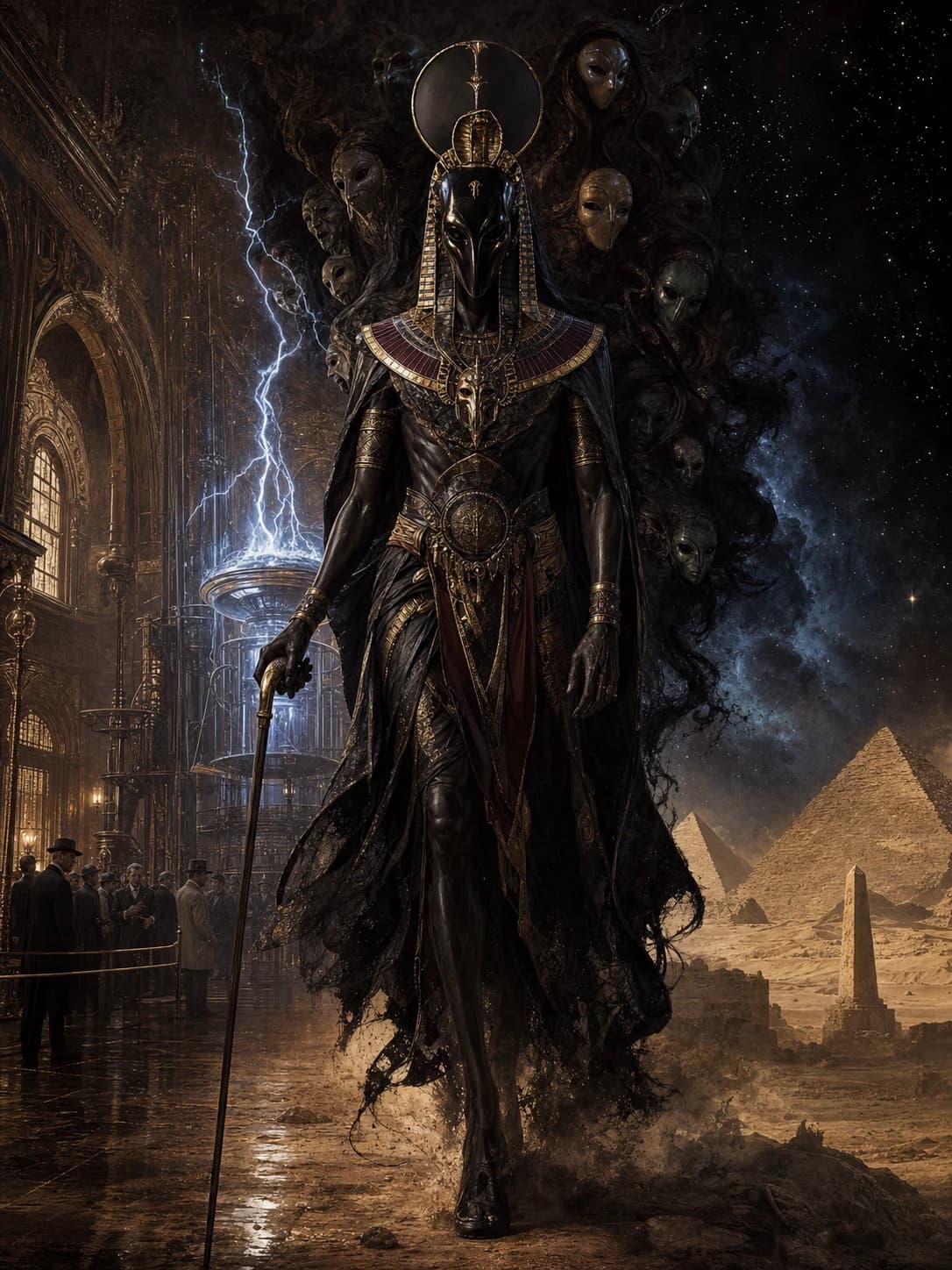
Hastur did not begin as a yellow-robed deity within the Cthulhu Mythos. Ambrose Bierce used the name in the 1890s for a benevolent god of shepherds. Robert W. Chambers then placed Hastur among Carcosa, Aldebaran, the Yellow Sign, and a play that destroys its readers, leaving uncertain whether the word names a place, person, or force. Lovecraft borrowed this vocabulary in “The Whisperer in Darkness” but only as part of a mysterious catalogue.
August Derleth later assigned Hastur a definite mythos position, elemental alignment, and relationship to other powers. Board games and roleplaying traditions further shaped the King in Yellow as an avatar or identical being. The familiar Hastur is therefore a temple assembled by many hands rather than a design completed by one author. Its fascination lies precisely in migration. A name crosses four writers and several media, shedding old meanings and gathering new shadows until it resembles a genuinely transmitted forbidden god more closely than any tidy, singular canon could.