THE STORY & ITS AFTERLIVES
Enlil, 'Lord Wind,' god of air and earth, was the effective head of the Sumerian pantheon. The sky god An outranked him in theory, but it was Enlil who issued decrees and held the Tablet of Destinies; Mesopotamian texts use 'Enlilship' as a byword for supreme divine authority. His holy city was Nippur, his temple the Ekur, 'Mountain House.' Nippur never ruled an empire, yet it was the religious center of Sumer, and kings who claimed lordship over the land sought Enlil's sanction there.
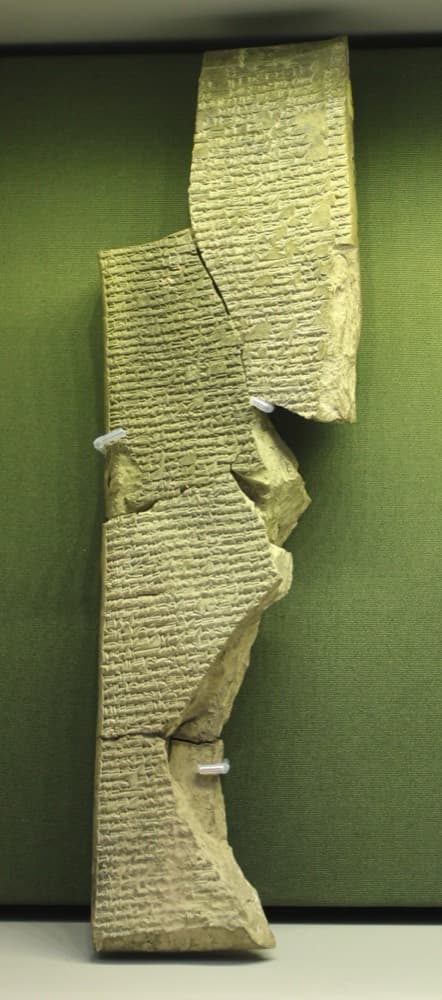
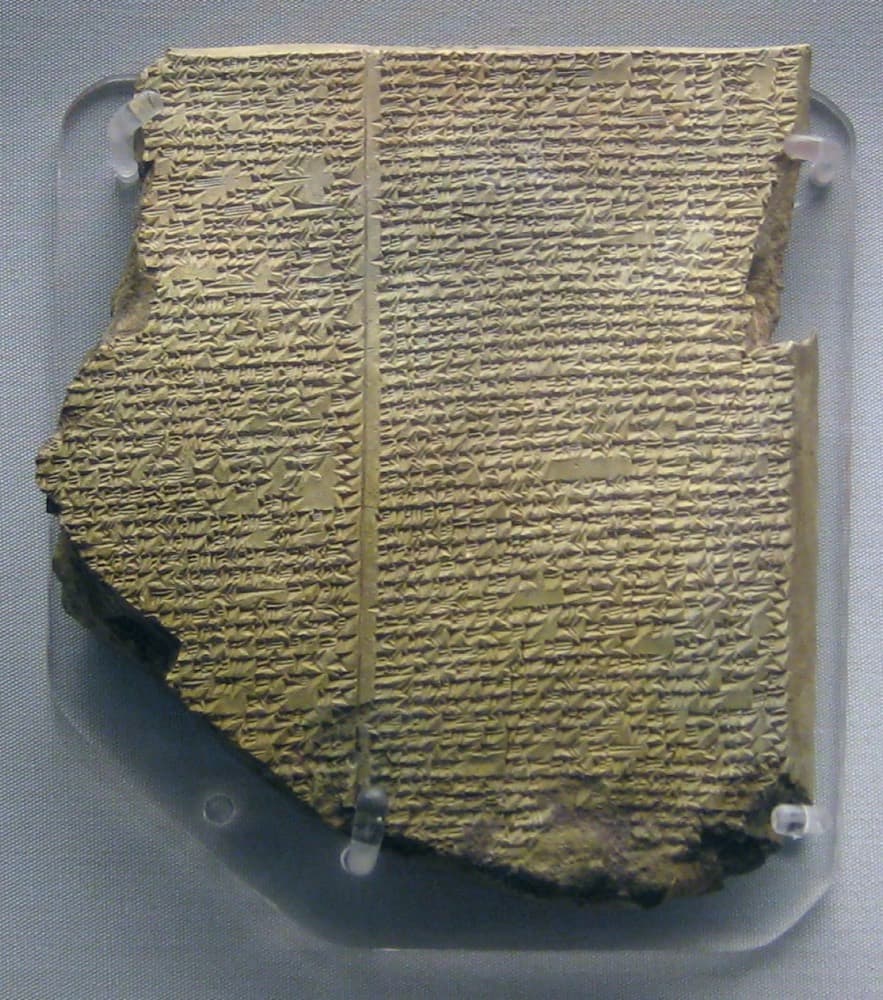
The Sumerian Song of the Hoe has him split the junction of heaven and earth with his pickaxe so that humans could sprout from the soil. In Enlil and Ninlil he forces himself on the young goddess Ninlil by the canal at Nippur and is banished to the netherworld by the assembly of the gods; Ninlil follows him, pregnant with the moon god Nanna, and along the way conceives three infernal deities. His majesty always carried a destructive edge: in the Atrahasis epic the din of multiplying humanity robs him of sleep, and after plague, drought, and famine fail he unleashes the Flood, settling afterward with Enki on infant mortality and barrenness as permanent checks on human numbers.
From the later second millennium BCE his rank passed to Marduk of Babylon and to Ashur, the Assyrian state god — Assyrian copies of Enuma Elish simply substitute Ashur as hero. The Ekur precinct at Nippur, dug repeatedly since the 1890s by the University of Pennsylvania and others, has yielded tens of thousands of tablets, the single richest source of Sumerian literature.