THE STORY & ITS AFTERLIVES
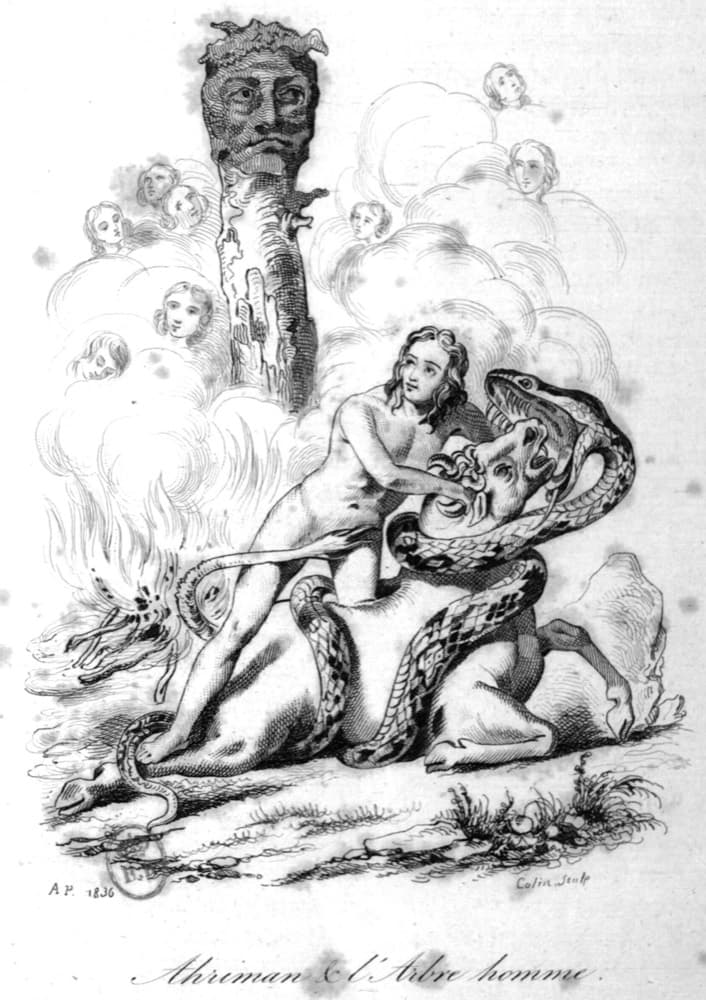
The div is the ogre-demon of Persian legend. The word descends from Avestan daeva, cognate with the Vedic deva — old gods demoted wholesale to evil spirits in Zarathustra's reform; the Vendidad, the "law against the demons," is one long manual of purities for keeping them at bay. Over the centuries they hardened in New Persian literature and folktale into concrete monsters: tower-tall, rough-hided, horned and tusked, sometimes bull- or boar-headed, hurling stones like rain, versed in sorcery, able to walk unseen, and laired in mountain caves.
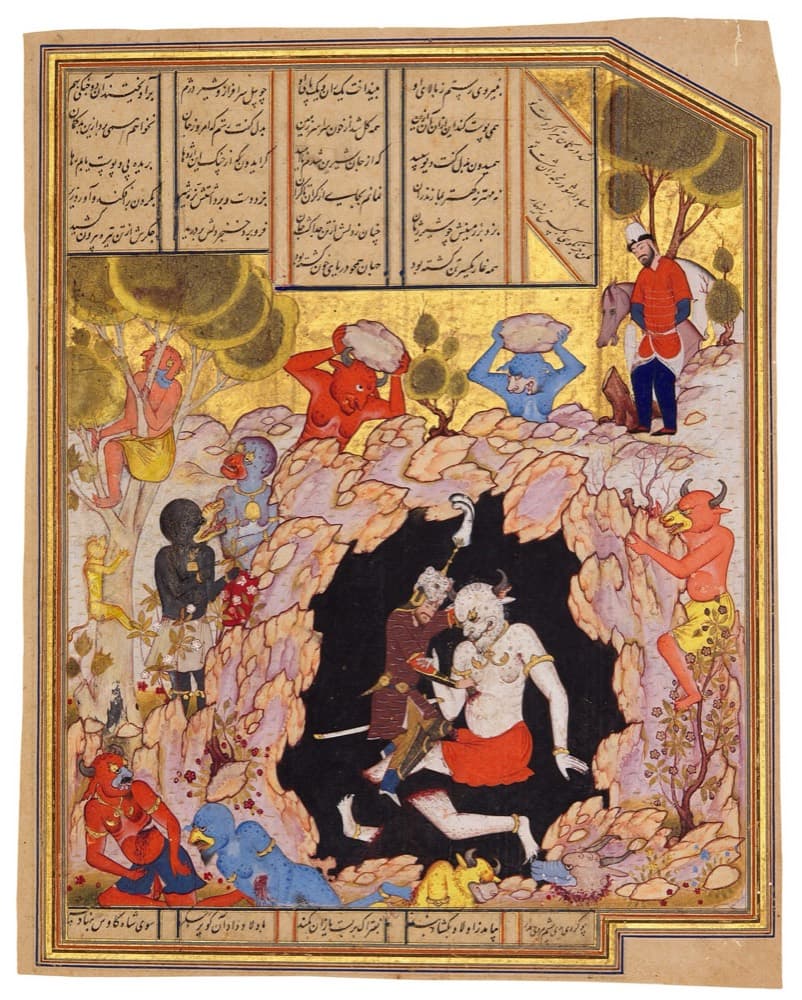
The Shahnameh gave the divs their most famous stage. The primeval king Tahmuras, called the Binder of Demons, spared the divs he had conquered in exchange for the arts of writing in thirty scripts — Persian legend thus owes its letters to demons. Mazandaran, south of the Caspian, is their kingdom: when King Kay Kavus invaded it, the White Div (Div-e Sepid) raised a black cloud of sorcery that blinded the whole Persian army and threw the king into a cavern. Rostam rode the Seven Trials to the rescue, slaying the div captain Arzhang on the way, and at last wrestled the White Div in its cave, tore it apart, and restored the army's sight with the blood of its liver. That cave duel became one of the favorite scenes of Persian miniature painting, the White Div rendered with goat's beard and leopard-spotted hide in manuscript after manuscript. In modern Persian, div remains the ordinary word for the giant of fairy tales.