THE STORY & ITS AFTERLIVES
The Dagda is the father-figure of the Tuatha De Danann, the god-race of Ireland. His name, 'In Dagda', means 'the good god' in the sense of being good at everything. Medieval texts draw him with deliberate coarseness: a cloak too short to cover his backside, and a club so huge it took eight men to carry, killing with one end and restoring life with the other. His cauldron, one of the four treasures of the Tuatha De Danann, sent no company away unsatisfied; his oak harp called the seasons into their proper order and played the three strains of weeping, laughter, and sleep.
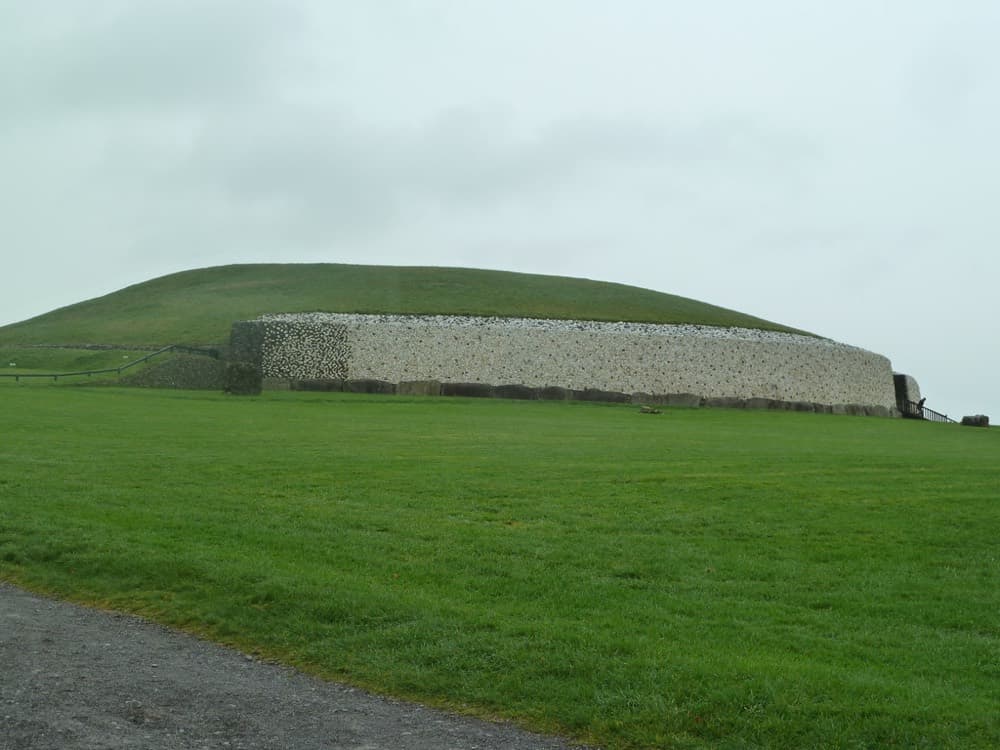
His best-known deeds appear in Cath Maige Tuired, the Second Battle of Mag Tuired. Before the fight against the Fomoire, at Samhain, he met the war goddess known as the Morrigan at the river Unius and coupled with her, winning her aid for the coming battle. Sent to parley in the enemy camp, he was forced to eat a pit of porridge brewed from fourscore gallons of new milk with meal and fat in like measure, whole goats, sheep and swine boiled in, a humiliation he survived with his mission intact. After the gods withdrew into the hollow hills, the Dagda assigned each his dwelling and kept Bru na Boinne, the great mound at the bend of the Boyne, for himself, until his son Oengus talked him out of it with a riddle about 'a day and a night' meaning all time.
He also bears the bynames Eochaid Ollathair, 'horseman, great father', and Ruad Rofhessa, 'lord of great knowledge'. The joining of gross appetite and limitless power in one body is characteristic of how Irish tradition lets its greatest gods be both august and absurd.