THE STORY & ITS AFTERLIVES
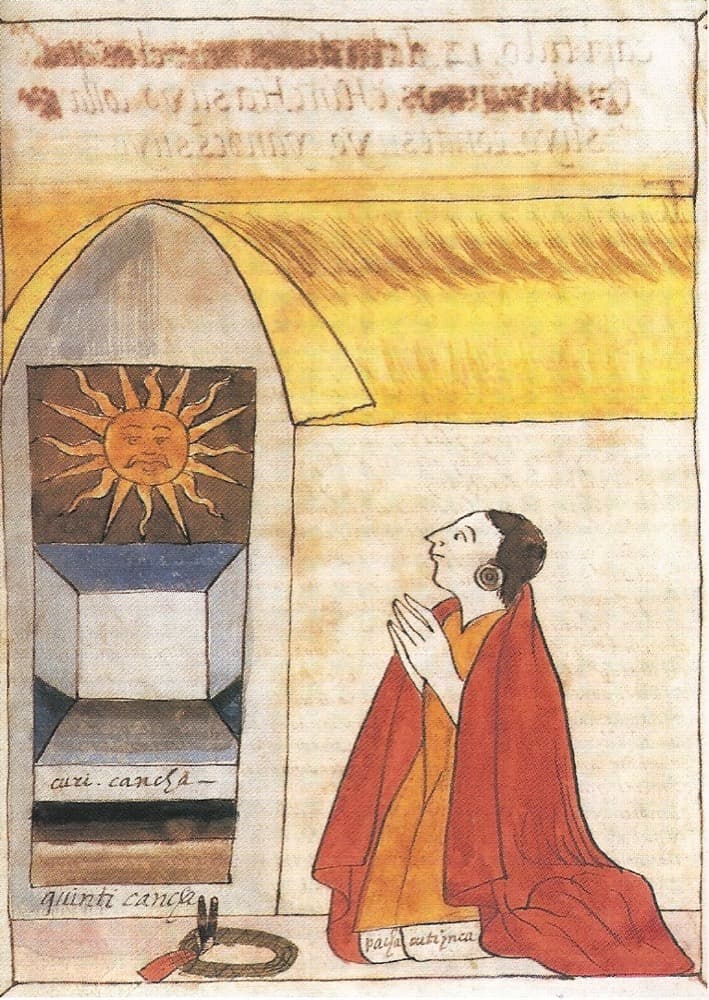
Coricancha, the Golden Enclosure, stood on a terrace above the meeting of Cusco's two rivers, the holiest building in the empire and the summit of Inca stonework: megaliths ground to so exact a fit, without mortar, that a blade will not enter the joints, the curved western wall the most celebrated of all. The principal hall belonged to the Sun, its walls sheeted in gold beneath a running band of gold; flanking chambers served the Moon — hers plated in silver — the stars, the thunder and the rainbow. Garcilaso describes the marvel of its garden, where maize stalks, llamas and herdsmen wrought in solid gold stood among the real ones.
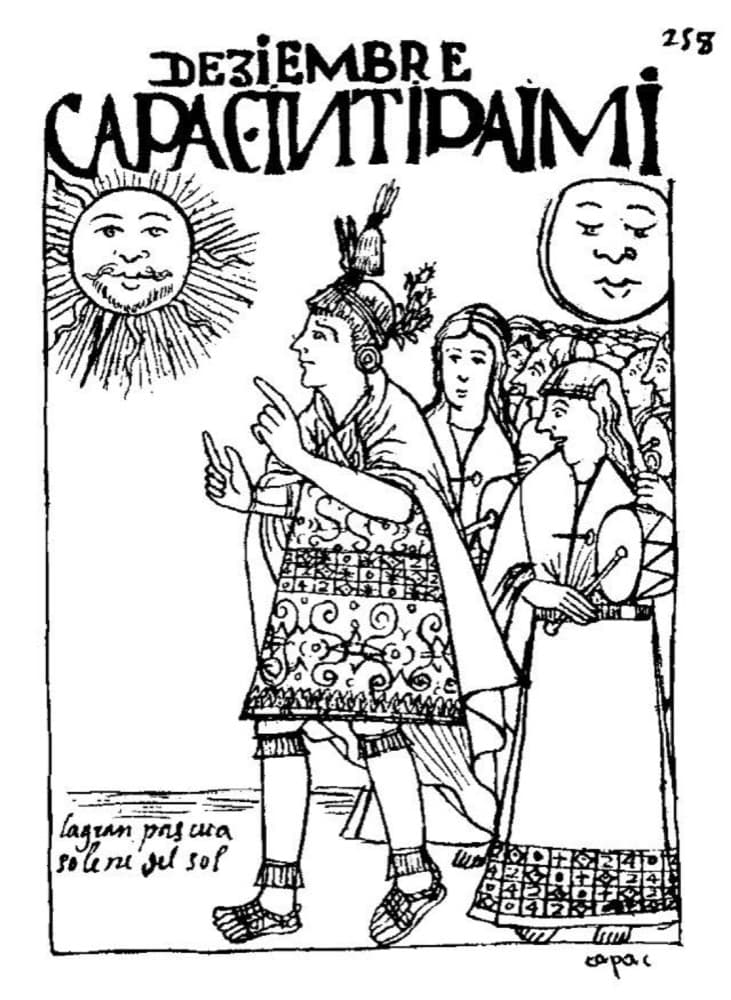
It was also the origin point of the empire's sacred geography. By Cobo's account, more than forty sightlines called ceques radiated from Coricancha, stringing over three hundred shrines around Cusco into a single network, each line in the care of a particular kin group. The embalmed bodies of dead Inca kings were carried into the temple to attend the Sun at the great festivals, and the golden sun image Punchao was enshrined within.
In 1533 Atahualpa's ransom reached the temple, and by the early accounts the Spaniards pried some seven hundred plates of gold from its walls. After the conquest the Dominicans raised the priory of Santo Domingo on the Inca foundations. The earthquakes of 1650 and 1950 both wrecked the colonial church, while the Inca walls did not shift. At Coricancha today the lower courses are still the original chambers of dressed stone, with a baroque bell tower and cloister standing on top — two worlds pressed onto one foundation.