THE STORY & ITS AFTERLIVES
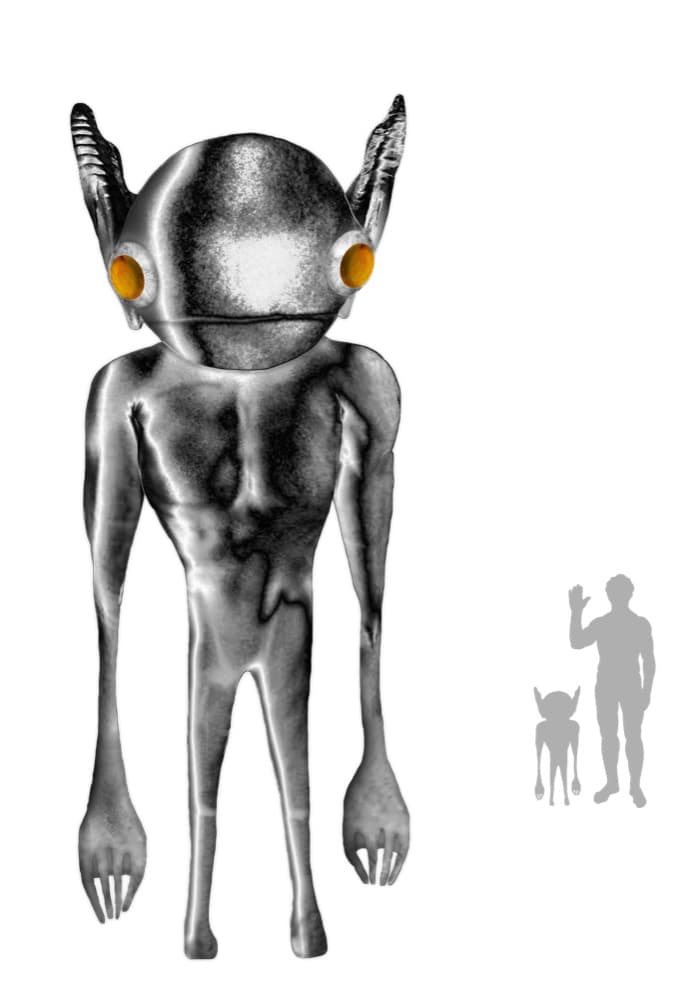
The legend began in Puerto Rico in March 1995, when goats, chickens, and rabbits were found dead with small puncture wounds, their owners insisting the blood had been drained. In August, Madelyne Tolentino of Canovanas described an upright creature about four feet tall with gray skin, large slanted eyes, and a row of spines down its back. Comedian Silverio Perez jokingly dubbed it the chupacabras — "goat-sucker" — and the name stuck. Puerto Rican media ran story after story, and sightings soon spread to Mexico, Central America, and Spanish-speaking communities across the United States.
In the new century the creature's image mutated. In Texas and northern Mexico, "chupacabra" increasingly meant a hairless four-legged animal — blue-gray skinned, fanged, dog-like — that ranchers shot or photographed. DNA tests identified nearly every specimen as a coyote, feral dog, or hybrid with severe mange, whose naked skin gave the legend its second body.
Skeptical investigator Benjamin Radford, in Tracking the Chupacabra (2011), made two famous points: Tolentino acknowledged having recently seen the 1995 science-fiction film Species, whose creature Sil closely matches her description, and necropsies of "drained" livestock generally found normal blood volume, the punctures matching canine teeth. None of this has slowed the goat-sucker, now the most vigorous modern monster of Latin America and the borderlands, appearing everywhere from The X-Files to children's cartoons.