THE STORY & ITS AFTERLIVES
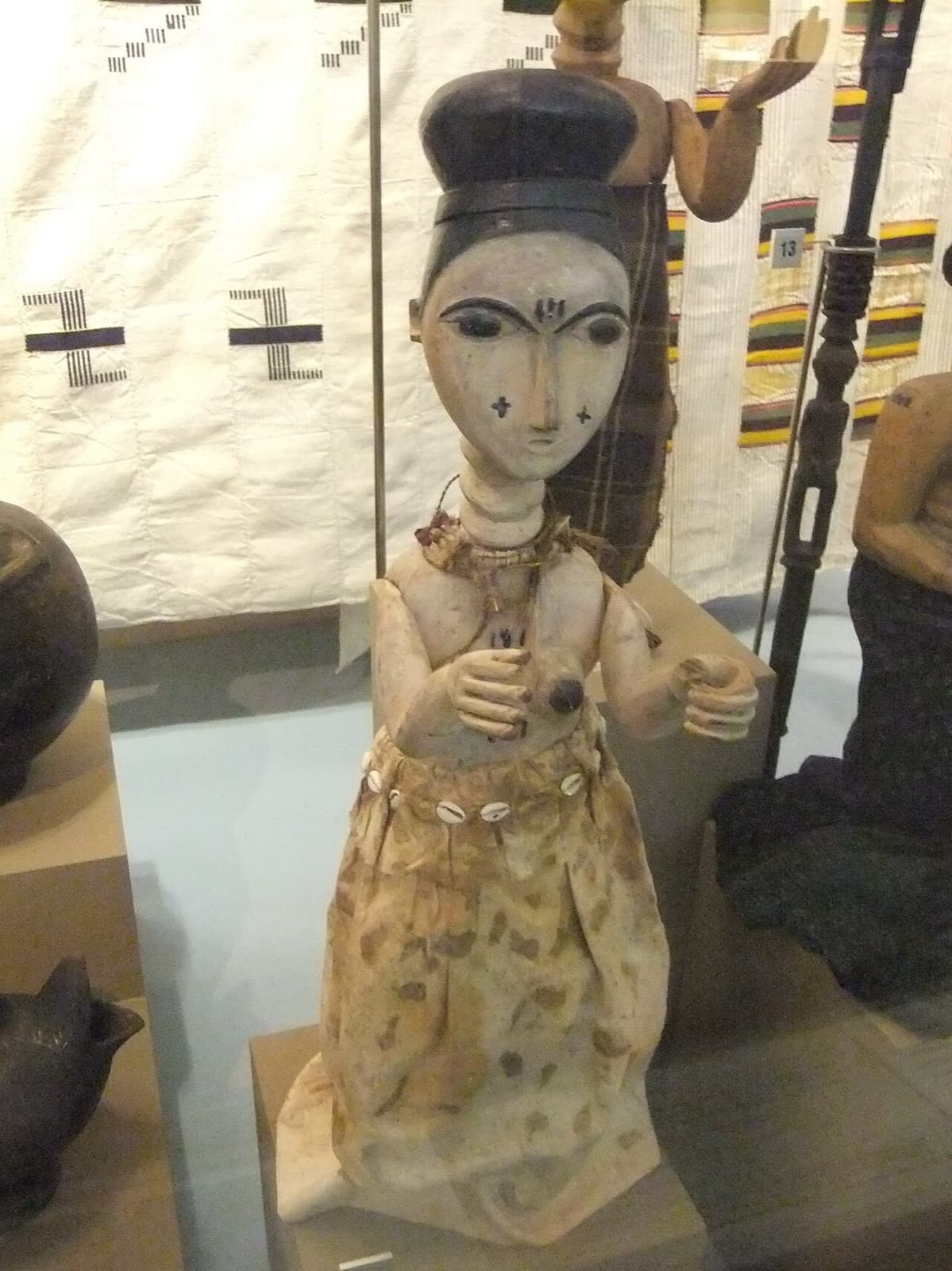
A woman named Akua could not conceive. A priest instructed her to commission a small female figure and treat it as a living infant: carry it on her back, feed and wash it, and give it beads. Neighbors mocked the wooden child as Akua’ba, “Akua’s child,” but she maintained the observance and eventually bore a healthy daughter. Others adopted the practice, and the taunt became the name of an object of prayer. The large disk-shaped head, high forehead, slender neck, and rings of flesh express Akan ideals of beauty, health, and wisdom. Female form also serves continuity in a matrilineal society.
A figure enters a particular relationship only after consecration by a priest. A petitioner carries it close to the body. After a successful birth it may be returned to the shrine in thanks or kept within the family as remembrance; related uses include protection in pregnancy, hope for health, and teaching girls to care for infants. Western collecting long reduced the works to “fertility dolls,” as though every similar carving automatically contained magic. Akua’ba power emerges from story, consecration, care, and promise acting together. Wood is treated as a child not because anyone mistakes timber for flesh, but because a prayer must first practice becoming real upon the body.