THE STORY & ITS AFTERLIVES
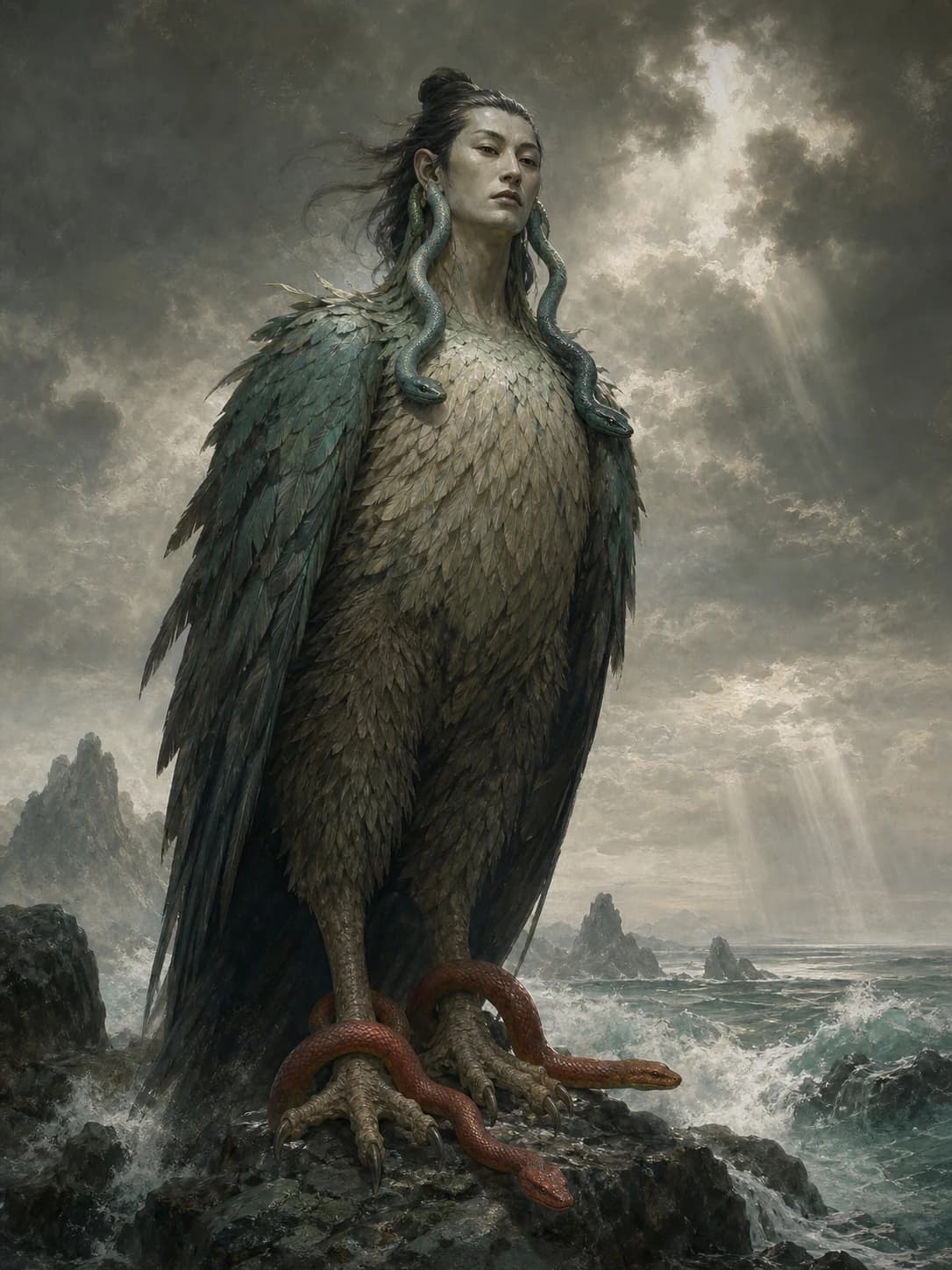
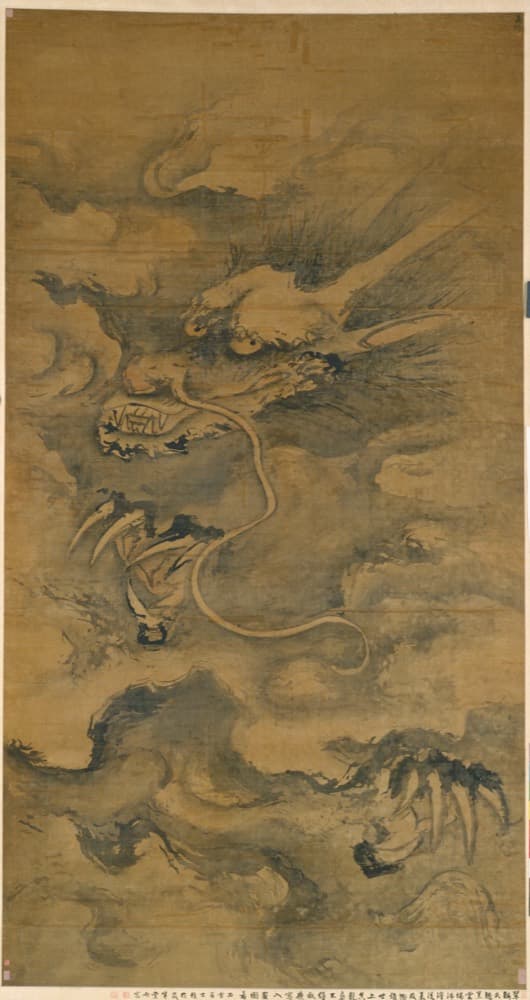
Beyond the northwest sea, north of the Red River, stands Mount Zhangwei, says the Great Wilderness: North. On it lives a god with a human face and a serpent's body, scarlet from head to tail, its eyes set as vertical slits. When it closes its eyes, the world goes dark; when it opens them, the world is day. It does not eat, sleep, or breathe, and wind and rain come to wait upon it. Because it lights the ninefold darkness it is called Zhulong, the Torch Dragon.
A parallel passage in Beyond the Seas: North calls the god of Bell Mountain Zhuyin, 'Torch Shade': sight is day and blinking is night, an inhalation makes winter and an exhalation summer; it neither drinks nor eats nor breathes, yet when it does breathe there is wind; it is a thousand li long, red, human-faced and snake-bodied, dwelling below the mountain. The two names have always been read as one god, whose eyelids and breath govern day and night, winter and summer, and the wind — the switch of time itself.
The Heavenly Questions asks: 'Where does the sun not reach? What does the Torch Dragon light?' — showing that Warring States poets already used it to explain light in sunless polar lands. The Huainanzi locates it north of Yanmen, screened from the sun by Mount Weiyu. Modern scholars have repeatedly suggested the figure distills far-northern hearsay of polar day, polar night, even the aurora; unprovable, but it keeps Zhulong among the most reread gods of the entire classic.