THE STORY & ITS AFTERLIVES
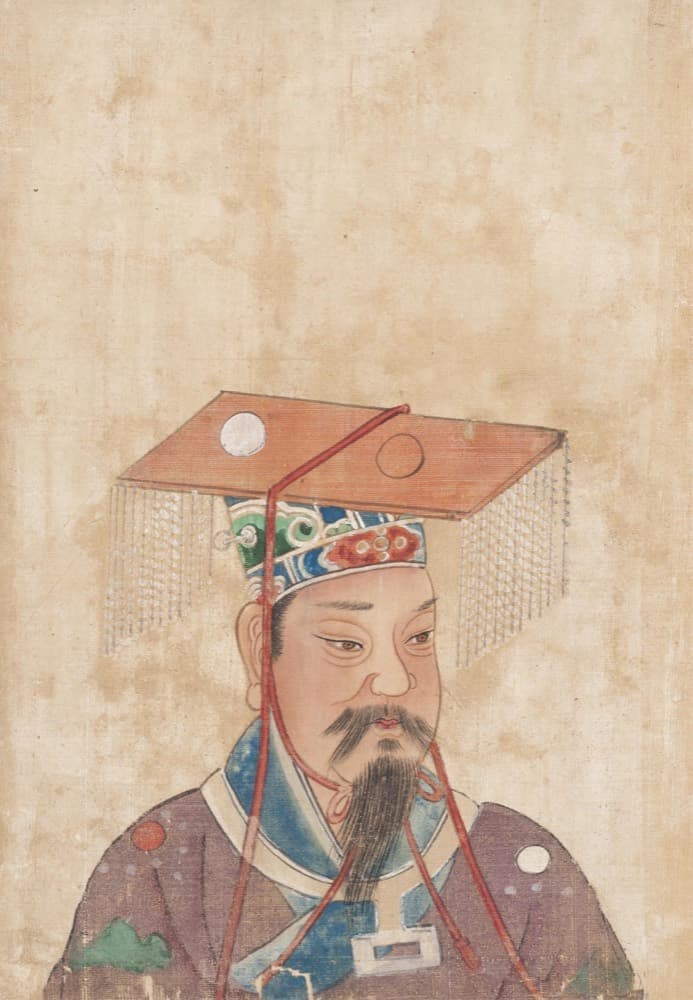
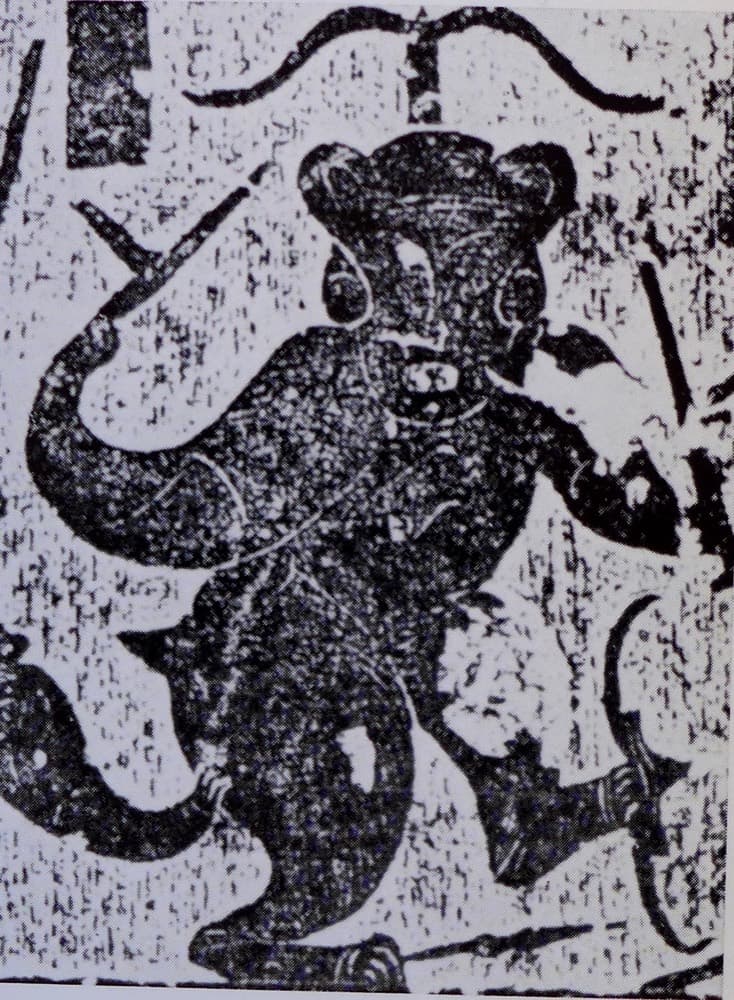
Yandi, the Flame Emperor, bears the title Shennong, the Divine Farmer. The Guoyu makes him and Huangdi both sons of the Shaodian lineage, one raised by the Jiang River and one by the Ji. Later tradition gives him an ox's head on a man's body, born with an instinct for husbandry. The 'Great Commentary' to the Book of Changes credits him with carving wood into plowshares and bending wood into handles, teaching the people to till, and instituting the midday market where goods were exchanged.
The Huainanzi preserves his most heroic labor: in remote antiquity people ate wild plants, drank untested water, and were constantly poisoned, so Shennong tasted the hundred herbs himself and sampled the springs, sweet and bitter, so that the people would know what to avoid, encountering seventy poisons in a single day. Physicians honored him as the founder of pharmacology, and China's earliest materia medica circulates under his name as the Shennong Bencao Jing. He is also said to have made the first five-stringed zither of tong wood and silk.
Defeated by Huangdi at Banquan, his confederation merged with the victor's, and the Chinese have called themselves descendants of Yan and Huang ever since. His reputed tomb at Yanling in Hunan has received sacrifices since at least the Song dynasty, and Baoji in Shaanxi, by his native Jiang River, maintains a rival temple.