THE STORY & ITS AFTERLIVES
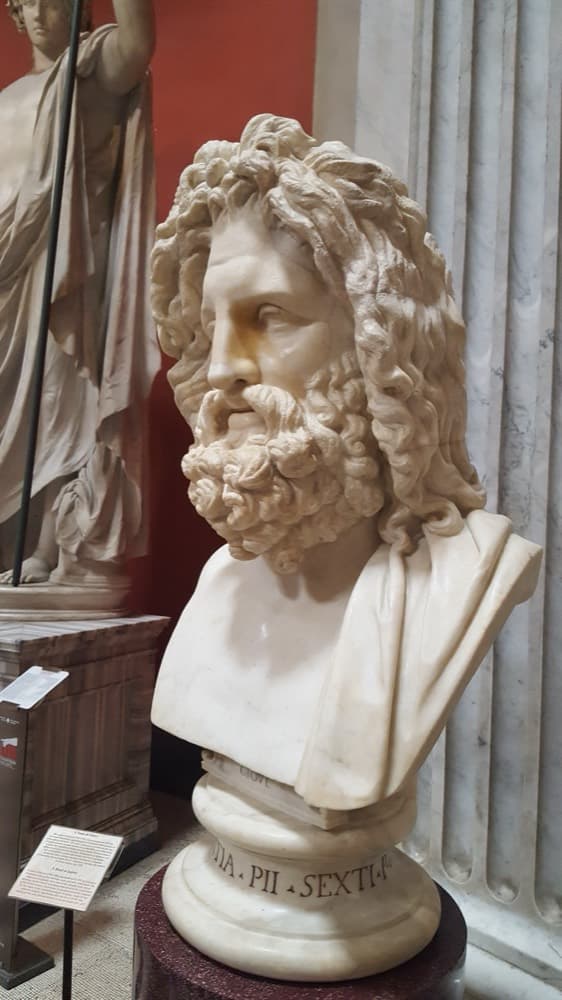
Typhon, youngest child of Gaia and Tartarus, was the deadliest enemy the gods ever faced. Hesiod describes a hundred serpent heads rising from his shoulders, fire flashing beneath their brows, and voices of every kind — now speech the gods could understand, now the bellow of a bull, the roar of a lion, the yelping of whelps, the hiss of snakes. He rose against Zeus's kingship and was beaten down by volley after volley of thunderbolts and hurled into Tartarus; Pindar and Aeschylus say instead that he lies pinned beneath Mount Etna in Sicily, whose eruptions are his stirrings and his fire.
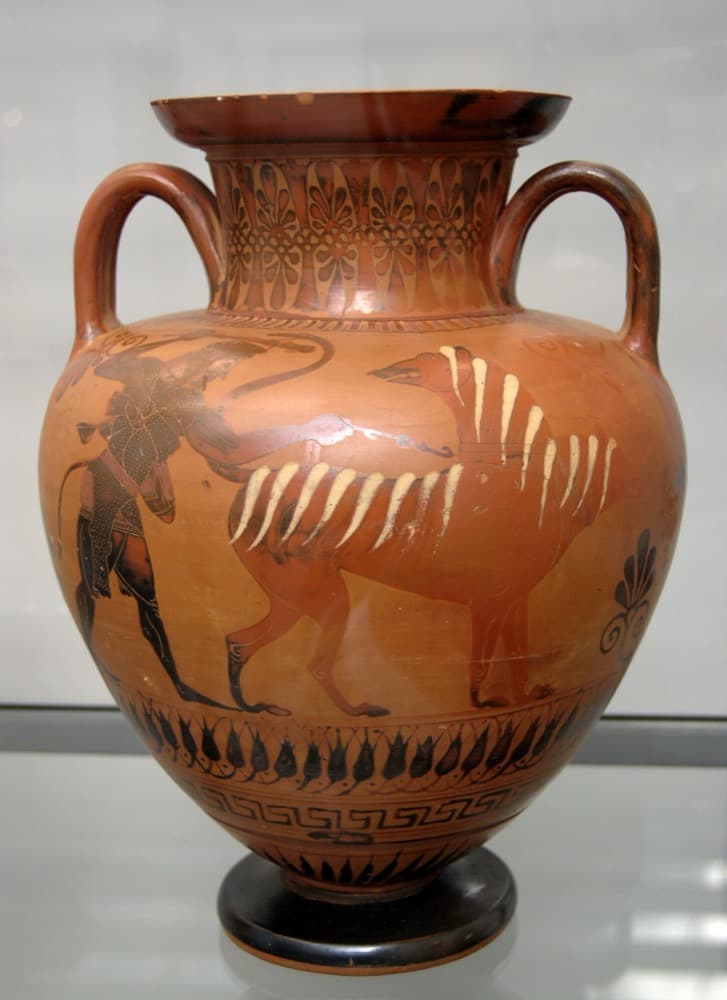
Apollodorus's Library preserves a grimmer version in which Typhon cut the sinews from Zeus's hands and feet and hid them in the Corycian cave in Cilicia, until Hermes stole them back and the god returned to win the battle. By the serpent-woman Echidna he fathered Cerberus, the Lernaean Hydra, the Chimera, and the two-headed dog Orthrus — most of the famous monsters of Greek myth belong to this brood. The word 'typhoon' has often been connected with his name.