THE STORY & ITS AFTERLIVES
In the fullest East Greenland accounts, a tupilaq was not the small figure now familiar from souvenir displays. A practitioner secretly gathered bone, hide, hair, sinew, beaks, and sometimes material associated with a grave, sewing them into a temporary body. Song, touch, and substances from the maker’s own life gave it direction. Launched where nobody could see, the being entered the water, assumed the shape of an animal or composite monster, and pursued the named enemy. Manufacture had to remain hidden because force depended on unequal knowledge: if others learned how the thing was composed, they might undo it.
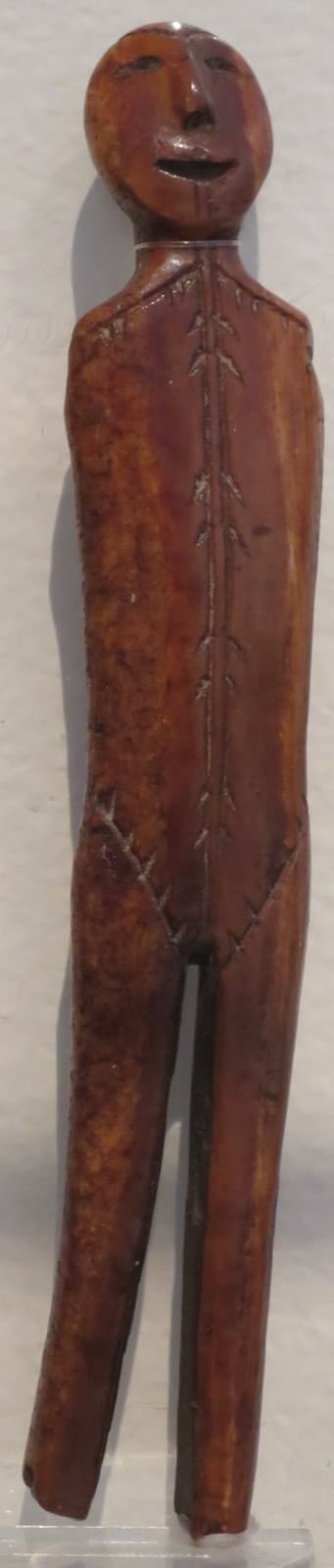
The most frightening law was return. A target with greater shamanic power could reverse the tupilaq and send it hunting back along the path to its creator. In some accounts the maker’s only escape was public confession; once the secret was spoken, the force fastened to secrecy weakened. When outsiders asked to see such beings in the early twentieth century, Greenlandic carvers began giving imagined forms to them in tooth, bone, and wood, producing the contorted figures now internationally known. The carving is not the surviving body of an ancient “voodoo doll.” It is an oral idea acquiring a new anatomy through colonial encounter and the art market.