THE STORY & ITS AFTERLIVES
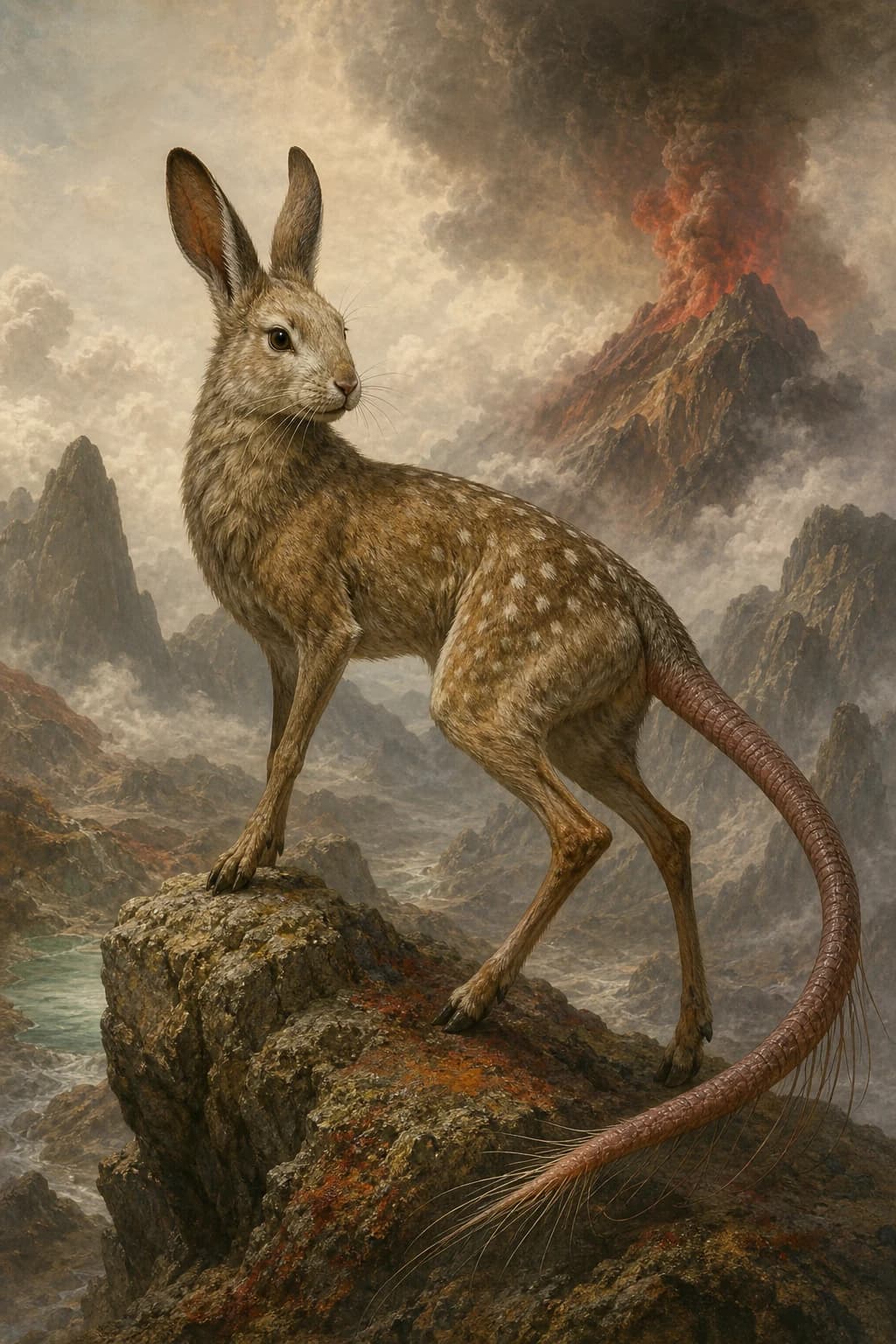
Macheng Mountain, in the third guideway of the Northern Mountains, bears patterned stones on its heights and gold and jade on its northern slope. Its beast is called the tianma, the Heavenly Horse: it is shaped like a white dog with a black head, and the instant it catches sight of a human being it launches itself into the air and flies away, crying what sounds like its own name. The text mentions no wings; it does not seem to need them. Flight at the sight of people is its instinct, and the whole of its dealings with mankind.
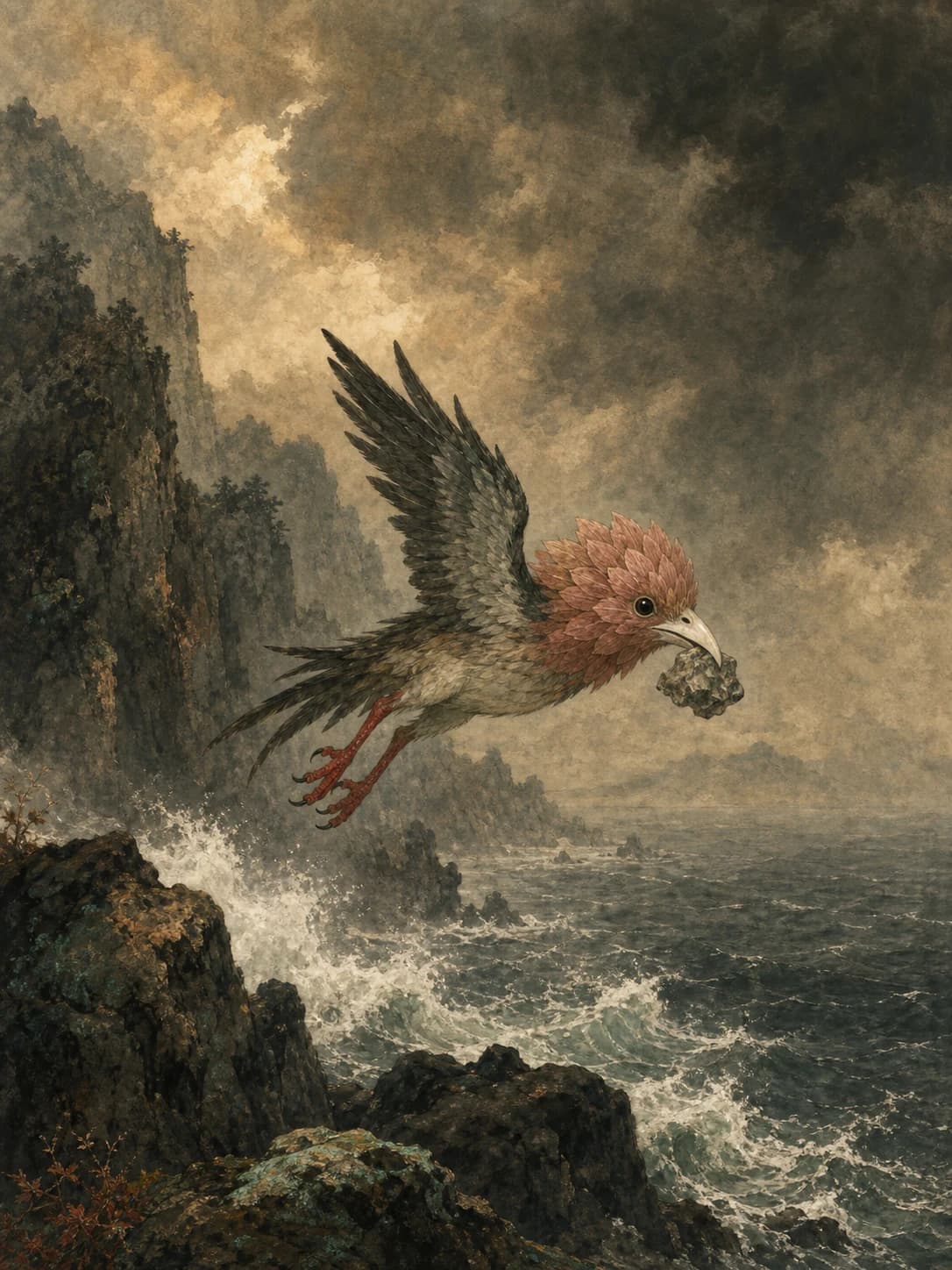
A 'horse' shaped like a dog is a typical mismatch of name and form in the classic. The same mountain hosts the jueju, a crow-like bird with a white head, blue-green body, and yellow feet, whose flesh keeps hunger away. One beast that flees people and one bird that feeds them: with that, the mountain's inventory closes.
The name Heavenly Horse later acquired a grander career. When Emperor Wu of Han obtained the blood-sweating horses of Ferghana, he composed the 'Song of the Heavenly Horse' — 'the tianma comes from the western limit' — and the term settled into Chinese as the celestial steed of the western regions, companion of dragons, eventually yielding the idiom 'a heavenly horse crossing the sky' for unbounded imagination. None of this descends from the black-headed white dog of Macheng Mountain, the earlier and stranger bearer of the name, which found no place in later tianma iconography.