THE STORY & ITS AFTERLIVES
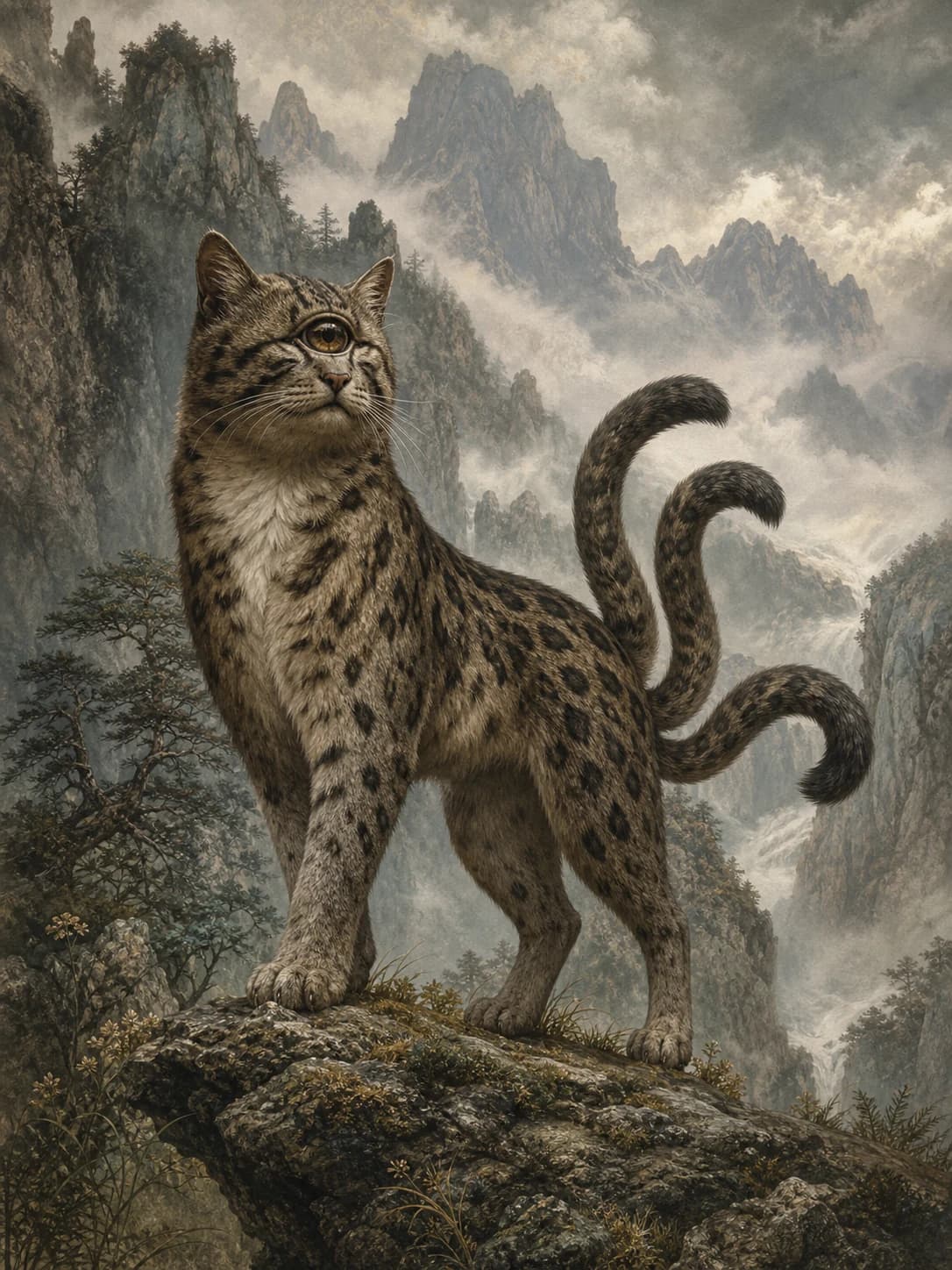
The 'Classic of the Western Mountains' records on Mount Yin 'a beast shaped like a wildcat with a white head, named Tiangou — Celestial Dog — whose cry sounds liu-liu; it can ward off evil.' In the Shanhaijing, then, the Tiangou is a small protective animal, wholly benign.
Later ages reversed it. The Shiji's 'Treatise on the Celestial Offices' describes the baleful star Tiangou as 'like a great running star, with a sound, coming to rest on the ground, resembling a dog', its fall blazing up like flames to the sky and portending war and bloodshed; every later manual of astrology kept it among the great evils. Popular custom explained eclipses as the Celestial Dog swallowing the sun or moon, to be driven off with gongs and drums, and Qing New Year prints show the archer Zhang Xian drawing his bow at the Tiangou to protect newborn sons.
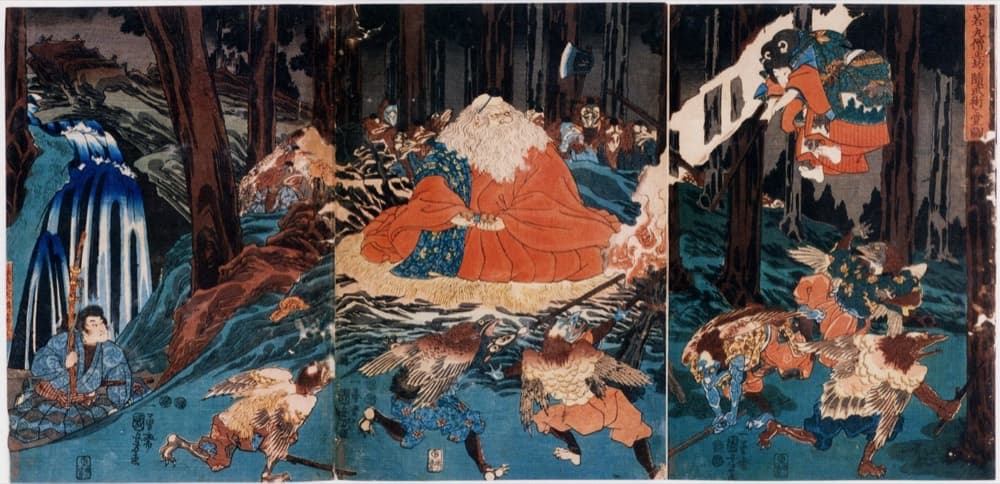
In the seventh century Japan borrowed the name: when a great meteor thundered across the sky in 637, the Nihon Shoki records, the monk Min declared it 'no shooting star, but a tengu'. The Japanese tengu then evolved on its own into the long-nosed goblin of the mountains — sharing nothing with the white-headed little guardian of the Shanhaijing but the two characters of its name.