THE STORY & ITS AFTERLIVES
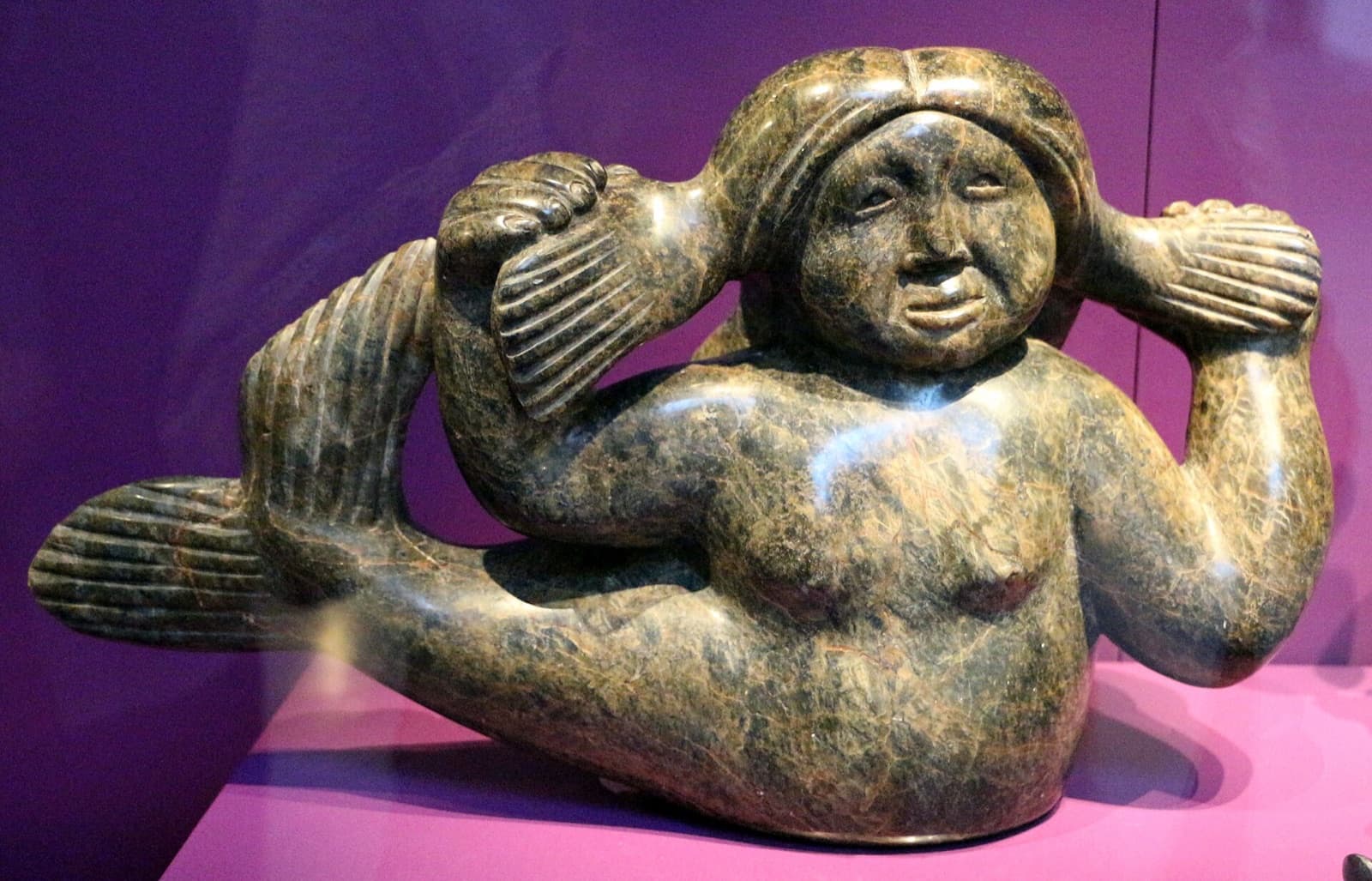
To translate Sila only as a “weather god” loses its deepest reach. Across Inuit languages, sila can name the weather outside, the air surrounding the world, and also awareness, reason, or a person’s mind. Rasmussen’s Iglulik accounts speak of an immense power revealed through wind and sea, without a fixed human shape. It cannot be seen, yet all life is known to breathe through it. Elsewhere one encounters Sillap Inua, the owner or personhood of sila, or stories that make it a primordial spirit. The shared word does not prove that every community worshiped a single deity with the same biography. It shows language placing cosmos and consciousness inside one breath.
Calm weather may mark a relationship held in balance; sudden storm, white fog, and breaking ice may answer disorder. Through drum, song, and disciplined breath, an angakkuq enters another mode of attention—not an escape from nature, but an encounter with the mind already present in it. In modern Inuit speech, sila can still carry weather, environment, and judgment at once, a living multiplicity closer to the tradition than any statue. Every inhalation brings the outer world into the body; every exhalation returns the self to wind. Sila needs no temple because the sky was never outside the door.