THE STORY & ITS AFTERLIVES
In Lovecraft’s fiction, Shub-Niggurath is usually a name spoken with ritual awe rather than a character brought to center stage. Invocations join the image of a black goat of the woods with a thousand young, compressing fertility, forest, sacrifice, and uncontrolled increase into a single formula. Readers witness the worshippers’ cries and the residue of ceremonies, but never receive a complete portrait certified by the original author.
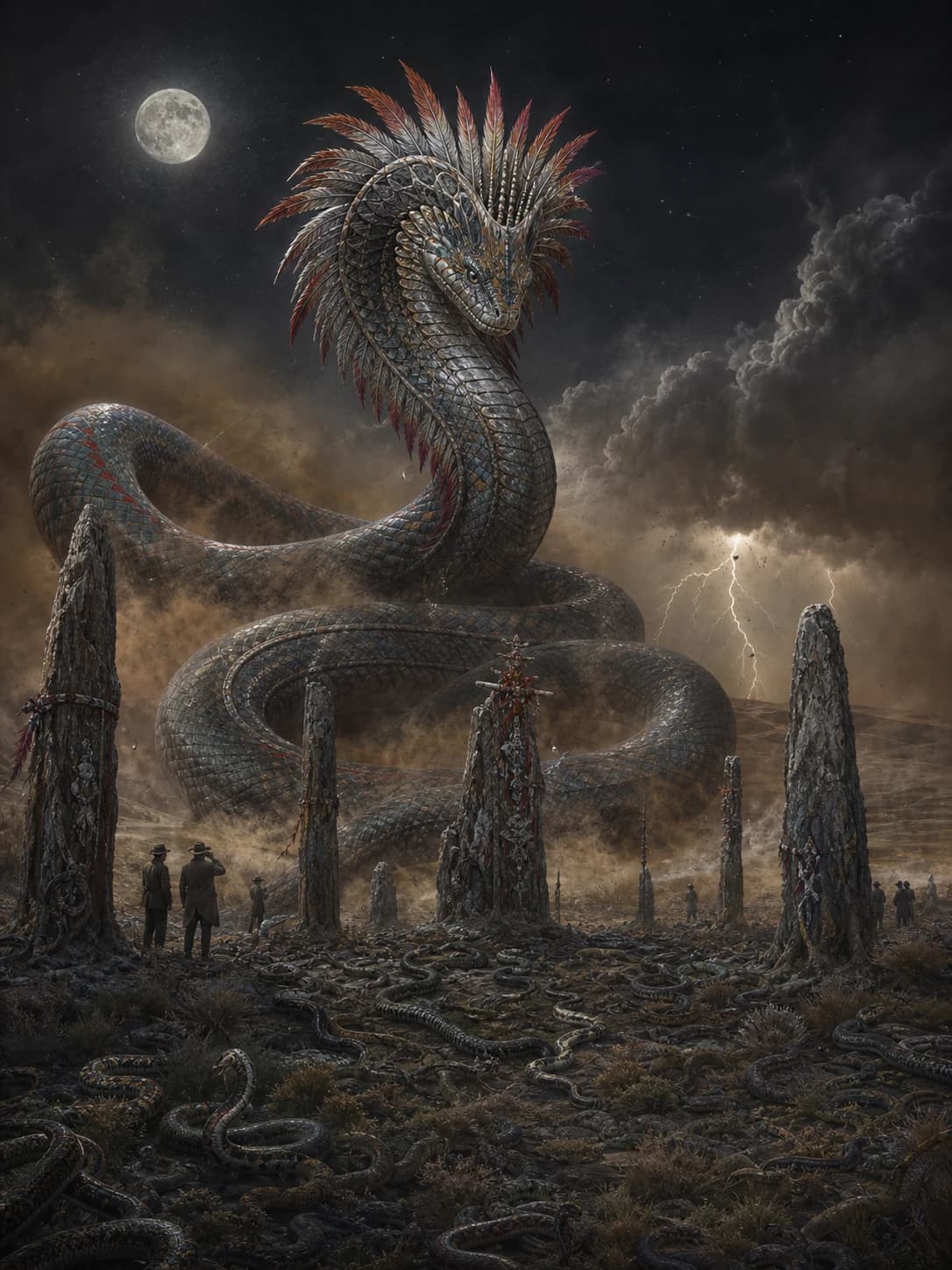
That absence left later mythmakers an unusually broad field. Derlethian taxonomies, roleplaying games, and visual artists gradually supplied horns, hooves, tendrils, roots, and a body forever giving birth, commonly ranking the entity among the Outer Gods. Those images now belong to the shared tradition but should not be poured backward into the early stories. The original force comes precisely from withholding form: a name that never appears can still make isolated valleys, ancient woods, and alien species answer within the same rite. It becomes an inverted emblem of life—not spring’s renewal, but fecundity after all measure has been lost.