THE STORY & ITS AFTERLIVES
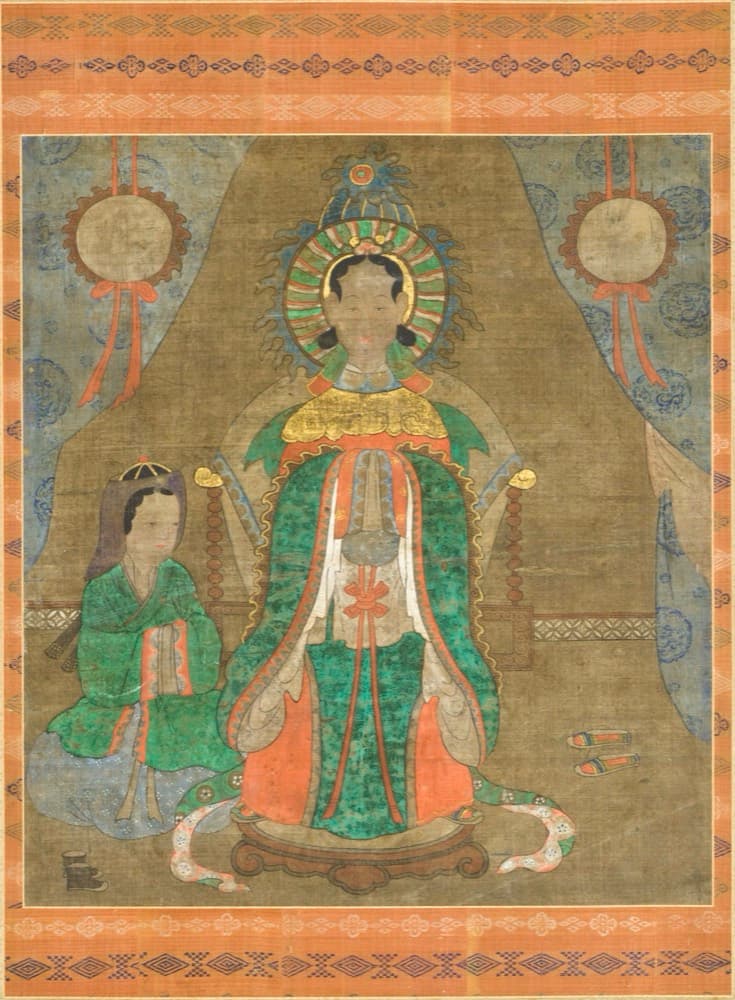
Samsin Halmoni oversees everything from conception and childbirth to a child's safety before the age of seven. She has no temple; she lives in the inner room of each house. When labor begins, a Samsin table is laid with white rice, seaweed soup, and clear water, and for the first three weeks after a birth a taboo rope hangs at the gate while daily offerings are made. The custom of the mother drinking seaweed soup after delivery, and of Koreans eating it on every birthday since, descends from these offerings. The blue Mongolian spot on a newborn's lower back is explained as the goddess's handprint, left as she slapped the baby on its way into the world.
Her origin is sung in the shamanic narrative Jeseok Bon-puri, known in dozens of versions from Hamgyong to Gyeongsang. Danggeum-aegi, the only daughter of a noble house, receives an alms-begging monk while her family is away and conceives, in some versions by eating three grains of rice he gives her. Her scandalized family shuts her in a stone grotto behind the garden, where she bears triplet boys. Grown, the sons demand their father; mother and children seek out the monk, who proves their blood, makes the three boys Jeseok gods, and appoints Danggeum-aegi the Samsin, goddess of childbirth.
Jeju Island sings a different account, the Samseung Halmang Bon-puri, in which the daughter of Myeongjinguk and the daughter of the Dragon King of the East Sea compete at growing flowers for the office of birth goddess. The winner becomes Samseung Halmang; the loser becomes the Halmang of the otherworld, who carries off children who die young, giving the perils of birth their mythic explanation.