THE STORY & ITS AFTERLIVES
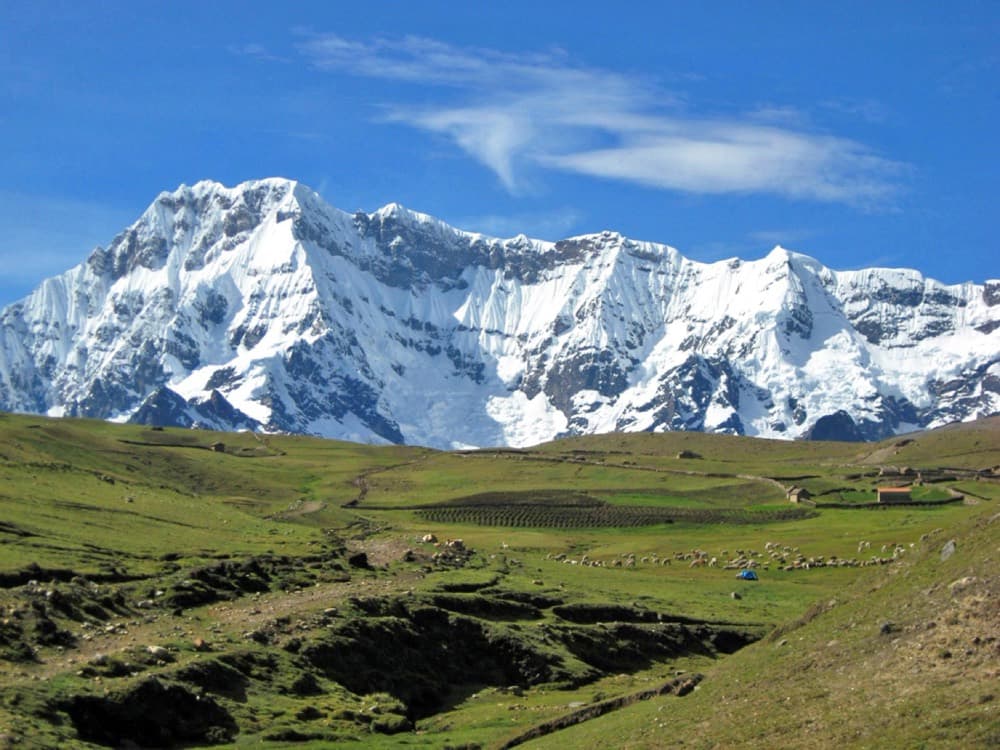
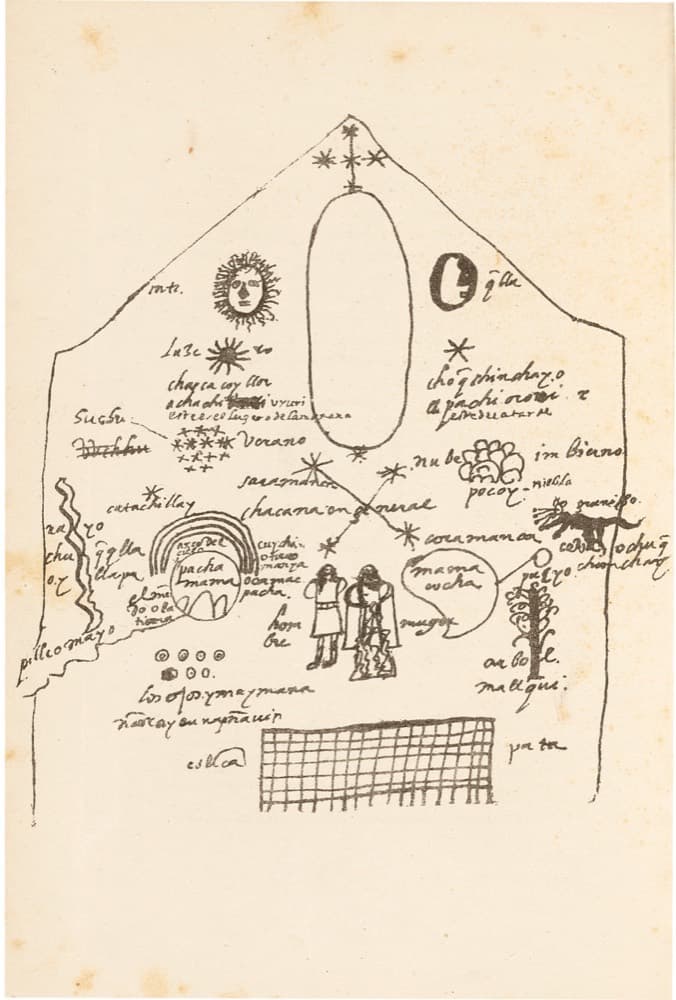
Pacha in Quechua means at once earth, world and time; Pachamama is the living ground itself, the body that bears and feeds all things. She presides over sowing and harvest — potatoes and maize come out of her flesh, and the increase of the herds depends on her goodwill. Because she is everywhere underfoot she needed neither temples nor idols: offerings go straight into the soil, and a farmer asks her leave before the first cut of the plow, since to break ground is to knock at her door.
Her thanks follow a set etiquette. The first sip of chicha is tipped onto the earth, a libation called ch'alla; perfect coca leaves are presented in threes or buried at the field's edge; on graver occasions a despacho bundle is laid out — coca, llama fat, seeds and sweets arranged in order, then wrapped and burned or buried for the earth to receive. In the southern Andes August is her month, and the first of August remains her feast day in Bolivia, southern Peru and northwest Argentina: the hungry season when the earth 'opens its mouth' before planting begins.
After the conquest her figure and the cult of the Virgin Mary grew into one another, and many Andean Marian feasts keep the dates and places of her older rites. She is a living faith: Ecuador's 2008 constitution invokes Pachamama by name in its articles on the rights of nature, and drivers on Andean roads still spill a few drops for the earth before setting out.