THE STORY & ITS AFTERLIVES
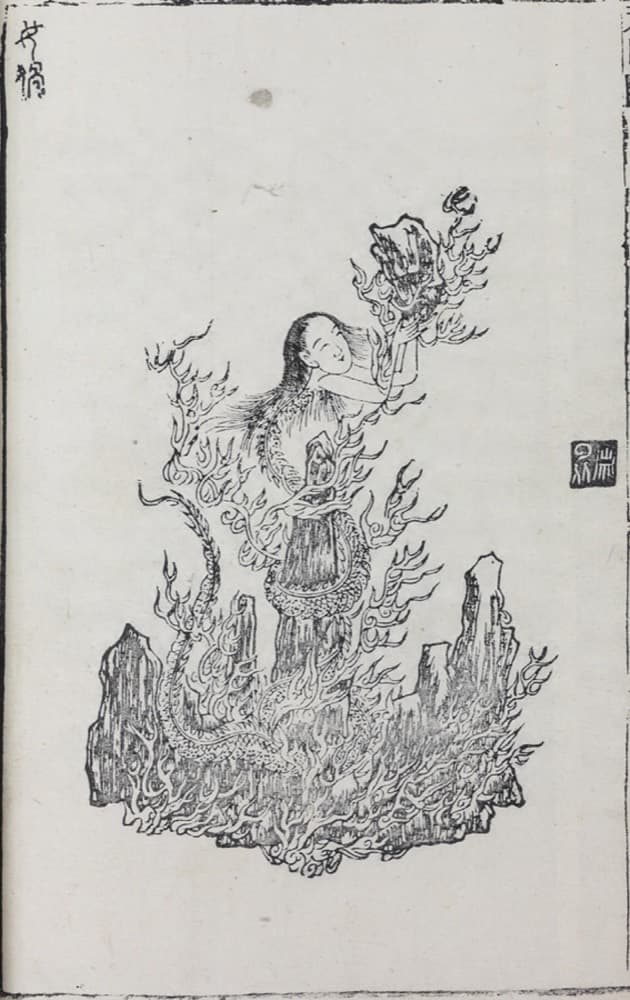
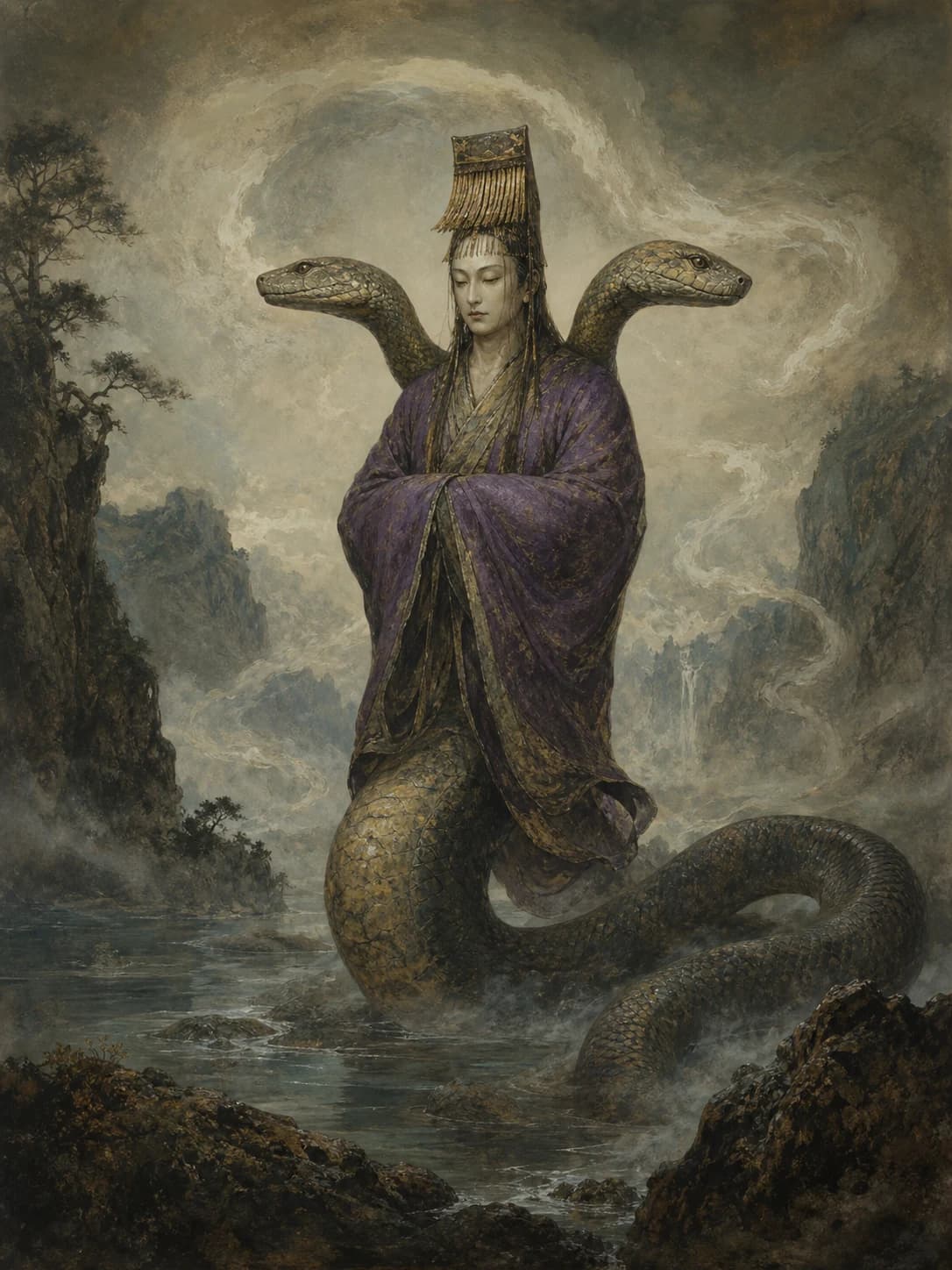
The Great Wilderness: West records ten gods who share a single name: Nüwa's Entrails. They were transformed from the entrails of Nüwa, and they dwell on the plain of Liguang, lying athwart the road. Guo Pu's commentary supplies the transformer's credentials: Nüwa was a divine woman of high antiquity who reigned as sovereign, human-faced and serpent-bodied, capable of seventy transformations in a single day — and her belly became these gods.
This is the only sentence in the whole Classic that mentions Nüwa. There is no mending of the sky, no shaping of humans from yellow clay; those famous deeds surface only in later texts such as the Huainanzi and the Fengsu Tongyi. What this line preserves is an older stratum of her divinity: Nüwa's own body as the raw material of creation, a length of gut sufficient to make ten gods. The Heavenly Questions catches the vertigo of the idea — 'Nüwa had a body; who fashioned it?' — and the Shuowen dictionary glosses her name as 'the divine woman of antiquity who transformed the ten thousand things', in exact agreement with the classic.
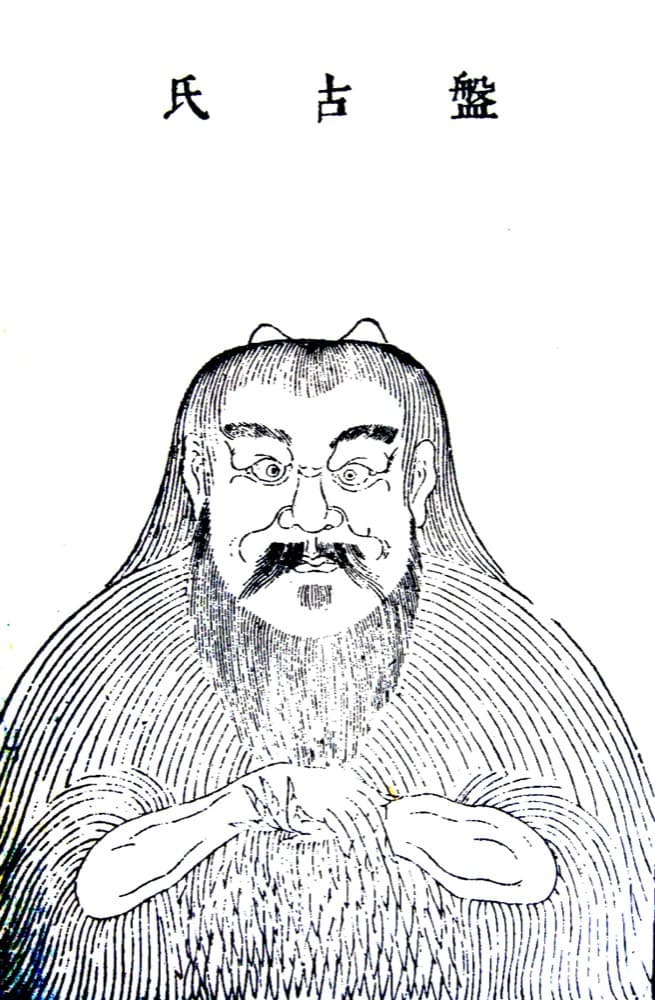
The motif of a god's body becoming the world reached its full scale later in the story of Pangu, whose dying breath became wind and cloud, his voice thunder, his blood the rivers. The ten nameless gods lying across the road at Liguang are among the earliest silhouettes this motif left in a pre-Qin text.