THE STORY & ITS AFTERLIVES
The Nephilim appear in the four verses that open Genesis 6, immediately before the Flood narrative: as humankind multiplied, the 'sons of God' saw that the daughters of men were beautiful and took wives of all they chose; the Nephilim were on the earth in those days — and afterward — when the sons of God came in to the daughters of men, who bore them children: 'these were the mighty men of old, the men of renown.' The passage is terse and cryptic. The Hebrew nephilim is usually linked to the verb naphal, 'to fall,' hence 'fallen ones'; the Septuagint simply renders it gigantes, giants. Numbers 13 mentions them again: the spies sent into Canaan report seeing the Anakim, descended from the Nephilim, 'and we seemed like grasshoppers to ourselves.'
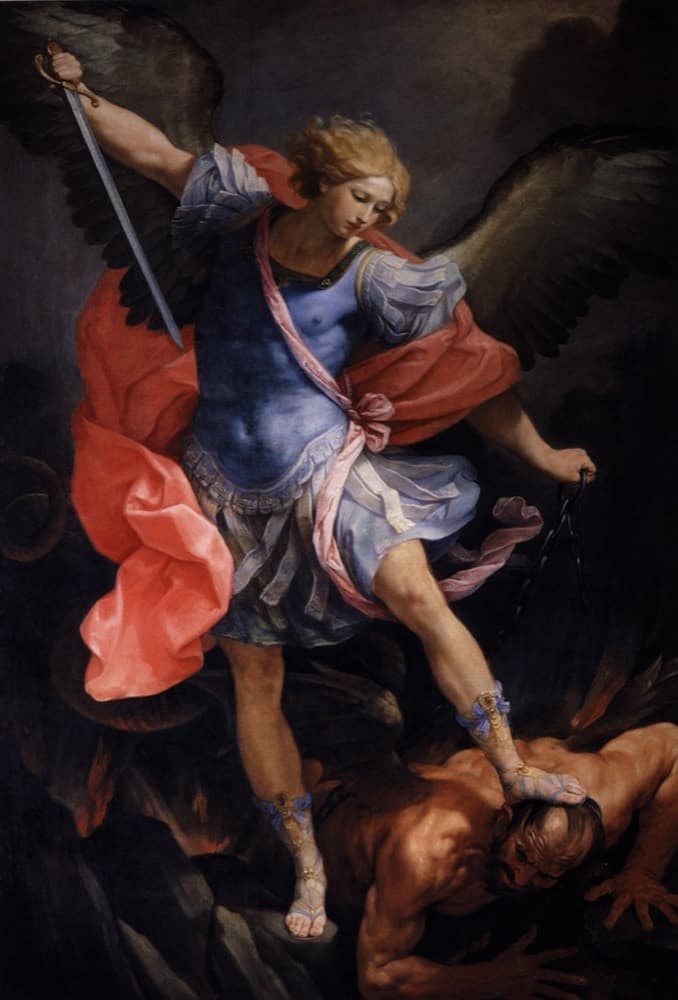
The Book of the Watchers in 1 Enoch, written in the third or second century BCE, expands those verses into a full narrative of angelic fall: two hundred angels called Watchers, led by Shemihazah, swear an oath on Mount Hermon and descend to take human wives, teaching metallurgy, weapon-making, cosmetics, sorcery, and astrology — the arms and adornments taught by Azazel are singled out for blame. Their gigantic offspring devour the produce of humankind, then humans and beasts themselves, and drink blood; the earth cries out, God sends the archangels to imprison the Watchers, and the Flood scours the world. Parallel versions survive in the Book of Giants among the Dead Sea Scrolls and in Jubilees; the story circulated widely in the Second Temple period.
Mainstream Jewish and Christian exegesis later favored a tamer reading, taking the 'sons of God' as the line of Seth rather than angels. But the Watchers and their giants never vanished, flowing from medieval legend into modern fantasy fiction, comics, and film, where 'nephilim' is now the standing label for characters of half-angelic blood.