THE STORY & ITS AFTERLIVES
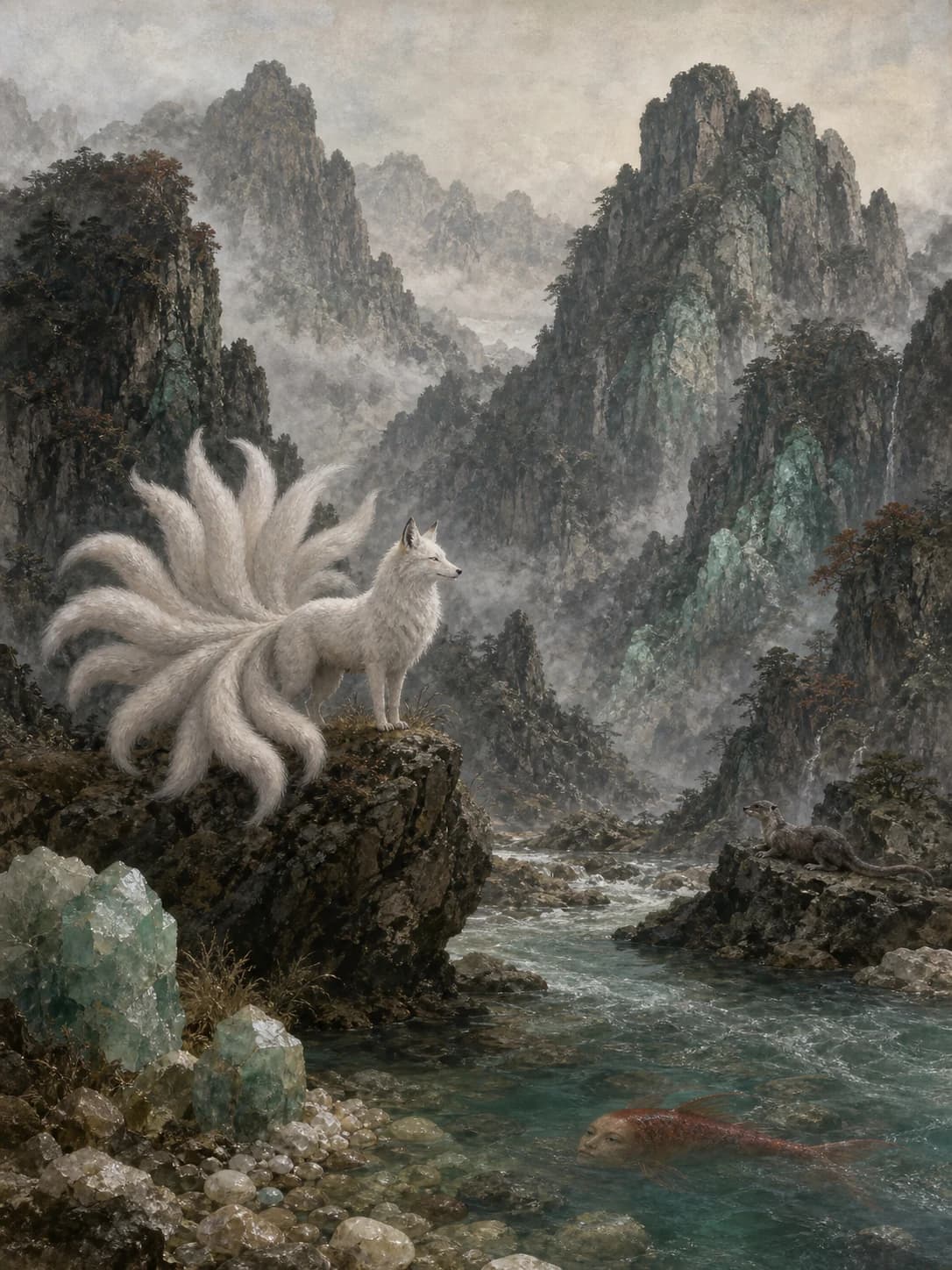
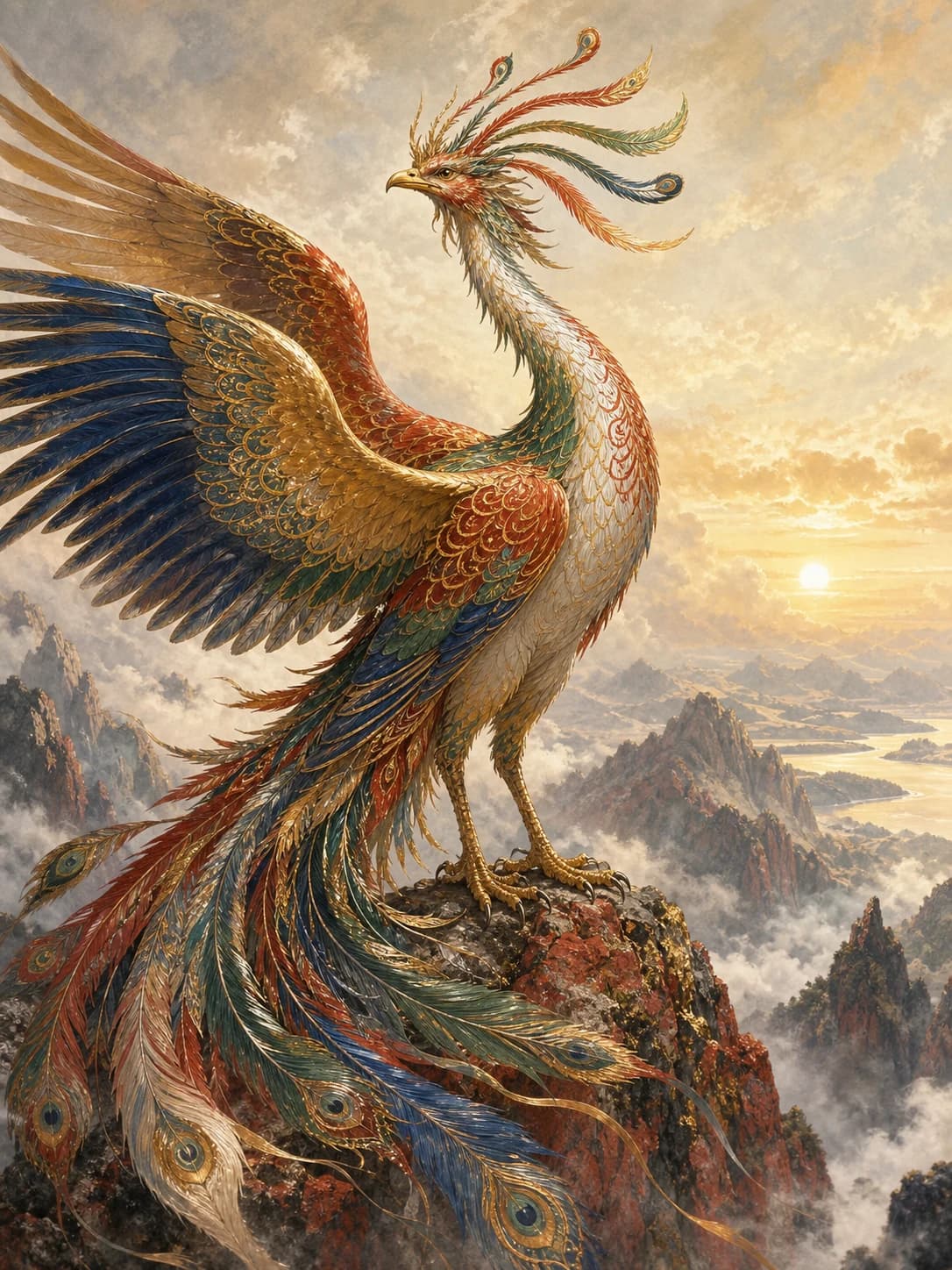
The forty-one mountains of the Classic of the Southern Mountains fall into three ranges, and at the end of each range the itinerary pauses for the same two matters: what the gods of these mountains look like, and what they are owed. The ten mountains from Zhaoyao to Jiwei have gods with birds' bodies and dragons' heads; the seventeen from Ju to Qiwu, dragons' bodies and birds' heads; the fourteen from Tianyu to Nanyu, dragons' bodies and human faces. Bird and dragon are recombined range by range, the dragon gaining ground southward until it finally wears a human face.
The rites are graded. The gods of the first range receive a sacrificial animal buried with a zhang scepter of jade, an offering of tu rice, a bi disk, and a mat of white rushes; those of the second, a buried bi disk and tu rice; those of the third, the prayer of a single white dog with tu rice. Burial is the operative act — these gods dwell in the earth, not the sky, and offerings reach them only by being put into the ground.
The gods have no names, no deeds, no temples: only bodies and a tariff of dues, like a circular issued to travelers and officiants. Passages such as these are why scholars have long read the Classic of Mountains less as storytelling than as a ritual geography — a handbook of which mountain requires what, buried where.