THE STORY & ITS AFTERLIVES
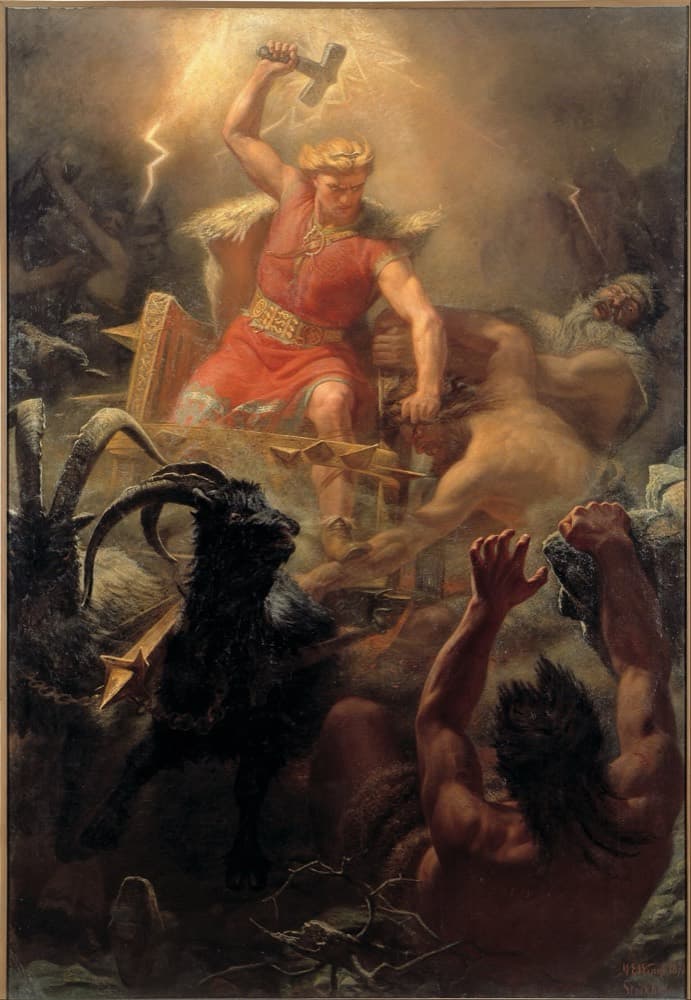
Mjolnir is Thor's hammer, forged in the smithy of the dwarf brothers Brokk and Eitri (called Sindri in later retellings). As Skaldskaparmal tells it, Loki wagered his own head that the brothers could not outdo the sons of Ivaldi; while the hammer was in the forge Loki became a biting fly and stung the bellows-worker Brokk on the eyelid, making him falter, so the haft came out shorter than it should have been. Even so, the assembled gods judged it the best of the six treasures: it never misses, always flies back to the thrower's hand, and can be shrunk small enough to carry inside a shirt. Loki's head was forfeit; he argued his neck was not part of the bargain, so Brokk sewed his lips shut instead.
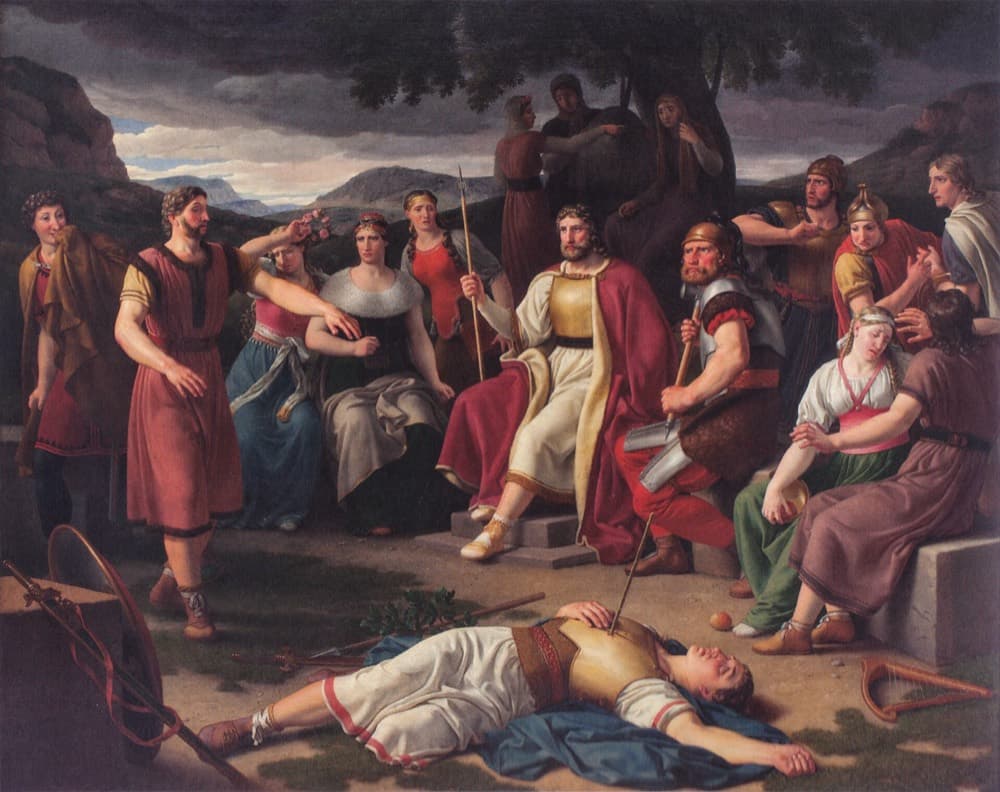
The hammer is the gods' one sure defence against the giants, and it is also an instrument of blessing. Thor hallows the bones of his slaughtered goats with it to bring them back to life, and hallows Baldr's funeral pyre; in the Thrymskvida the giants lay the hammer in the bride's lap 'to hallow her', delivering it straight back to Thor in his bridal disguise.
Viking Age people wore it: hundreds of hammer-shaped amulets have been unearthed across Scandinavia, circulating alongside cross pendants during the conversion era, and a tenth-century amulet from Lolland in Denmark carries the runic inscription 'this is a hammer'.