THE STORY & ITS AFTERLIVES
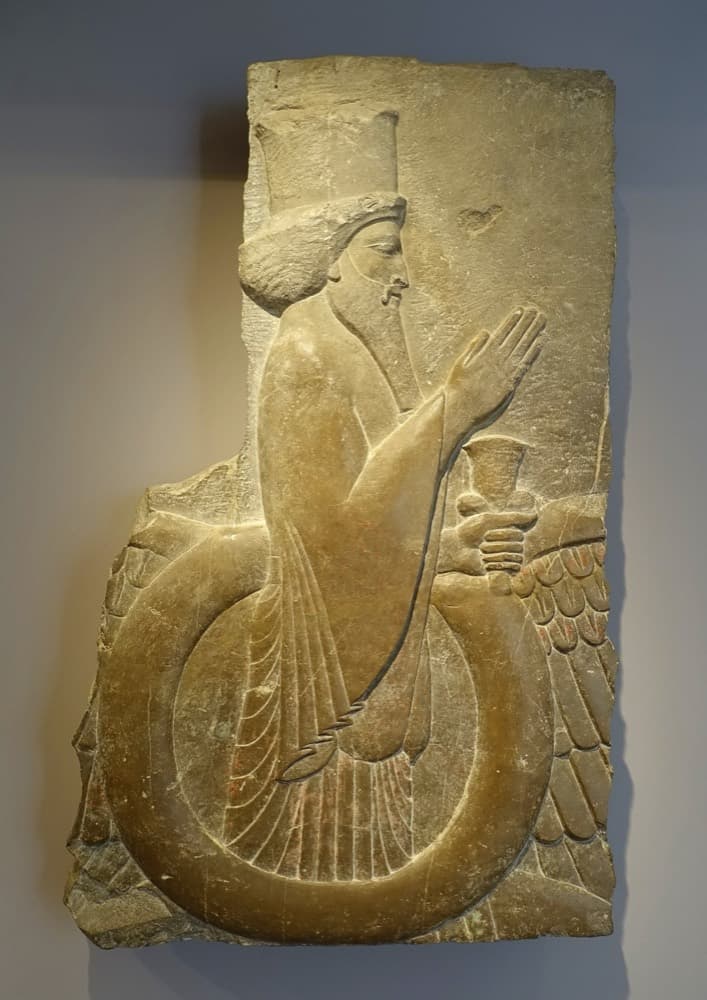
Mithra is among the greatest of the yazatas, the venerated divinities of Zoroastrianism, and his name means "covenant" itself. The Mihr Yasht (Yasht 10), one of the longest hymns of the Avesta, describes him with a thousand ears and ten thousand eyes, never sleeping, watching all the Aryan lands from his broad lookout; before the sun rises he mounts the peak of Mount Hara, driving a golden-wheeled chariot drawn by four white horses and wielding a mace cast with a hundred bosses. Whoever breaks a compact — whether sworn to a believer or an unbeliever — becomes a liar to Mithra, and his horses carry ruin into the oath-breaker's country.
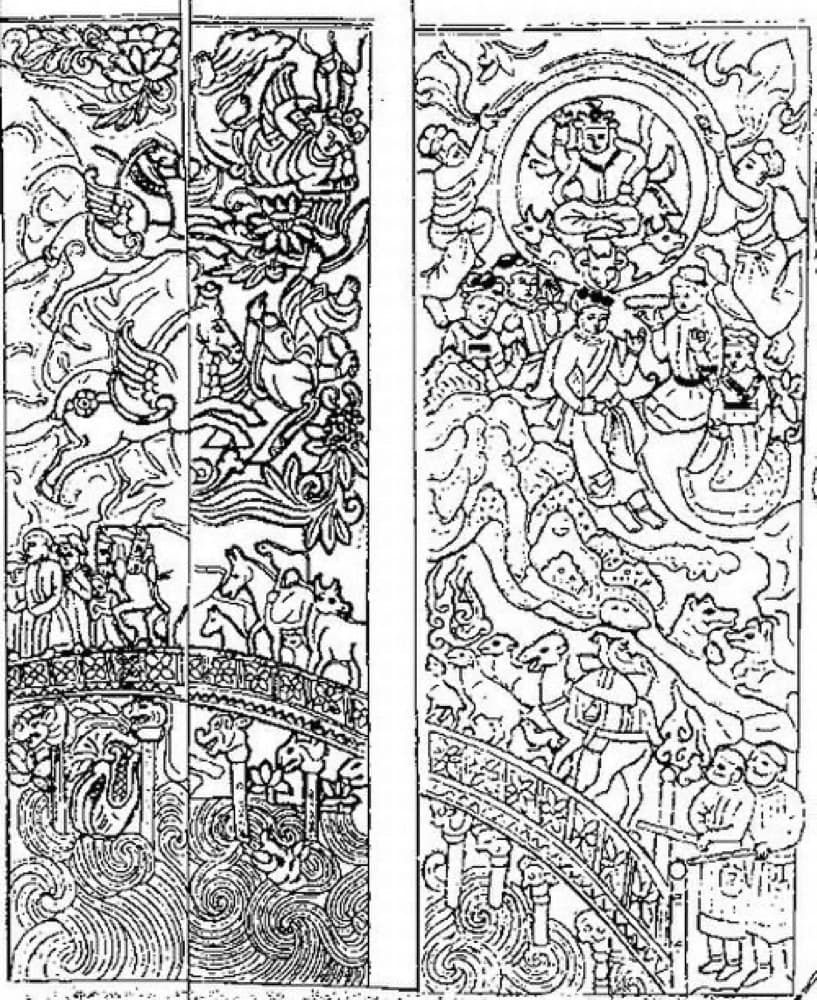
With Rashnu the judge and Sraosha the spirit of conscience, he weighs the souls of the dead at the Chinvat Bridge. In the later Achaemenid period he re-enters royal writing: Artaxerxes II invokes Ahura Mazda, Anahita, and Mithra together in his inscriptions at Susa and Hamadan, asking the three to protect his palace and person. His bond with the sun grew ever closer; Middle Persian mihr means at once sun, covenant, and affection, the sixteenth day of every month and the seventh month of the Zoroastrian calendar bear his name, and the autumn festival of Mehregan is still kept in Iran. The mystery cult of Mithras that spread through the Roman legions in the first centuries CE borrowed his name, but its bull-slaying icon and underground rites have no Persian counterpart and are generally regarded as a Roman creation.