THE STORY & ITS AFTERLIVES
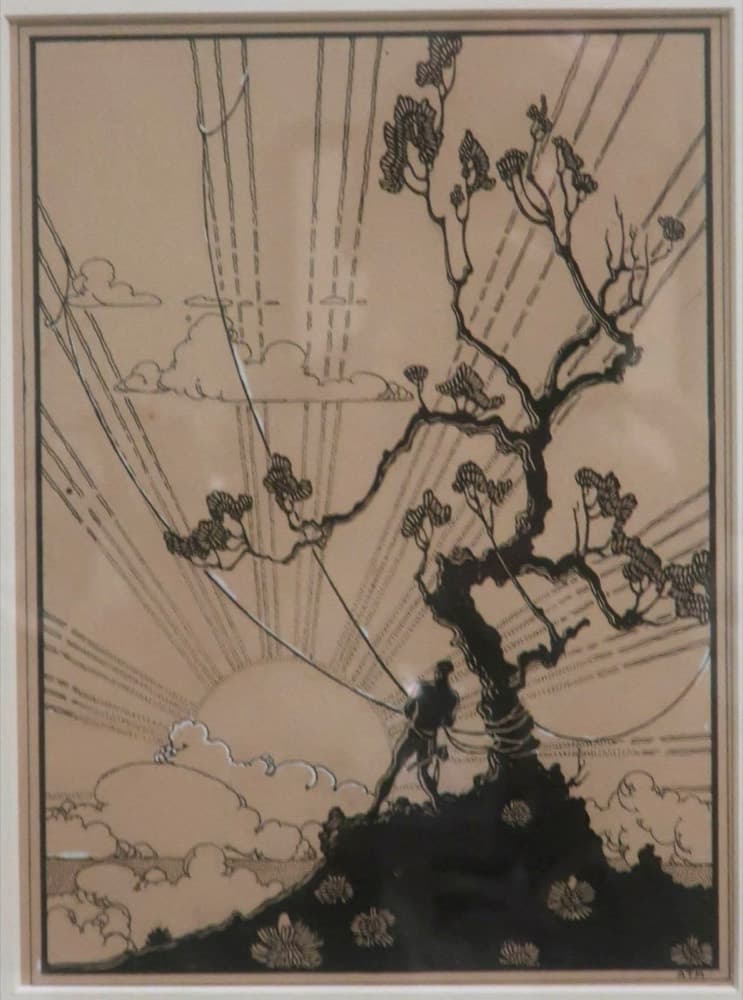
Every Polynesian island group remembers the hook in Maui's hand. Hawaiian tradition gives it a name, Manaiakalani. In the versions gathered in Beckwith's Hawaiian Mythology, Maui meant to fish the scattered islands together into one land: he sank the hook into the deep, caught something vast on the sea floor — in one telling the great fish Pimoe — and set his brothers paddling with strict orders not to look back. Land was breaking the surface when one brother turned his head; the line snapped, and the islands have floated apart ever since.
The Maori version is in George Grey's 1855 record: the hook was made from the jawbone of his grandmother Murirangawhenua. Maui stowed away in his brothers' canoe, baited the hook with blood from his own nose, and hauled up the great fish that is the North Island of New Zealand, Te Ika-a-Maui. The Maori name of Hawke Bay, Te Matau-a-Maui, means "Maui's fishhook," after the hook-shaped sweep of headland at its southern end; the South Island, in the same telling, is Maui's canoe.
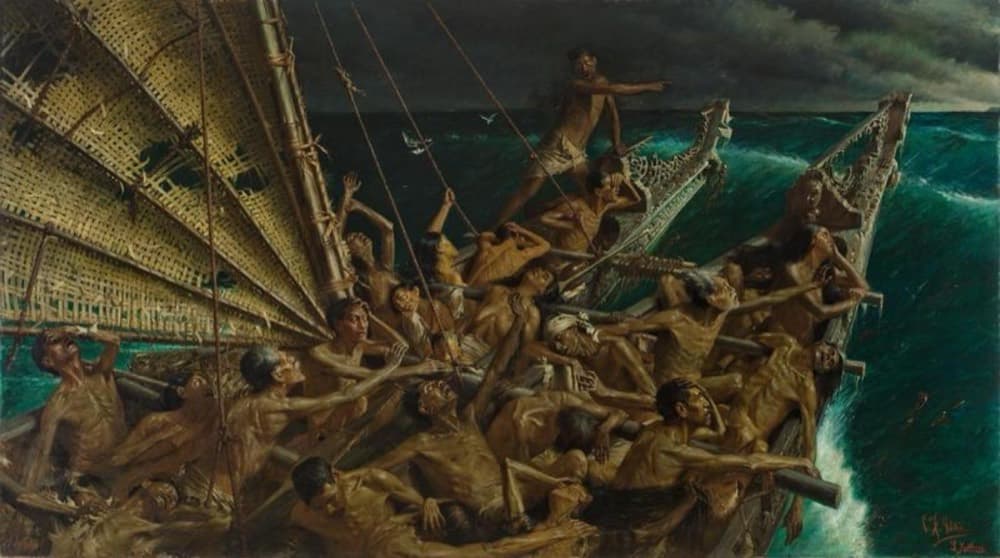
The hook ended up in the night sky. Hawaiian star lore calls the curved line of bright stars in the tail of Scorpius the big fishhook of Maui, Manaiakalani, and since the 1970s the navigators of the Polynesian voyaging revival, sailing the canoe Hokulea without instruments, have used it as one of the star lines of their wayfinding system.