THE STORY & ITS AFTERLIVES
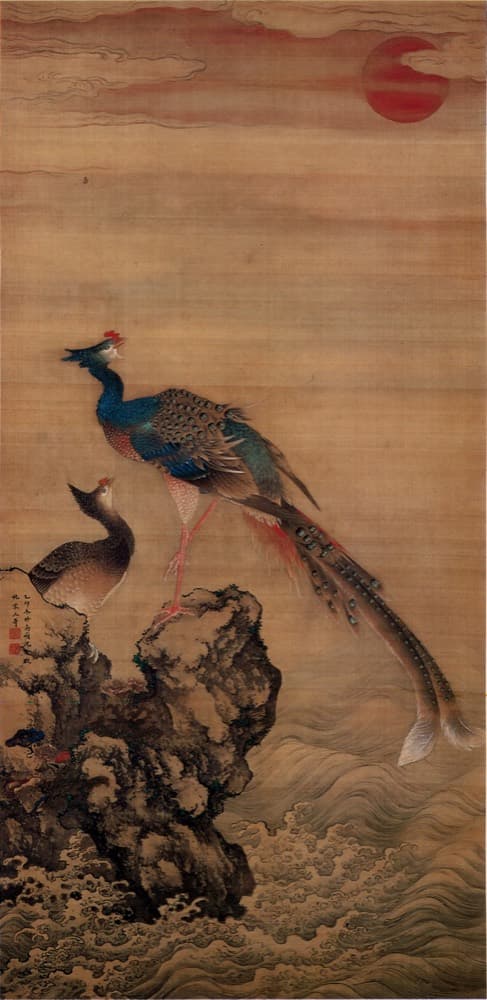
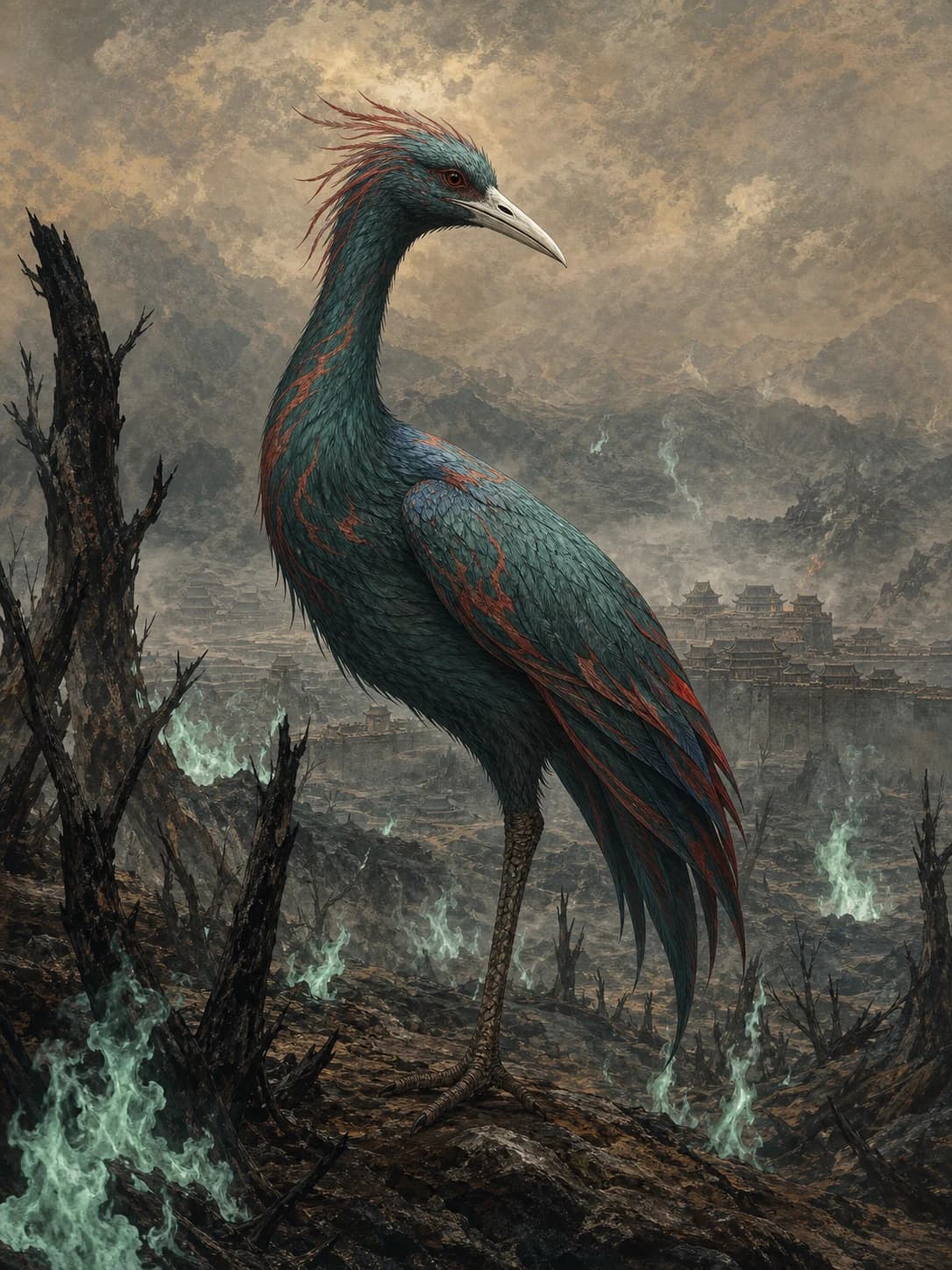
On Mount Nüchuang — copper on its southern face, graphite on its northern — lives a bird 'shaped like a long-tailed pheasant with five-colored markings, named Luan; when it appears, all under heaven is at peace.' Among the western mountains, whose birds and beasts mostly portend drought, flood, or fire, the Luan is the rare herald of good order.
It was recorded early as an actual tribute bird: the 'Royal Assembly' chapter of the Yi Zhou Shu has the Di and Qiang peoples of the west presenting luan birds at the great gathering at Chengzhou. Later ages folded the Luan into the phoenix family of auspicious fowl, and the chiming bells on imperial chariots took their name from its cry. In the fifth century, Fan Tai's preface to his 'Poem on the Luan' tells of the king of Jibin who caged one for three years without hearing it sing, until his consort suggested hanging a mirror before it; seeing its solitary reflection, the bird gave one grief-stricken cry, soared once, and died. 'The lone luan before the mirror' became the fixed emblem of bereavement and lost mates, and the dressing-mirror itself came to be called a luan mirror.
Between bronze mirror-backs and the wedding formula 'luan and phoenix singing in harmony', no bird of the Shanhaijing worked its way deeper into everyday objects.