THE STORY & ITS AFTERLIVES
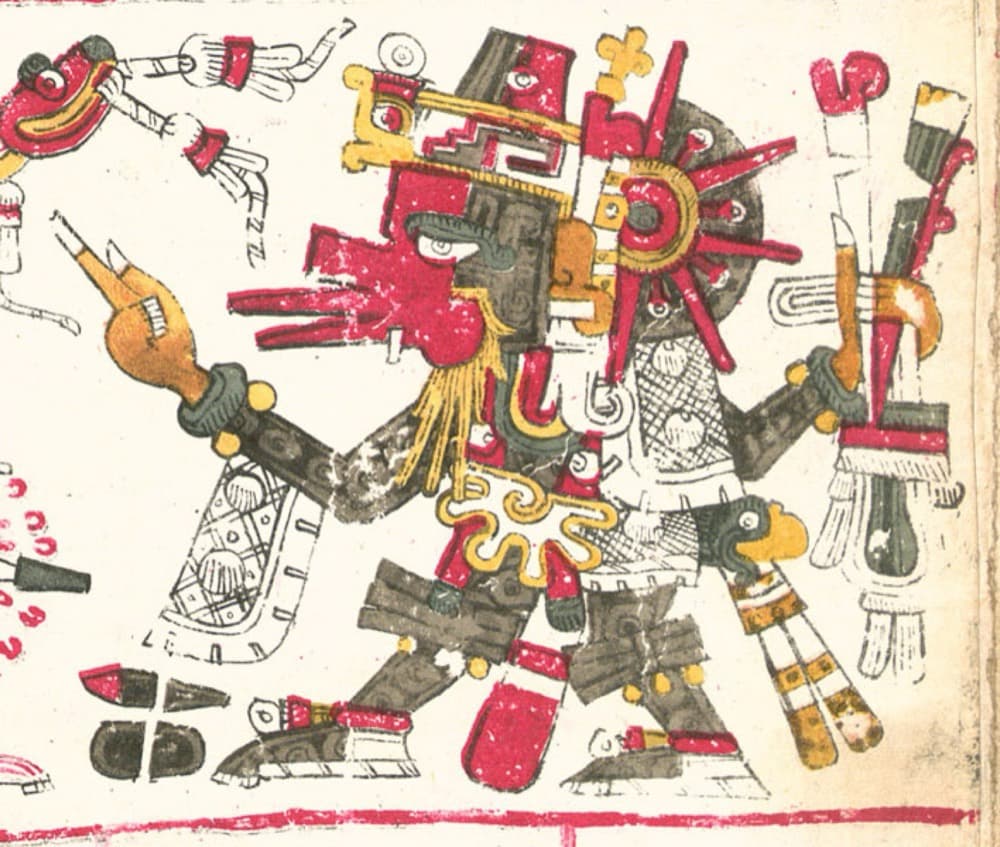
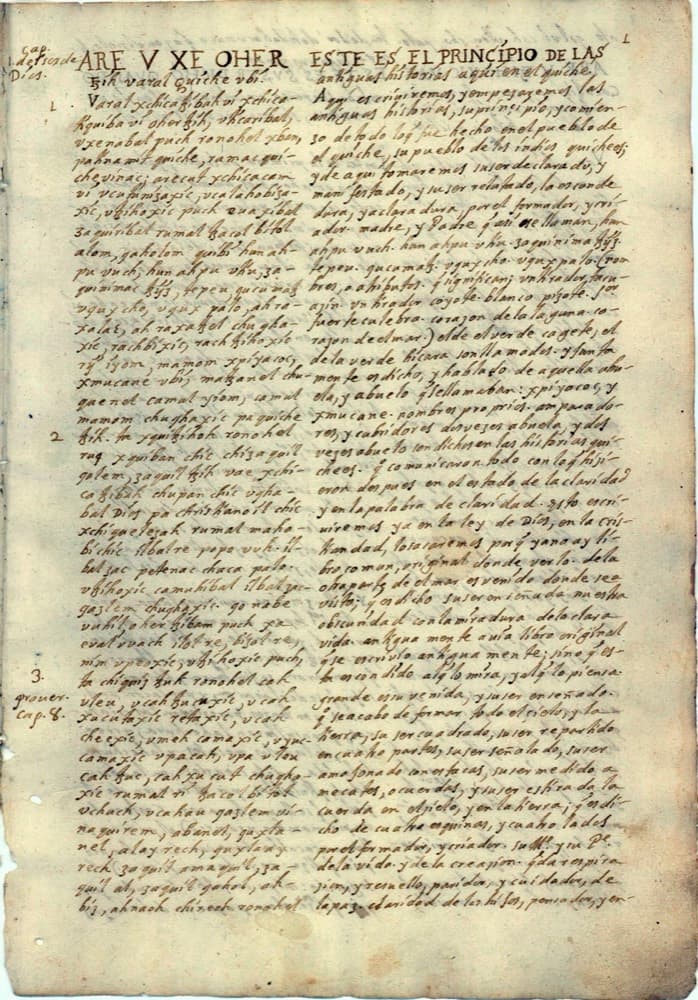
Kukulkan means "feathered serpent" in Yucatec Maya: k'uk'ul is the plumage of the quetzal bird, kaan the snake. He is a great serpent sheathed in long green feathers, one branch of the Mesoamerican feathered-serpent family that also includes Gucumatz, the creator of the K'iche' Popol Vuh, and the Nahua Quetzalcoatl. In the Postclassic period (c. 900-1500 CE) he was the preeminent god of Chichén Itzá and later of Mayapán.
His temple is the pyramid called El Castillo at Chichén Itzá. Its four stairways have 91 steps each; with the upper platform the count reaches 365, the days of the solar year. On the afternoons of the equinoxes, the stepped terraces throw seven linked triangles of light onto the balustrade of the north stairway, joining the carved stone serpent head at its foot into a single snake that appears to crawl down the pyramid. Serpent columns crown the summit shrine.
Bishop Diego de Landa's Relación de las cosas de Yucatán (c. 1566) preserves a second face of Kukulkan: a lord who arrived from the west, ruled at Chichén Itzá, presided over the founding of Mayapán, and was worshipped as a god after his departure. The Book of Chilam Balam of Chumayel likewise remembers his coming. Scholars generally read these accounts as a memory of central Mexican influence reaching Yucatán in the Postclassic era.