THE STORY & ITS AFTERLIVES
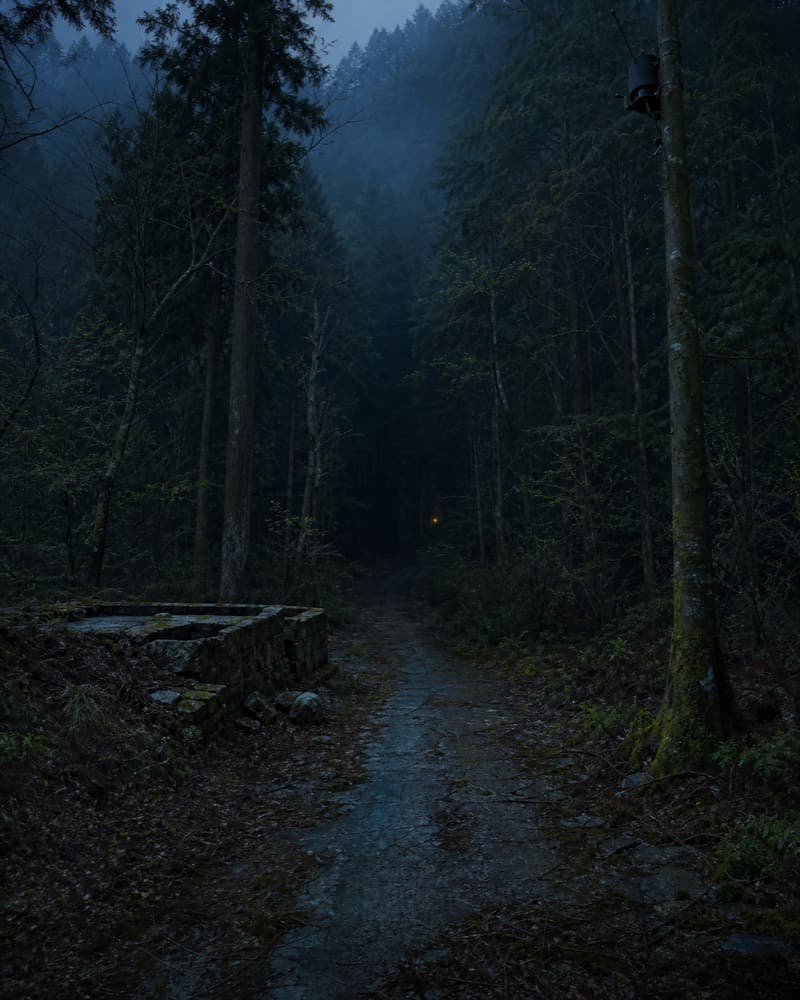
The Inunaki Village of legend hides in the mountains around Inunaki Pass in Miyawaka, Fukuoka: maps leave it blank, phone signal dies on the approach, and a sign at the mouth of the path reads, 'Beyond this point, the constitution of Japan does not apply.' Its people are said to have cut all ties with the outside for centuries and to hunt intruders with sickles and hoes; explorers' accounts add a wrecked white sedan by the entrance and dog howls and voices deep in the valley. These elements crystallized on personal websites and BBS boards in the late 1990s and were amplified through mobile horror sites and TV specials in the 2000s, making the pass a fixture of 'most haunted spot in Japan' lists.
The legend stands on a verifiable base. A real settlement existed in the Inunaki valley, including an Edo-period ironworking enclave; its residents were relocated in the 1980s for the Inunaki Dam, completed in 1994, which put part of the old village underwater, hence a village that vanished from the map. When the new Inunaki tunnel opened in 1975, the old tunnel fell derelict and drew bikers and thrill-seekers; in December 1988 five youths beat and burned to death a twenty-year-old factory worker near it, a murder that shocked the country, after which the tunnel mouth was sealed with concrete. A true crime, a walled-up tunnel, and a drowned village supplied everything the story needed.
Shimizu Takashi's 2020 film Howling Village carried the legend to cinemas and set off a wave of 'found-record' village horror. Sections of the pass are closed today, and Fukuoka police periodically warn explorers away.