THE STORY & ITS AFTERLIVES
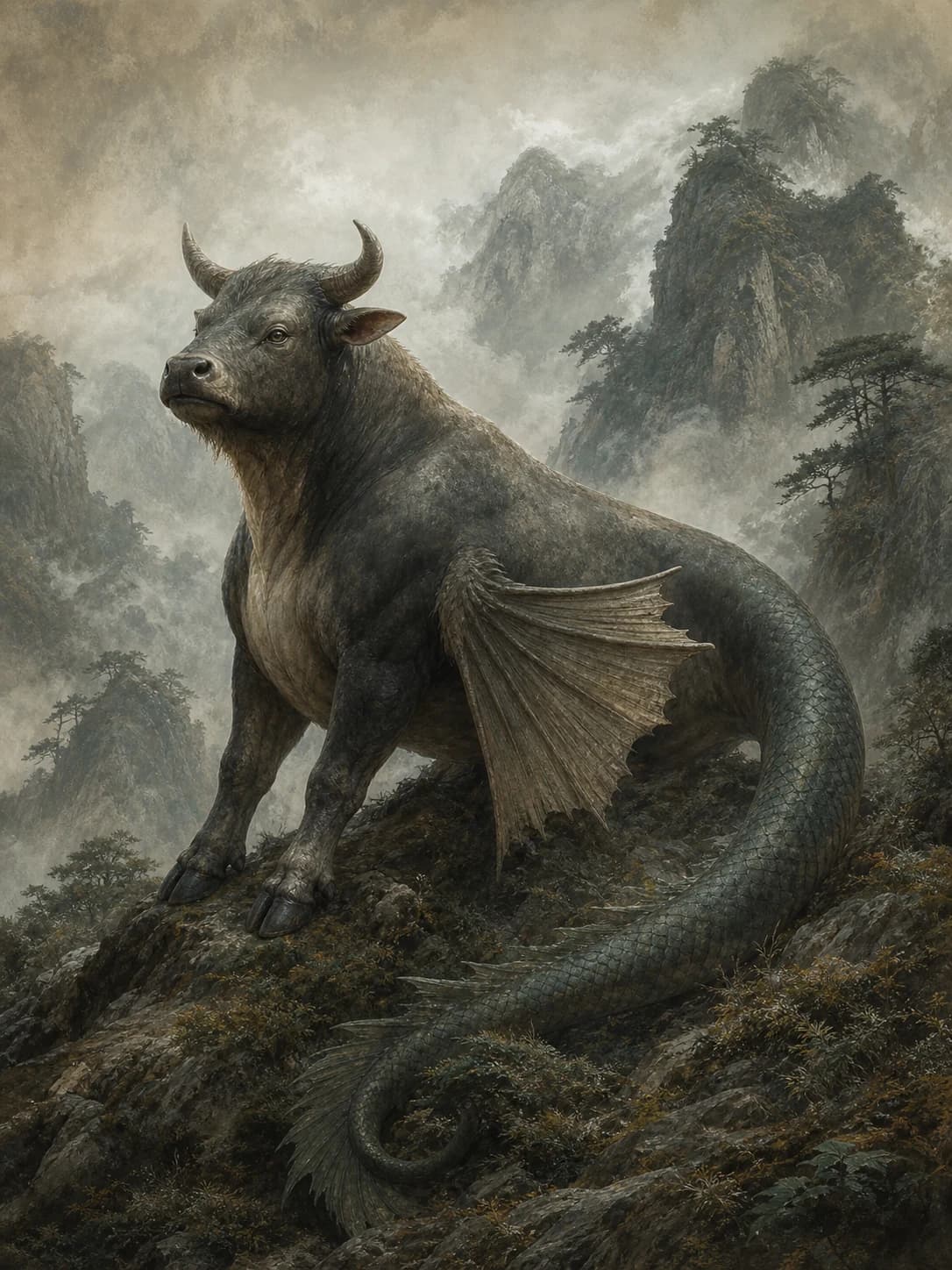
The Yin River rises on Mount Daoguo and flows south into the sea, and in its waters coils the hujiao, the 'tiger jiao'. Mount Daoguo is itself a storehouse of southern fauna — gold and jade above, rhinoceroses, buffalo, and elephants below — and the river adds this: a creature with a fish's body and a serpent's tail whose voice, incongruously, is the soft call of a mandarin duck.
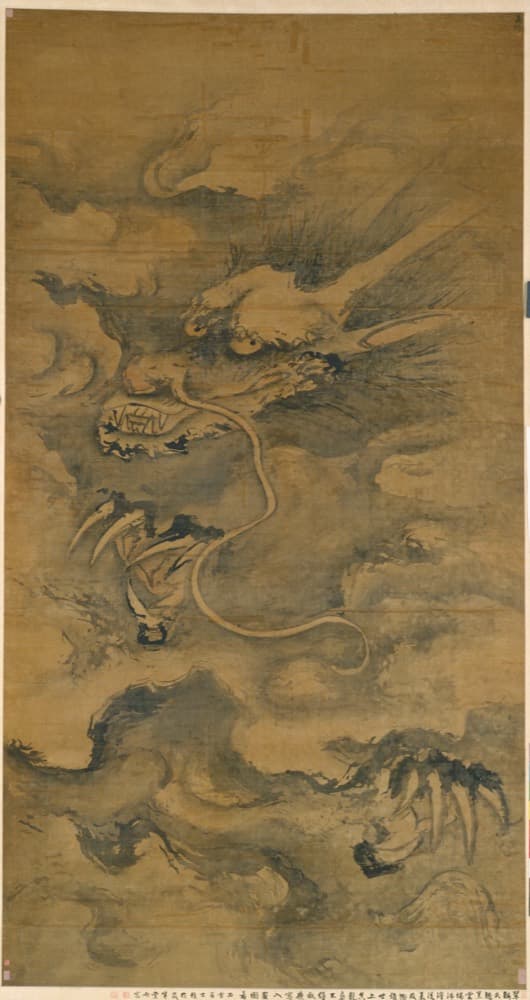
The jiao is a water-beast of the dragon kind; Guo Pu describes the type as snake-like with four legs, small-headed and thin-necked, the great ones a dozen spans around and able to swallow a man, and the 'tiger' in this one's name has usually been read as a mark of ferocity. Yet the Classic of the Southern Mountains is not interested in its menace. The entry closes as a recipe: whoever eats it will suffer no tumorous swellings, and it can cure hemorrhoids. Filing a dragon-kin monster under dietary medicine is the book's naturalist manner at its purest — every marvel must declare its locality, its cry, and its use, like goods a fisherman could price. Later lore let jiao grow into flood-raising serpents striving to become dragons; the hujiao stayed quietly in the Yin River, an item in the pharmacopoeia.