THE STORY & ITS AFTERLIVES
The Golden Fleece came from a flying ram with wool of gold. When the Boeotian prince Phrixus was about to be sacrificed through his stepmother's scheming, his mother, the cloud goddess Nephele, sent the ram to carry him and his sister Helle away through the air; Helle fell into the strait thereafter called the Hellespont. Reaching Colchis on the eastern shore of the Black Sea, Phrixus sacrificed the ram to Zeus and gave its fleece to King Aeetes, who nailed it to an oak in the grove of Ares under the coils of a sleepless dragon.
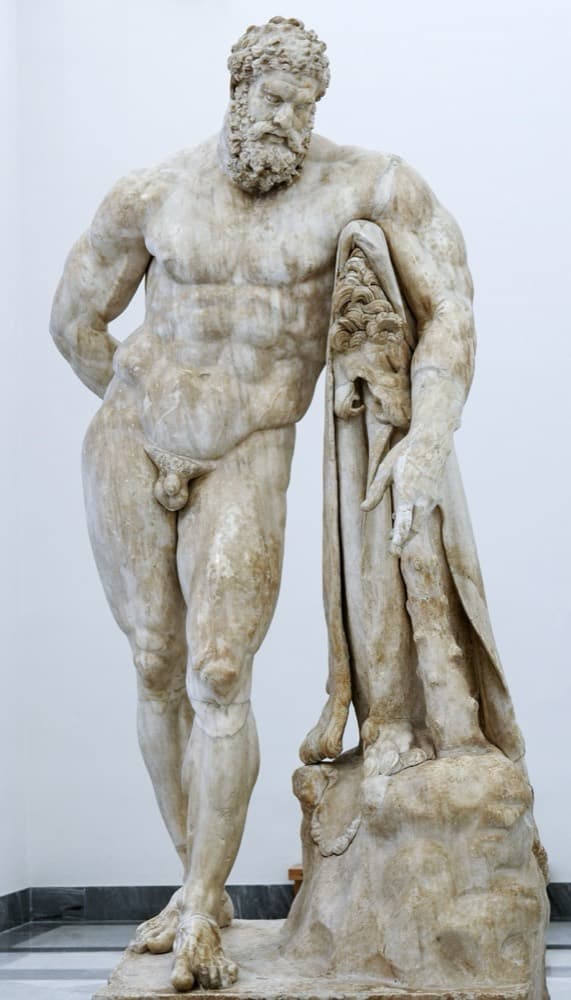
Jason sailed for it aboard the Argo — the price set for reclaiming his throne at Iolcus — with a crew that included Heracles, the singer Orpheus, and the Dioscuri. Aeetes demanded that he first yoke fire-breathing, bronze-hoofed bulls to plow a field and sow it with dragon's teeth; the king's daughter Medea, in love with him, anointed him with a protective salve and charmed the dragon to sleep with drugs and song, and Jason lifted down the fleece and fled west with her by night. Apollonius of Rhodes's Argonautica, written in the 3rd century BCE, is the fullest ancient account of the voyage; Pindar's fourth Pythian ode preserves an earlier telling.