THE STORY & ITS AFTERLIVES
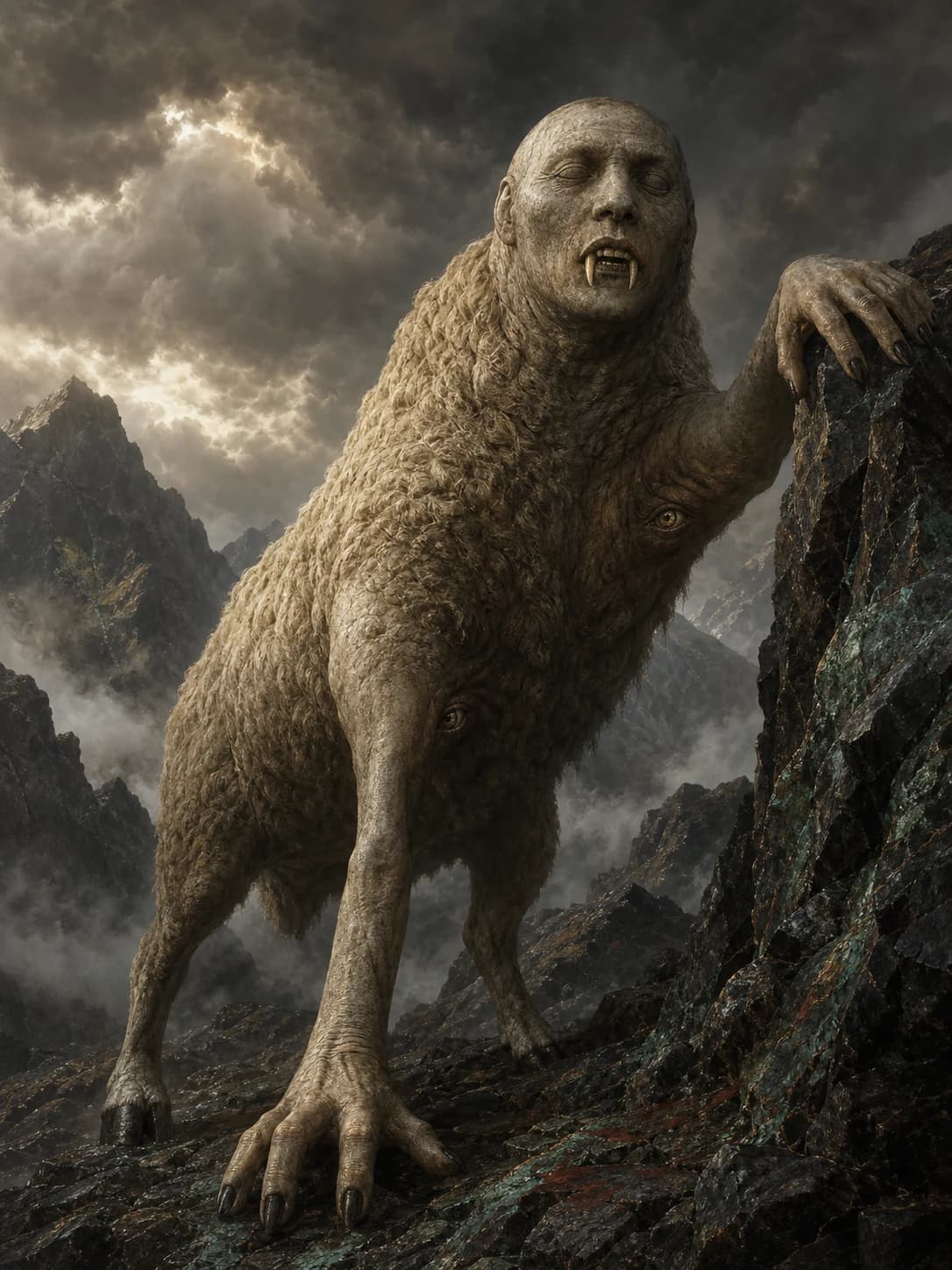
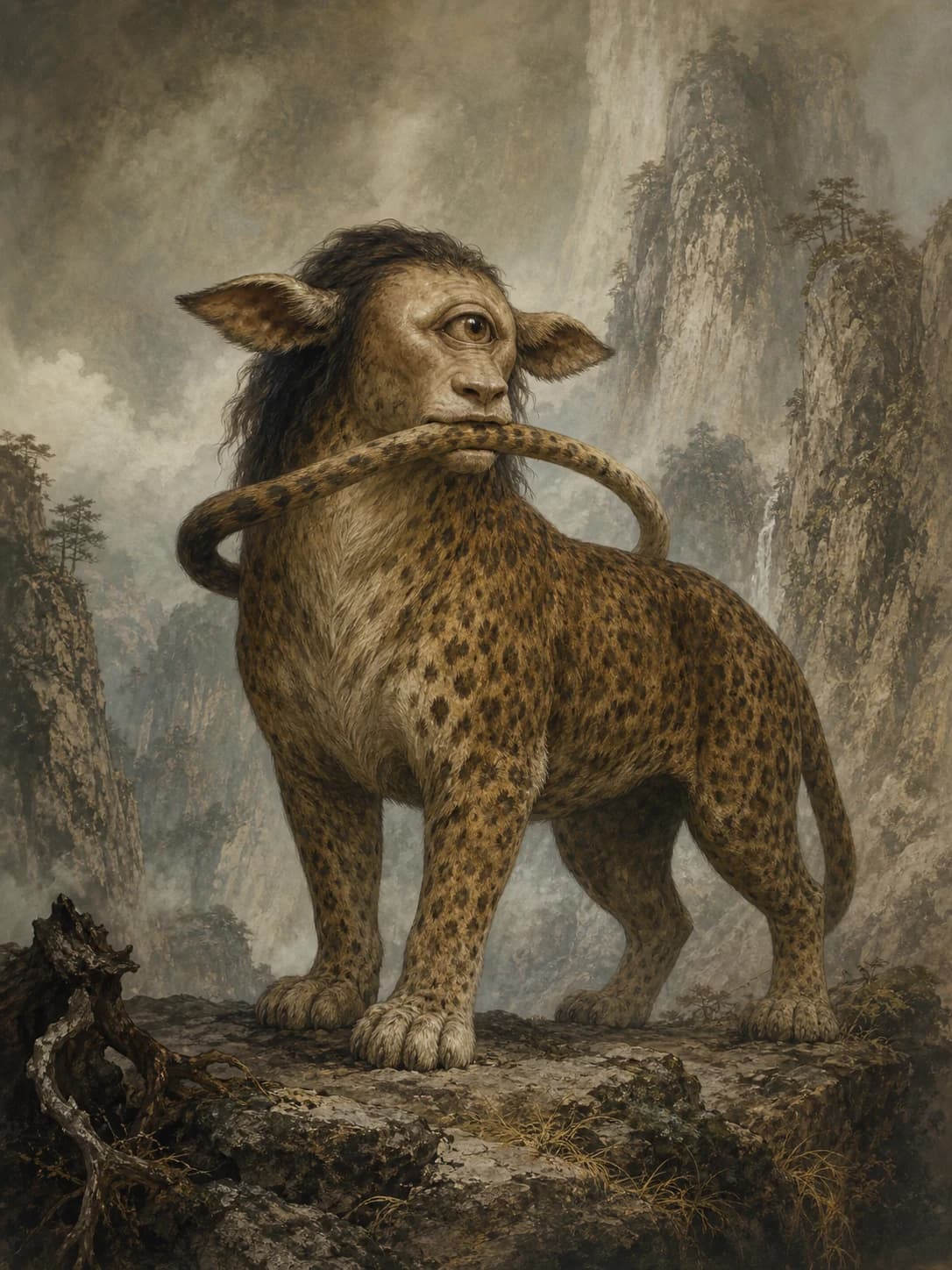
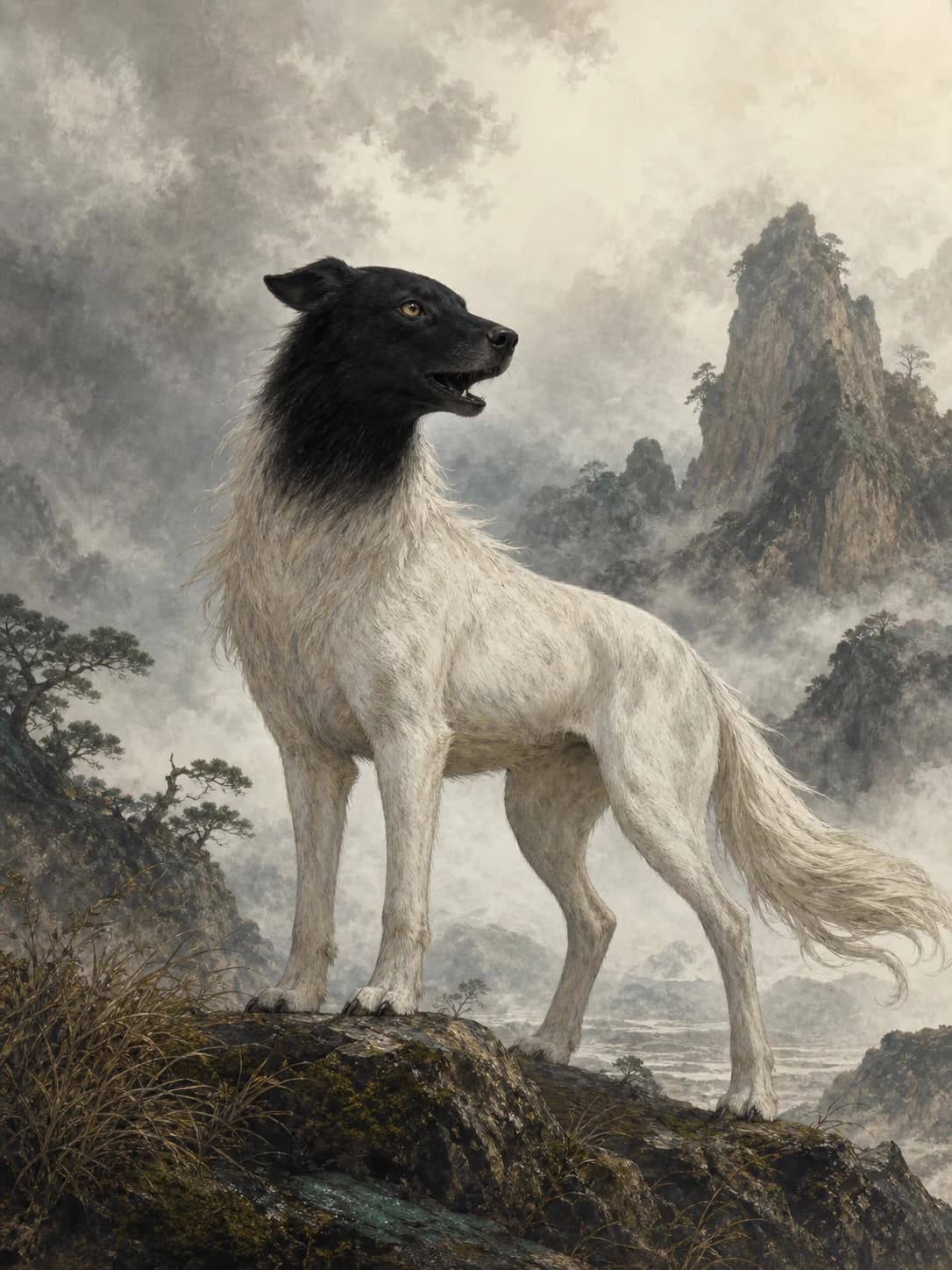
Beixiao Mountain, in the second guideway of the Northern Mountains, is a mountain without stones, carrying green jade on its southern face and jade on its northern. Its beast is, in outline, a tiger: a tiger's frame, entirely white, but fitted with a dog's head, trailing a horse's tail, with a boar's mane bristling along its neck. It is called the dugu, and there the record stops — it eats no one and portends nothing. Four household animals assembled into one unclassifiable predator, standing on a stoneless mountain.
The second character of its name, a 'dog' radical beside the graph for 'valley', is a coinage of the classic's own type: in the transmitted corpus the character exists almost solely for this animal, and Guo Pu's commentary supplies its reading, 'gu'. Such orphan graphs swarm through the Classic of Mountains and Seas, and when later dictionaries like the Yupian and Jiyun collected them, the definition could only read 'name of a beast; see the Classic of Mountains and Seas' — the character's life depending entirely on the beast, and the beast's evidence reduced to a character.
Ming and Qing illustrated editions usually draw the dugu as a white tiger with a drooping horse's tail and raised bristles, the dog's head rendered oddly mild and undersized against the feline body — which only confirms the animal's awkwardness: every part of it is familiar, and the whole has never been seen.