THE STORY & ITS AFTERLIVES
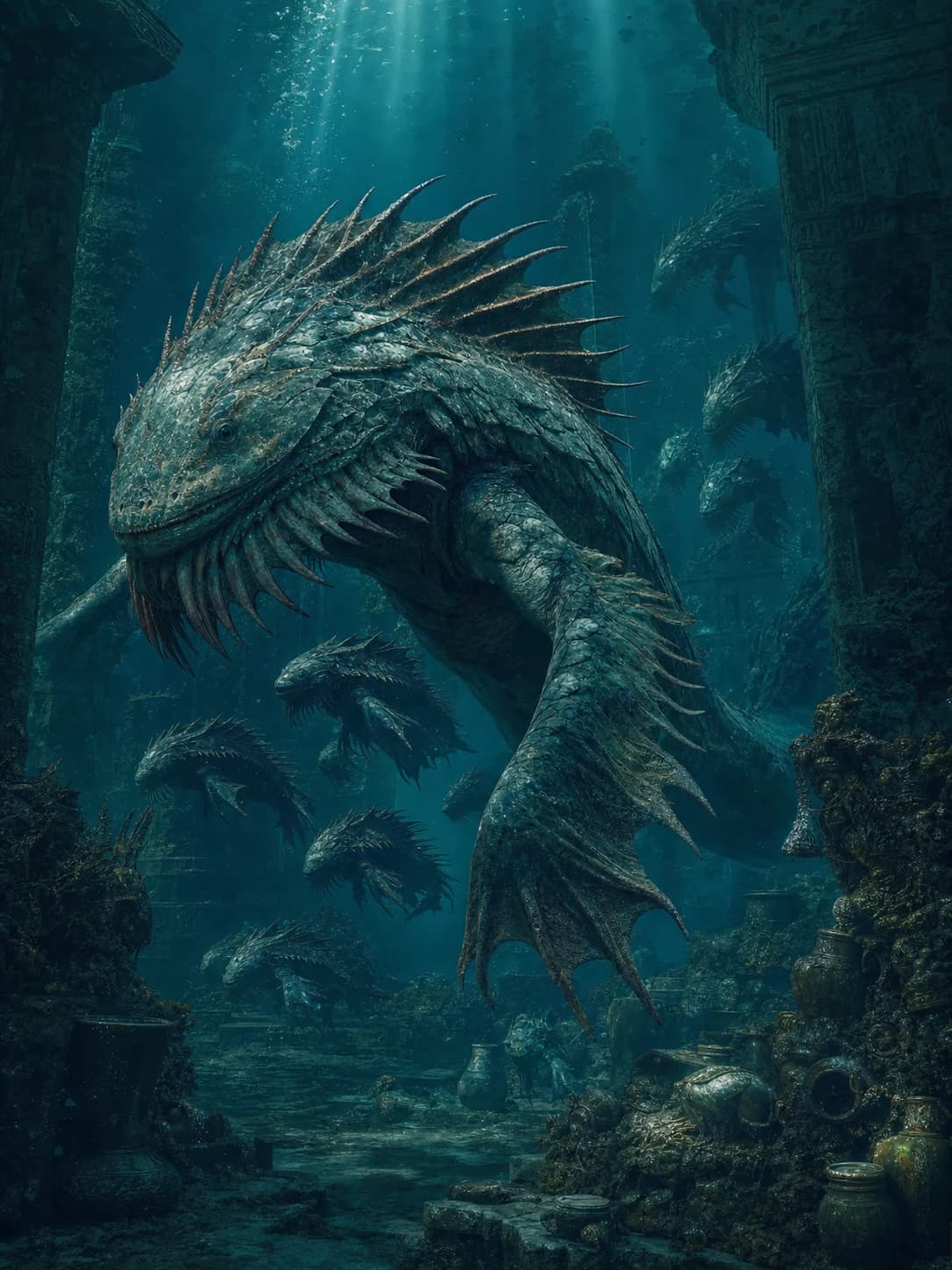
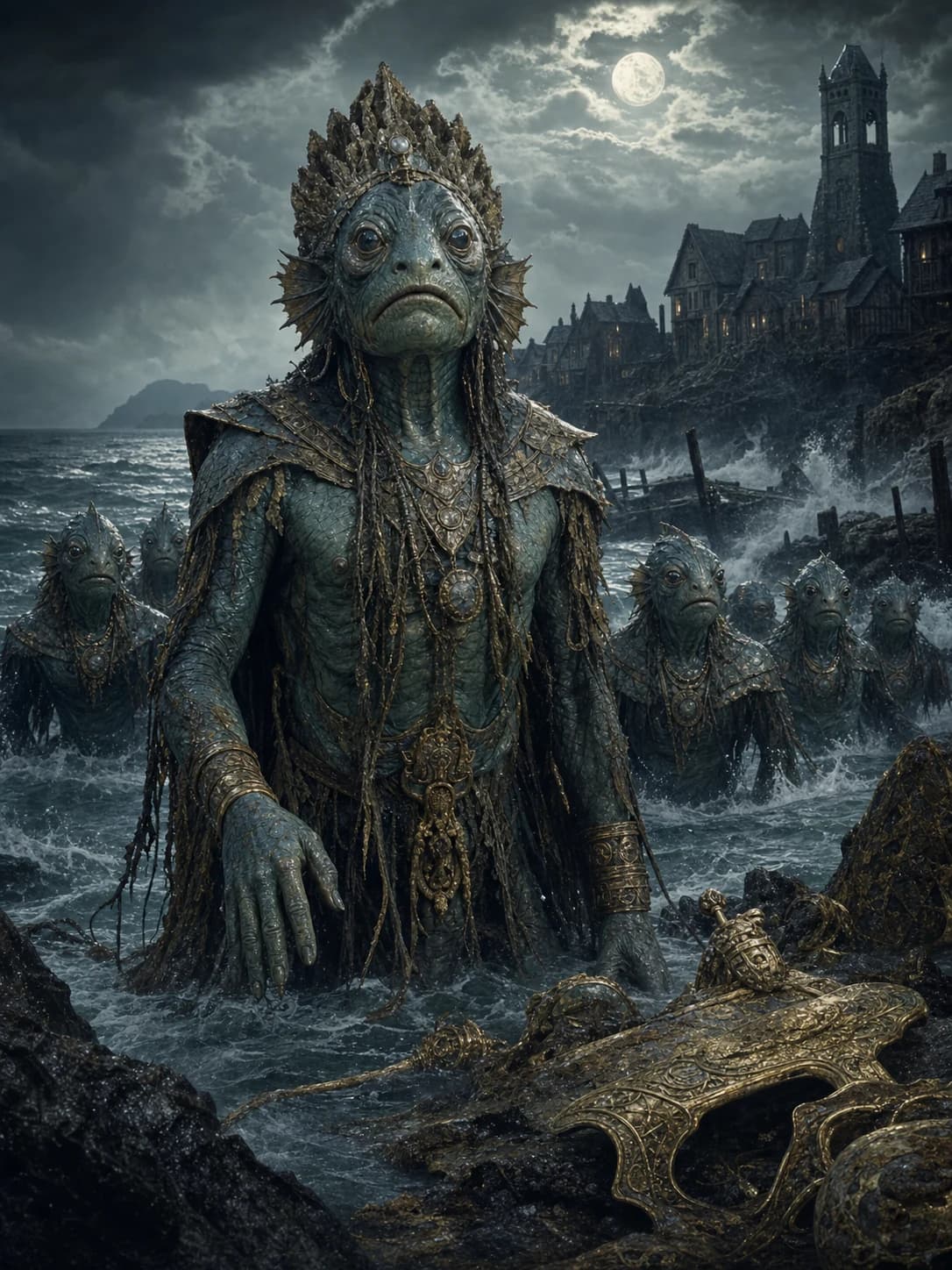
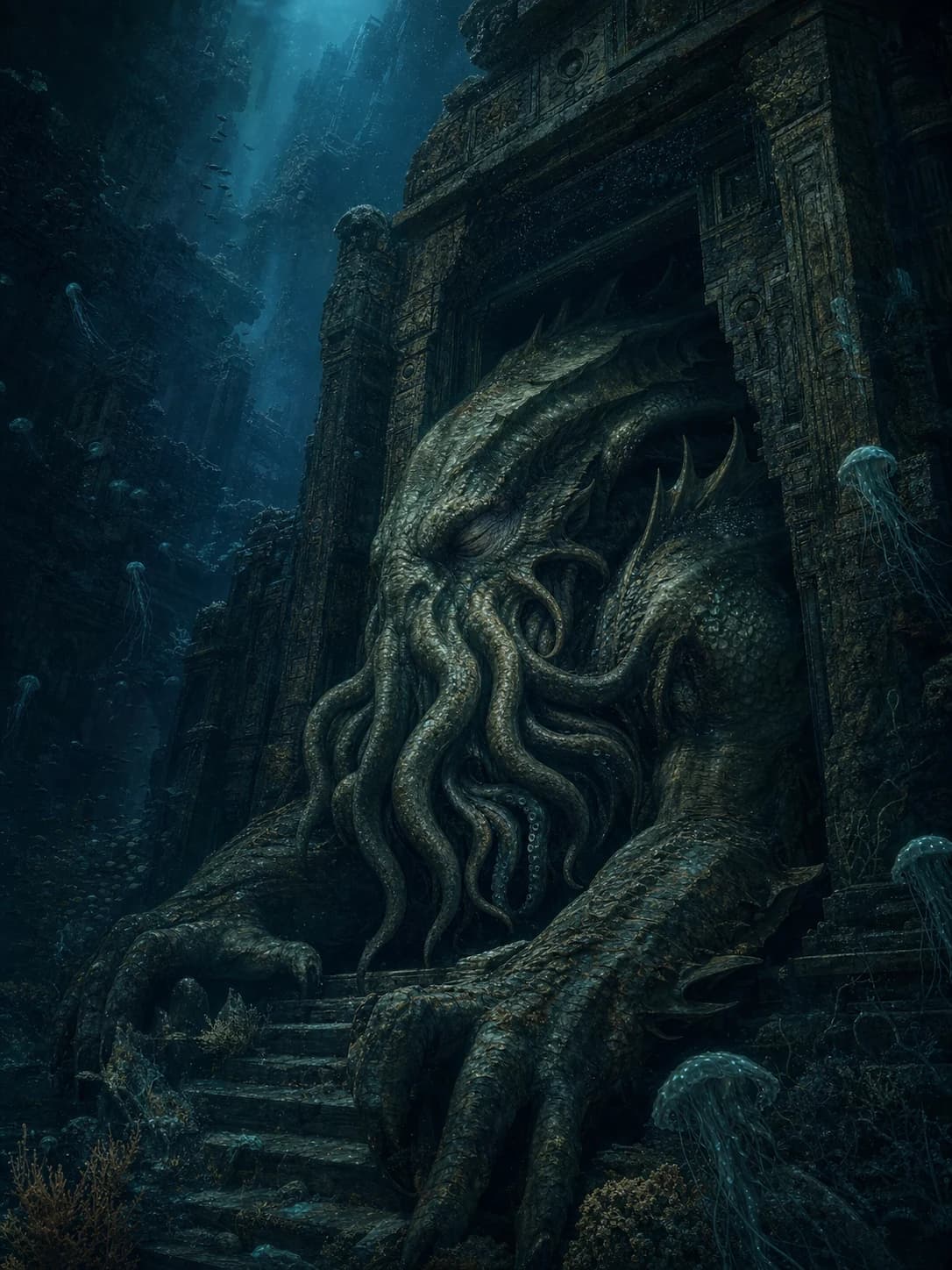
In the early story “Dagon,” a sailor of the First World War drifts onto mud suddenly raised from the ocean floor. He finds a monolith carved with aquatic humanoids and sees a colossal creature climb from the abyss to embrace the stone. The story never plainly identifies that being as Dagon; instead, an ancient Philistine divine name becomes the witness’s only inherited word for what cannot otherwise be named. “The Shadow over Innsmouth” later installs Father Dagon within the town’s Esoteric Order, worshipped beside Mother Hydra and the Deep Ones.
The water between those texts remains deliberately clouded. Dagon may be an individual giant, a title for Cthulhu, or an ancestral honorific used by an oceanic people. Later systems tend to fix him as a Great Old One or sovereign of the Deep Ones. This archive leaves the uncertainty open. More important is the name’s work: biblical memory, an ancient Near Eastern deity, and modern sea horror overlap, persuading coastal worshippers that land civilization is only a brief low tide and the elder altars remain below the waterline.