THE STORY & ITS AFTERLIVES
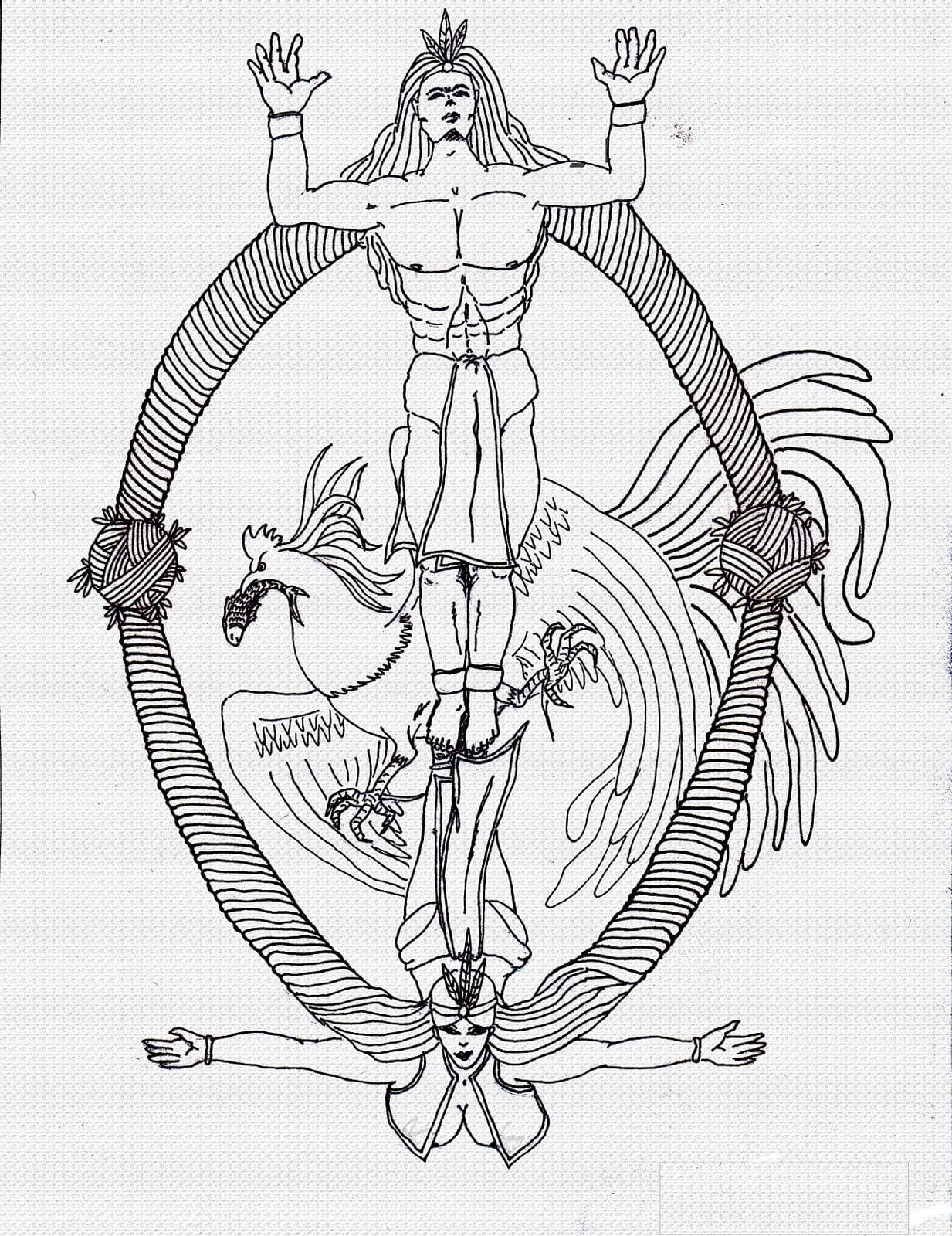
As an eclipse begins, an immense mouth seems to close between sea and sky. Across the Visayas and nearby regions the swallower is called Bakunawa, imagined as serpent, dragon, or vast marine being. Households strike pots and gongs and raise their voices until it spits the moon out. This is no silent observation of astronomy. Noise gathers scattered people into one cosmic emergency, and the retreating shadow becomes light won back by the entire settlement. Among the Abaknon of Capul Island in Northern Samar, lunar eclipse is still associated with a serpent called bakunawa, alongside cautions that pregnant women should not cross a threshold during the event.
Modern retellings often give the sky seven moons and have Bakunawa consume six out of desire for their beauty, leaving a final moon guarded by human noise. That elegant cycle is most visible in later synthesis and cannot stand as an ancient text shared by every community. Earlier dictionaries and folklore records preserve two more stable elements: the eating of the moon and the making of tremendous sound. Bakunawa now moves through design, games, and national fantasy, alternately disaster and wounded guardian. Whatever form it takes, it returns at the darkest face of the moon to remind the earth that celestial light may still require human voices.