THE STORY & ITS AFTERLIVES
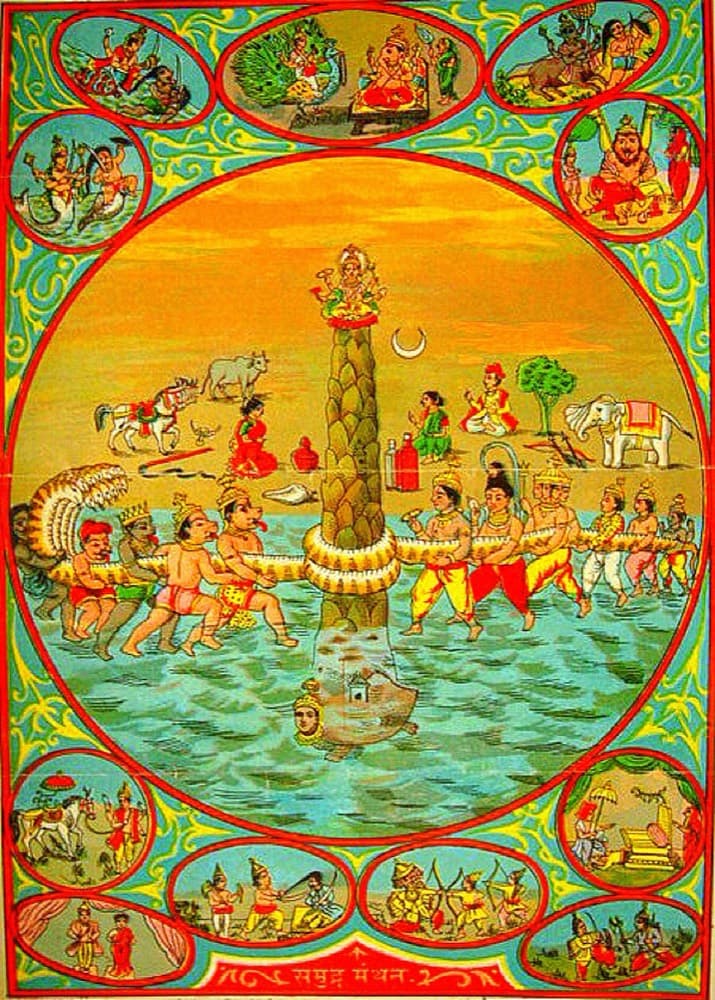
Amrita—literally 'deathless,' cognate with the Greek ambrosia—is the source of the gods' immortality. It did not exist ready-made: devas and asuras churned the ocean of milk with Mount Mandara for a thousand years, treasure after treasure rising, until Dhanvantari, physician of the gods, surfaced holding the nectar in a pot, the kumbha. It is closely entwined with soma, the sacrificial draught of the Vedas, which the Rigveda itself calls amrita; later texts often use the names interchangeably.
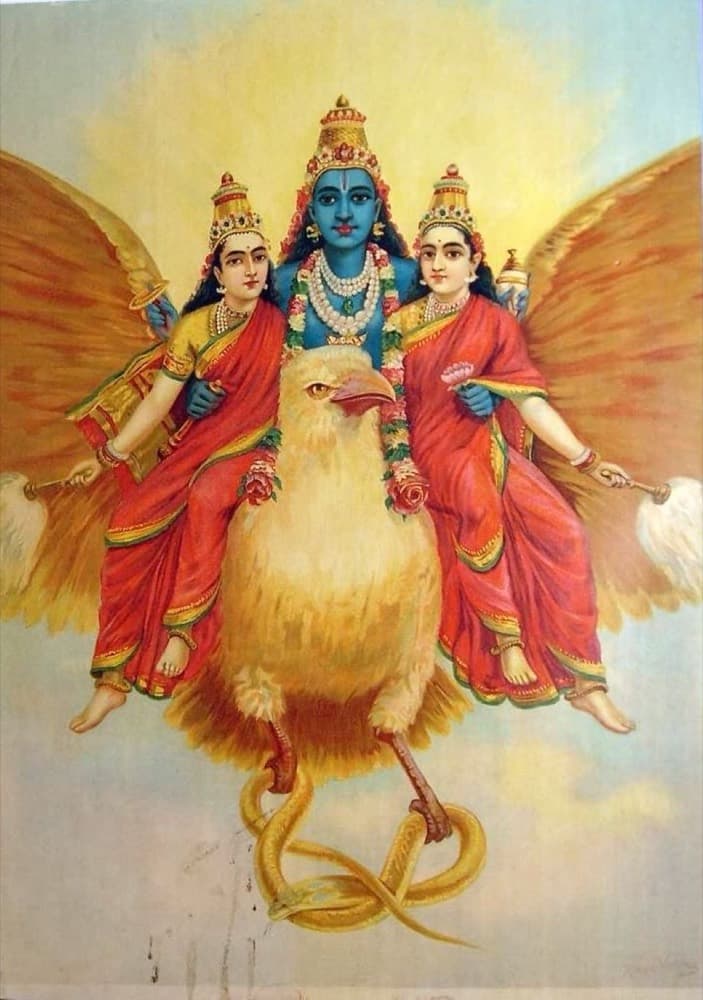
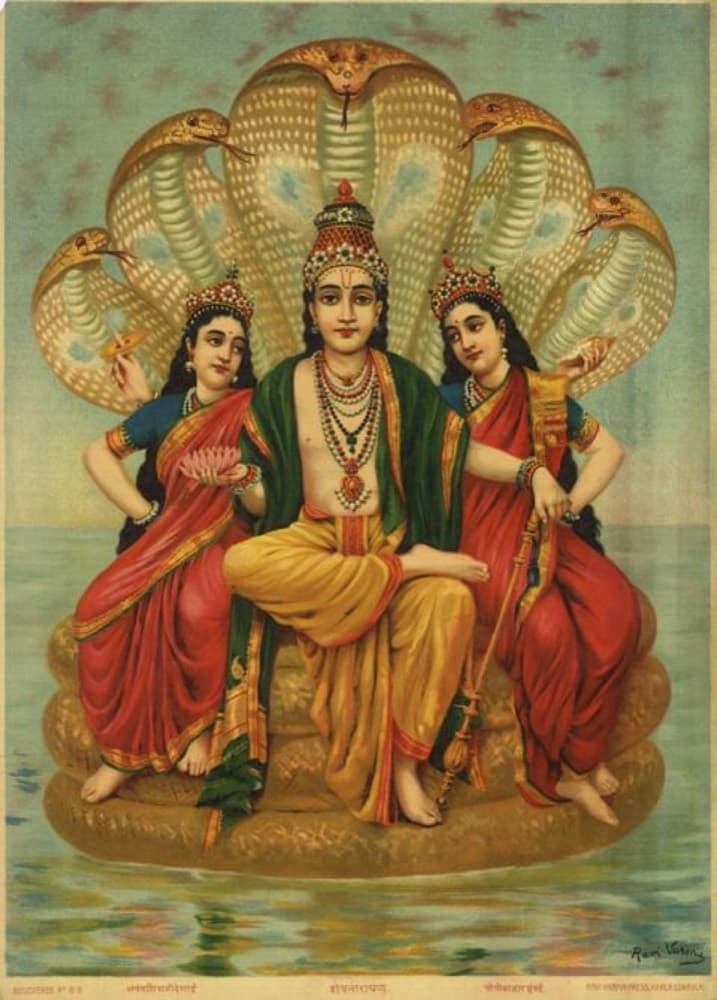
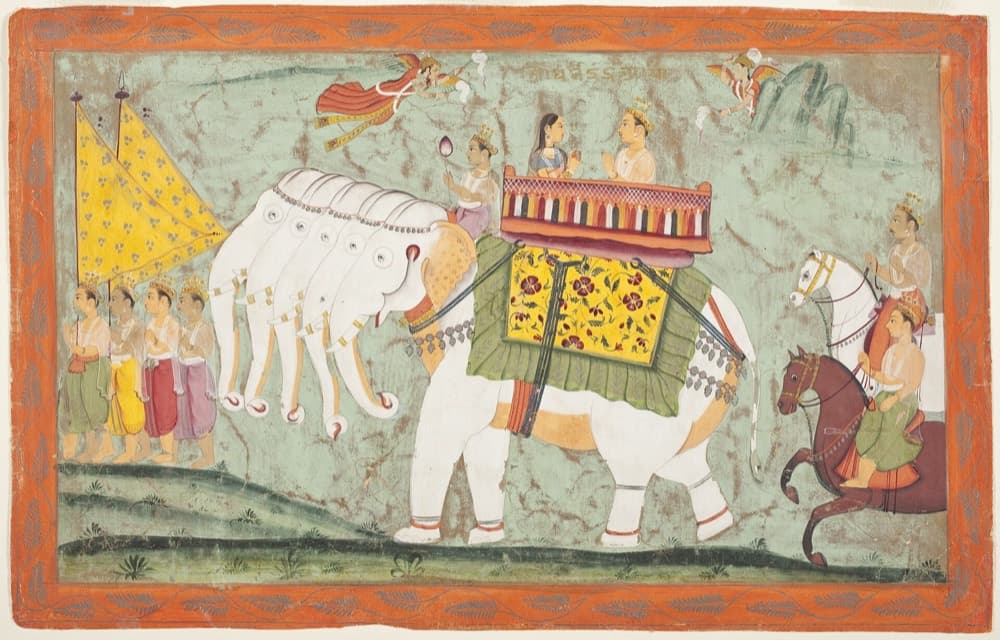
Two great stories orbit the pot. In the first, the asuras snatched the nectar as it came ashore, and Vishnu, in the form of the enchantress Mohini, talked his way into serving it—pouring every drop to the gods. The asura Rahu slipped into their ranks and swallowed a mouthful before the sun and moon exposed him; Vishnu's discus struck off his head, which, already deathless, has pursued and devoured the sun and moon ever since—the Indian explanation of eclipses. In the second, told in the Adi Parva of the Mahabharata, the eagle king Garuda stormed heaven and carried off the pot to ransom his enslaved mother from the serpents, without drinking a drop himself; once she was freed, Indra reclaimed the nectar, and the snakes, licking the sharp kusha grass where the pot had rested, split their tongues in two.
Popular tradition adds that during the struggle over the pot, drops of nectar fell to earth at four places—Prayagraj, Haridwar, Ujjain and Nashik. The Kumbh Mela, the 'festival of the pot,' rotates among these four cities, where bathing in the rivers during the festival is held to wash away sin; the 2025 gathering at Prayagraj counted attendance in the hundreds of millions, among the largest assemblies of human beings on earth.